AGAME DETAILS HOW THE WORLD CHOSE NOT TO STOP THE 1994 GENOCIDE AND WHY IT MATTERS NOW.[Courtesy]
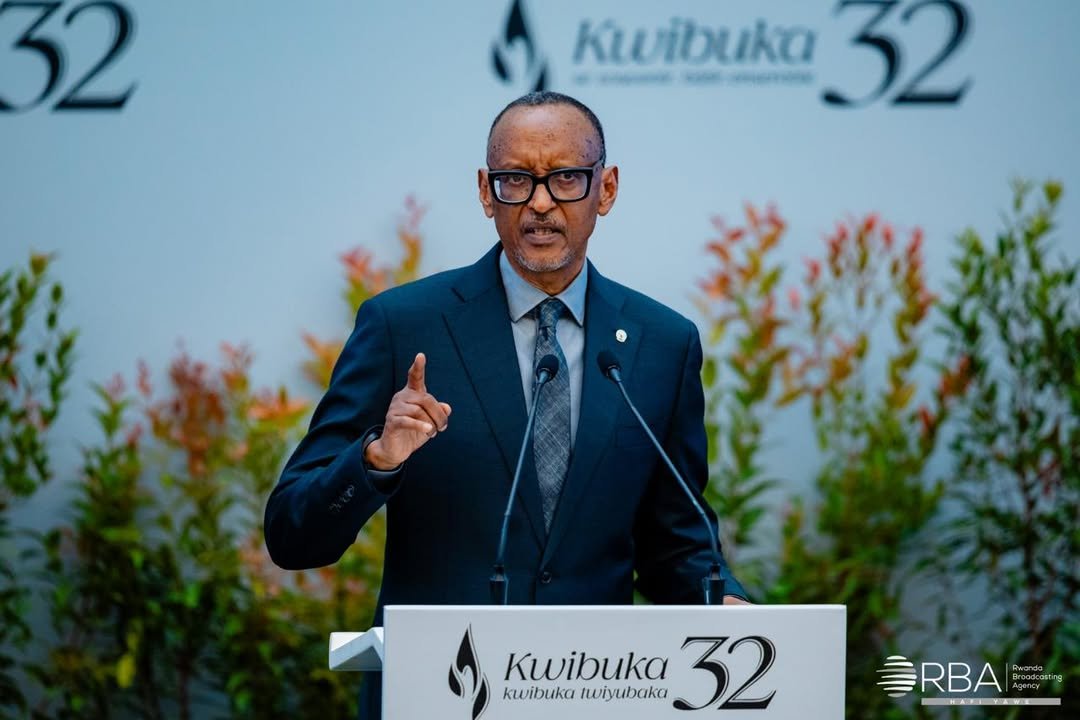
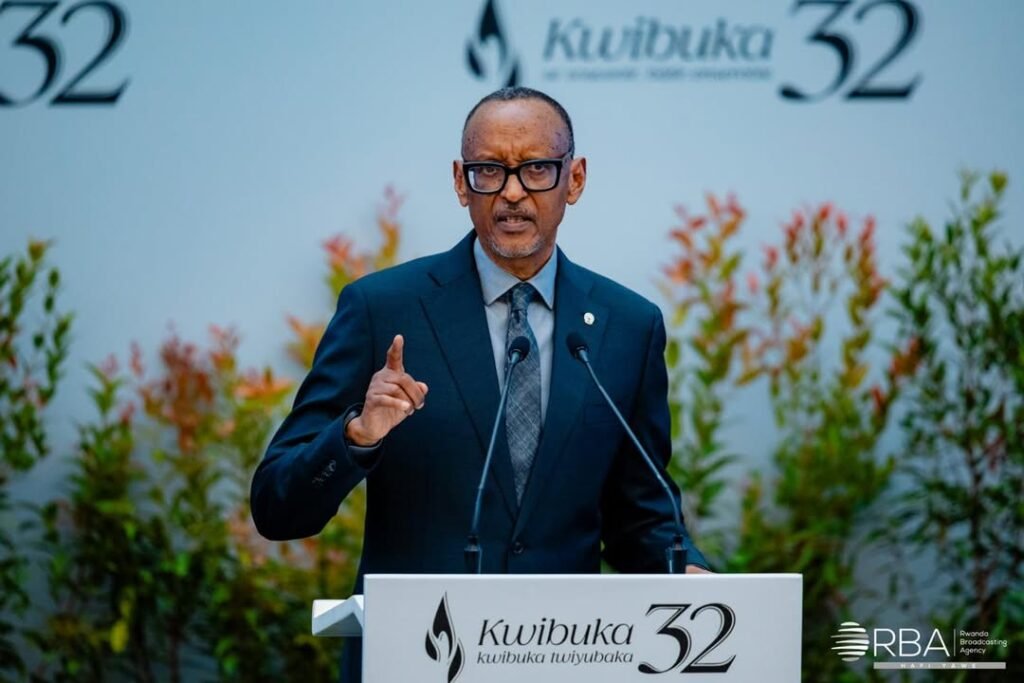
Rwanda’s President Paul Kagame used his Kwibuka 32 address to issue a pointed warning about ongoing efforts to destabilize the country, naming by name the forces he said are still organizing against Rwanda from abroad, while making clear they will not succeed.
Speaking on Tuesday at the national commemoration ceremony in Kigali, President Kagame described gatherings he said are taking place in Kinshasa and European capitals, involving individuals connected to the former genocidal government, including a son of late President Juvénal Habyarimana. “All of that is just noise,” he said. “It cannot amount to anything that will happen here of that kind again.”
The remarks are the most direct public statement President Kagame has made in recent months about what Kigali considers an active and organized threat. He was explicit that his confidence is not personal bravado, it is grounded in the determination of all Rwandans, which he said is as firm today as it has ever been.
President Kagame traced the current threat directly to the events of July 1994, when the genocidal government collapsed and its military and militia forces fled into what is now the Democratic Republic of Congo, forcing millions of civilians across the border with them. Inside those camps, he said, those forces reorganized into what became the FDLR [the Democratic Forces for the Liberation of Rwanda] and launched a sustained cross-border insurgency that claimed tens of thousands more lives in the years that followed.
He described the subsequent period as the Abacengezi insurgency, noting that Rwanda’s western border was only fully secured by the end of the 1990s, through the combined efforts of the Rwanda Patriotic Army and communities in the border areas. The defensive posture Rwanda has maintained since then, he said, is a direct and logical response to that history. “This is not a problem that should be left to Rwanda alone,” President Kagame said. “Doing so only rewards those behind the threats while Rwanda is penalized for standing up for itself.”
The remarks carry particular weight given the ongoing diplomatic tensions surrounding Rwanda’s security posture in eastern DRC, where Kigali has faced international pressure over its alleged support for the M23 armed group, President Kagame framed Rwanda’s security calculus in a broader historical argument: that the failure to respond to early warning signs is precisely what enabled the 1994 genocide and that Rwanda has learned that lesson with full seriousness.
He warned that genocide ideology is still spreading in the region and that if left unchecked, it has the power to drag the entire region backwards. Using a farmer-and-fire metaphor, President Kagame described the danger of neighbors who watch a spreading fire and tell themselves it does not concern them until it is too late.
About the Author