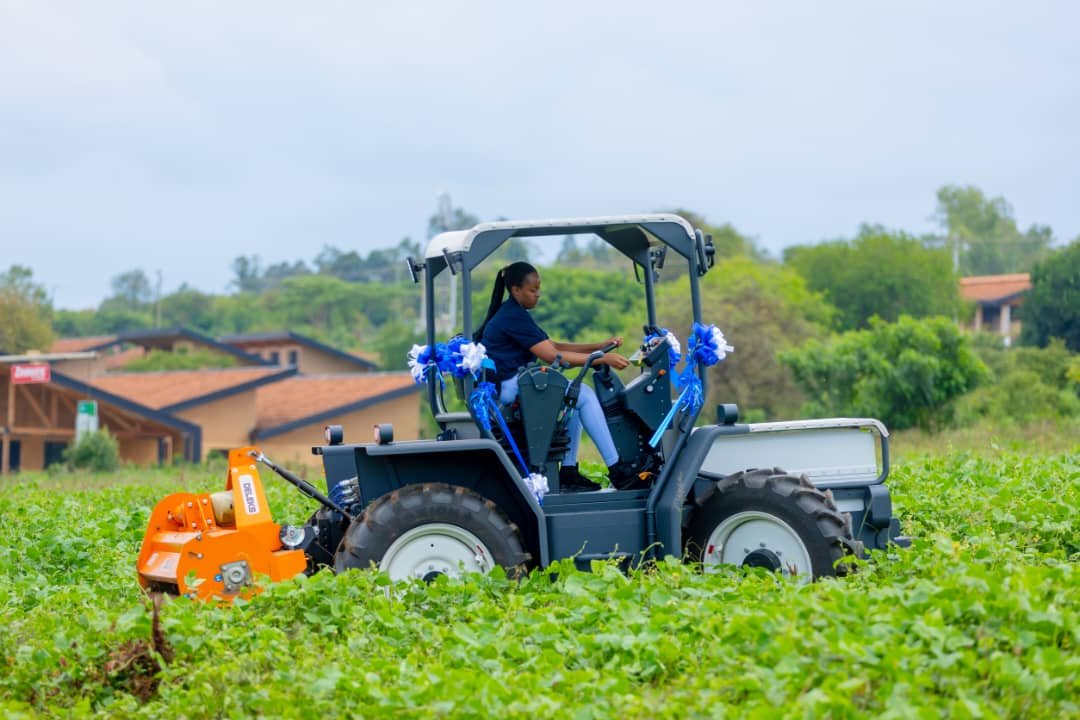
Farming in Rwanda is no longer what it used to be. The image of an elderly woman bent over a hillside with a hoe is giving way to something different: a 24-year-old running a greenhouse operation in Musanze, a young man managing a poultry cooperative in Kayonza, a university graduate processing chilli and watermelon for export in Rwamagana.
Rwanda’s government is not just hoping this shift happens, it is funding it, structuring it, and targeting 849,000 jobs from it by 2029.
The question for Rwanda’s youth is no longer whether agriculture can be a career. The question is whether they are positioning themselves to take the money that is already on the table.
The strategy is already written
In November 2025, Rwanda’s Ministry of Agriculture and Animal Resources officially launched the National Strategy for Youth Employment in Agrifood Systems, NS-YEAS, targeting the creation of around 849,000 jobs in agrifood systems by 2029, at an annual average of 170,000.
The strategy carries a total implementation budget of Frw 173 billion over five years, averaging Frw 35 billion per year.
The strategy aligns with Vision 2050, NST2, and the five-year Strategic Plan for Agriculture Transformation (PSTA 5), which runs from 2024 to 2029. According to the ministry, youth aged 16 to 30 already make up 27 percent of the national population and 32 percent of all farmers, and nearly 60 percent of Rwanda’s population is under 30.
That is not just a demographic stat. It is a political and economic argument: Rwanda cannot grow its agriculture sector without its youth, and its youth cannot escape poverty without agriculture.
Agriculture Minister Marc Cyubahiro Bagabe put it plainly at the strategy’s launch: “With a median age of 20 and nearly 60 percent of our population under 30, our youth represent a dynamic and innovative force.” He framed the strategy not as a government document but as a national commitment, a pledge to make agribusiness a dignified, profitable profession.
Several funding windows are open or actively disbursing
Business Development Fund (BDF)
BDF provides agribusiness loans of up to Frw 10 million at an interest rate of 12 percent per annum. Crucially, BDF provides 30 percent of the loan as a grant once 70 percent of the loan has to be repaid on time.
For a young entrepreneur who borrows and repays well, this is effectively a subsidized pathway into agribusiness. Eligibility requires Rwandan citizenship, at least a secondary school diploma, and a business plan that demonstrates job creation.
UNCDF / WFP BRIDGE Initiative
Under the WFP Rwanda BRIDGE initiative, UNCDF issued a $500,000 portfolio guarantee to Urwego Finance, a local microfinance institution.
The guarantee covers up to 70 percent of losses, allowing Urwego to extend credit to youth- and women-owned agribusinesses that typically lack sufficient collateral. The initial guarantee has already been fully utilized, unlocking $714,286 in loans to 92 agribusinesses across Rwanda, investments expected to generate over 3,220 jobs in rural areas.
This mechanism directly addresses the biggest barrier young farmers face: collateral. You do not need a house or land title to qualify, You need a viable agricultural enterprise.
World Bank / Government — Frw 23 Billion Agriculture Grant
Rwanda and the World Bank have signed a Frw 23 billion grant agreement to support agriculture intensification and food security, with specific emphasis on identifying and providing income-generating opportunities for women and youth, including investments in SACCOs, post-harvest and agro-processing equipment, and market linkages.
Mastercard Foundation — Agribusiness Challenge Fund & University Scholarship
The Mastercard Foundation’s Agribusiness Challenge Fund is open to SMEs in 20 Sub-Saharan African countries, including Rwanda, with grants of up to $2.5 million targeting enterprises in agriculture, climate impact, and the digital economy.
Separately, a five-year, $15 million WFP and Mastercard Foundation project operating across all 30 of Rwanda’s districts aims to strengthen local agri-food systems, engaging 200,000 smallholder farmers, with at least 80 percent being youth, and enrolling 600 farmer service centres, 80 percent of which will be youth-operated.
For students, the Mastercard Foundation Scholars Program at the University of Rwanda, a 10-year partnership running from 2021 to 2031 is offering fully funded undergraduate scholarships in agribusiness, agriculture, environmental science, and related fields, targeting economically disadvantaged youth aged 28 and under.
NS-YEAS Flagship Projects — Sector-Specific Investment
Under the NS-YEAS strategy, flagship projects already costed include greenhouse horticulture at Frw 2.8 billion generating 400 jobs, poultry at Frw 695 million generating 300 jobs, piggery at Frw 3.99 billion generating over 3,156 jobs, mechanization at Frw 19.3 billion, potato seed production at Frw 4.61 billion, rice seed production at Frw 1.31 billion, and fodder production at Frw 1.02 billion, altogether expected to create 4,393 youth jobs in the initial phase.
Why agriculture and not a desk job
The honest case for farming is not romantic, It is financial. Rwanda’s agriculture sector is being rebuilt from subsistence into a commercial, export-oriented system, and the returns on positioning yourself early are significant.
Full implementation of PSTA 5 is projected to push agricultural GDP growth above 6 percent and generate more than $1.5 billion in agriculture export revenue by 2028/29, and employment in the agrifood system is expected to increase by 60 percent, creating jobs in processing, logistics, trade, and services.
With 85 percent of Rwandan farmers already using mobile phones and over half using mobile payments, the foundation is in place for scaling digital extension, remote sensing, and climate advisory services, meaning tech-savvy youth who enter farming now are entering a sector that will increasingly reward exactly the skills they already have.
The challenge is real: youth unemployment stood at 15.5 percent in the third quarter of 2025, with more than half of young people facing some form of labour underutilisation and nearly 25 percent living in households below the poverty line. But the strategy being built around those numbers is agricultural.
The platform to join now
The Rwanda Youth in Agribusiness Forum (RYAF) is a national platform bringing together youth organizations, individual young farmers, and entrepreneurs across crop production, livestock, agro-processing, inputs, agro-services, farm mechanization, seed multiplication, and ICT for agriculture.
It connects members to financing, markets, training, and advocacy and it is where young agripreneurs are already networking with MINAGRI, BDF, and international partners.
The five-year clock on NS-YEAS has started. Rwanda has committed Frw 173 billion to make this work, and a growing list of international partners from the World Bank to UNCDF to the Mastercard Foundation, have put real capital behind the sector.
The flagship projects are costed, the strategy is published, and the financing windows are open. What is missing is enough young Rwandans who see farming not as a fallback but as a first choice. The government has built the infrastructure for that shift, the question is whether Rwanda’s youth will walk through the door.
About the Author