For over 30 years, the United States stood alone among major world powers in refusing to officially name the 1994 atrocities in Rwanda the Genocide against the Tutsi. That changed this week.
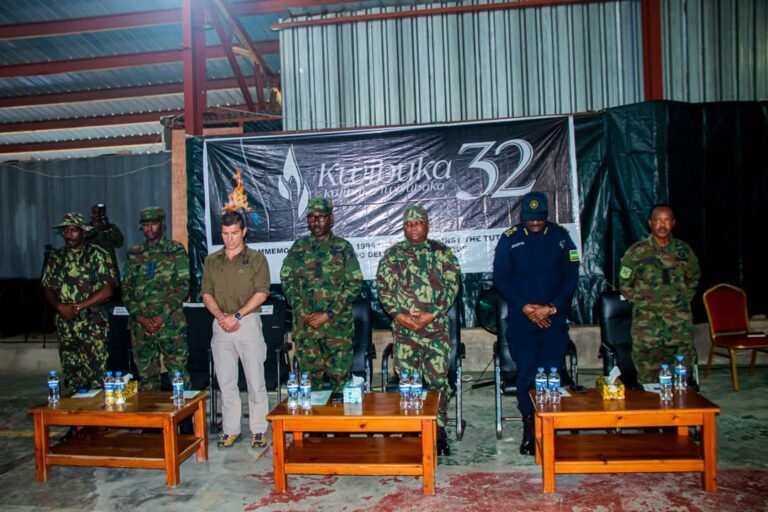
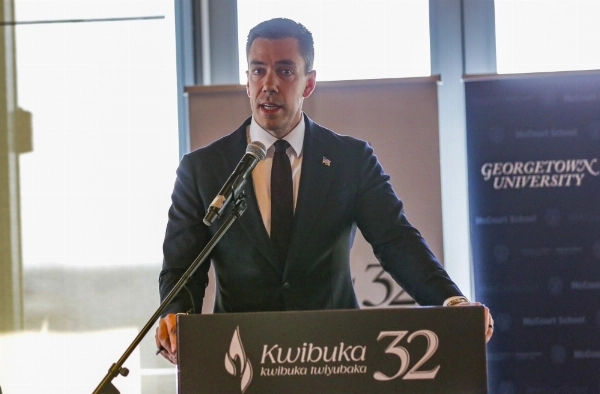
At the Kwibuka 32 commemoration held at Rwanda’s Embassy in Washington, D.C., on April 7, Nick Checker, Senior Bureau Official in the U.S. Bureau of African Affairs, became the first senior U.S. government official to formally use the correct name the Genocide against the Tutsi in an official address.
His remarks marked a quiet but significant shift in American diplomatic language that survivors and Rwandan officials have pushed for since the 1990s.
“As we gather here today to mark the solemn occasion of Kwibuka, let us do so in somber recognition of the unspeakable horrors that befell the Rwandan people during the Genocide against the Tutsi,” Checker said, opening remarks that were notably direct in both tone and terminology.
Why This Matters
The omission was never just a matter of style. Beginning under Secretary of State Hillary Clinton and continuing through multiple administrations, U.S. policy was to refuse to recognize the 1994 genocide against the Tutsi as anti-Tutsi in nature, rooted in the logic that others also died in the violence, and that the promise of clearer terminology could be used as leverage to extract concessions from Rwanda.
In diplomatic terms, the U.S. often reverted to broader phrasing such as “the Rwanda genocide” or “the genocide in Rwanda.” Rwandan officials consistently argued that any language not specifically using the phrase “genocide against the Tutsi” is ambiguous and conducive to genocide denial and revisionism.
That argument found its way to Capitol Hill. In April 2025, Senators Mike Rounds and Chris Coons introduced Senate Resolution 151, calling on the United States to formally recognize the 1994 genocide as “the genocide against the Tutsi in Rwanda” and directing the Secretary of State to publicly affirm that terminology.
The resolution noted bluntly that the United States was the only major country in the world to publicly reject the terminology “genocide against the Tutsi.”
The language debate has real consequences beyond protocol. Genocide denial rarely begins with outright rejection of facts it often begins with ambiguity.
When influential governments avoid precise terminology, even unintentionally, denialist narratives gain rhetorical leverage, pointing to that ambiguity as validation that the history is still “debated.”
Checker also praised Rwanda’s 32-year journey of recovery, noting restored security, stronger institutions, and a national identity that rejects the divisions which made the genocide possible.
He acknowledged Washington’s role in establishing the International Criminal Tribunal for Rwanda and said the U.S. continues to support accountability for genocide suspects still at large.
The State Department’s public remarks, now posted on its official website, also included a firm stance against distortion: “We oppose any attempt to misrepresent the historical record and reject any denial or minimization of the genocide.”
The shift in language is significant, but it is not yet codified as formal U.S. state policy. Senate Resolution 151, introduced in April 2025, remains before the Senate Committee on Foreign Relations.
Its passage would make the terminology mandatory in official U.S. government communications and direct the Secretary of State to adopt it publicly going further than an official’s remarks at a single event.
For Rwanda, the timing matters. Kwibuka 32 arrives as Kigali navigates complex relationships with Western partners amid tensions in eastern DRC. A clearer alignment from Washington on historical truth even symbolic signals continued engagement at a moment when Rwanda needs consistent allies.
Whether this shift leads to a permanent change in the State Department’s official language, or remains a one-time gesture, will become clear in the months ahead.
About the Author