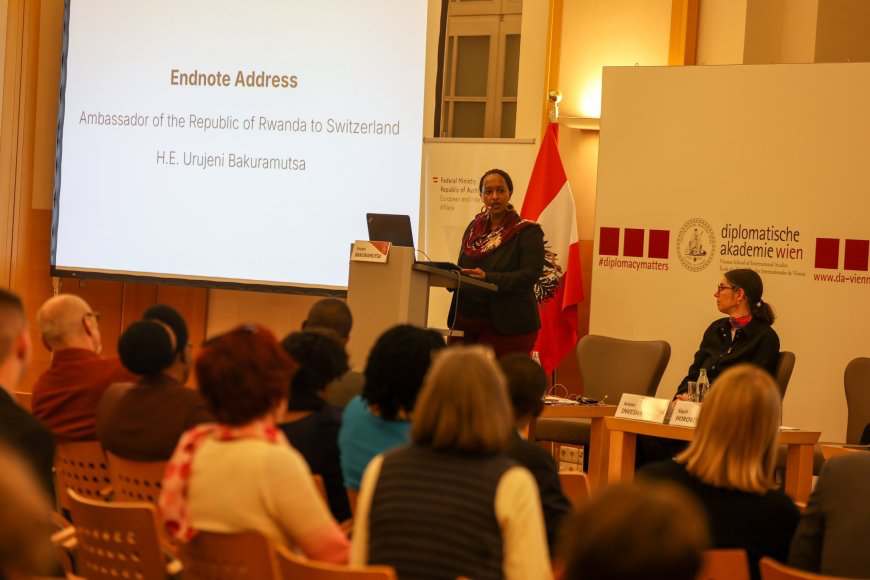
At the Diplomatic Academy of Vienna, Rwanda’s Permanent Representative to the United Nations Office in Geneva, Ambassador Urujeni Bakuramutsa, delivered powerful closing remarks at the International Conference titled “Learning from the Past, Shaping the Future: Remembrance, Reconciliation and Reintegration – the 1994 Genocide against the Tutsi in Rwanda.”
In her address, Ambassador Bakuramutsa emphasized that confronting genocide and mass violence demands a comprehensive and inclusive approach. She underscored that no single perspective can fully capture the complexity of such tragedies, calling instead for the integration of multiple tools including history, justice, remembrance, and education.
“These elements are essential,” she noted, “in helping societies understand how genocide unfolds, strengthening accountability mechanisms, and identifying early warning signs to prevent future atrocities.”
Beyond institutional frameworks, the Ambassador highlighted the indispensable role of communities and survivors in rebuilding societies affected by violence. She stressed that true reconciliation and reintegration take root at the grassroots level, where trust is gradually restored and the social fabric carefully mended.
Her remarks served as a poignant reminder that while policies and global cooperation are critical, lasting healing is a process that unfolds over time anchored in the lived experiences of those most affected.
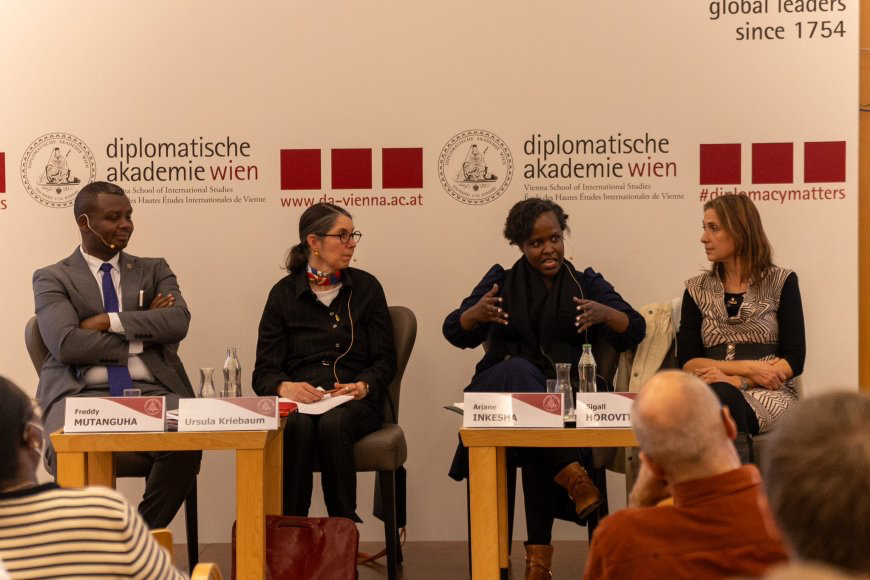
The conference brought together policymakers, scholars, and practitioners committed to advancing global understanding of remembrance and reconciliation, reinforcing the shared responsibility to ensure that the lessons of the past continue to guide efforts toward a more peaceful and resilient future.
About the Author