Kigali to London: you signed it, now honour it. That is the message Rwanda carried into the Permanent Court of Arbitration in The Hague on Wednesday, as its legal team opened a case against the United Kingdom over a migration deal Britain agreed to, funded partially, and then abandoned the moment it became politically inconvenient at home.
Rwanda’s case against the United Kingdom opened at the Permanent Court of Arbitration in The Hague on Wednesday, with Kigali making clear from the start that this fight goes beyond the £100 million it says London still owes.
In a 14-part thread posted on X this morning, Rwanda’s Ministry of Justice framed the hearing in terms that should make any diplomat uncomfortable. “At its core,” the ministry wrote, “the case is about a fundamental principle that underpins the entire system of international relations: that agreements freely entered into between sovereign states must be honoured in good faith and respectfully.” That framing sovereign principle over financial claim is deliberate, and it sets the tone for what promises to be a tense three-day proceeding.
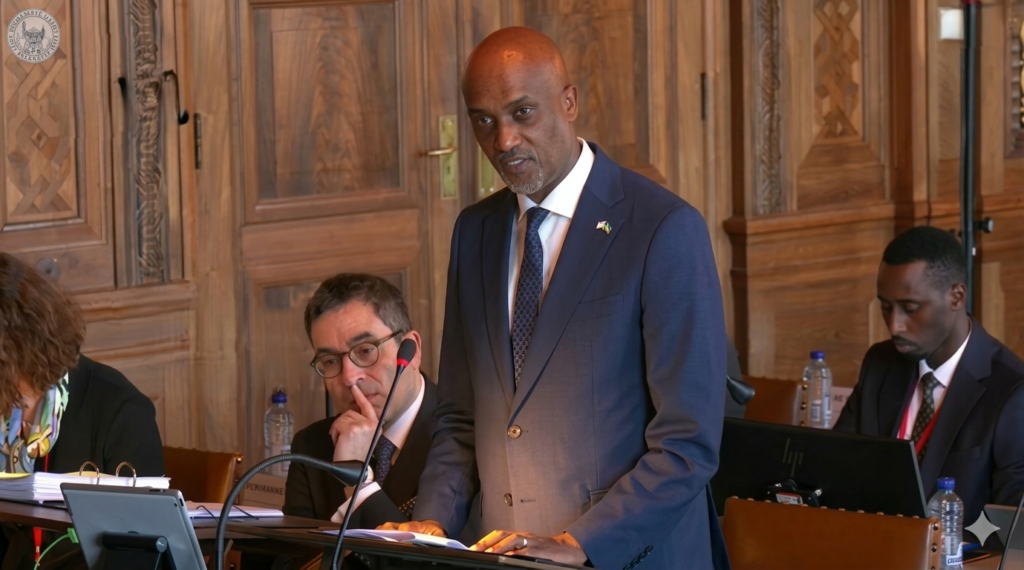
The hearing runs Wednesday through Friday before a three-judge panel at the PCA, the 1899-established court that handles contractual disputes between nations. Rwanda presents its case today, British lawyers respond Thursday, and both sides sum up Friday. A ruling is expected several months from now.
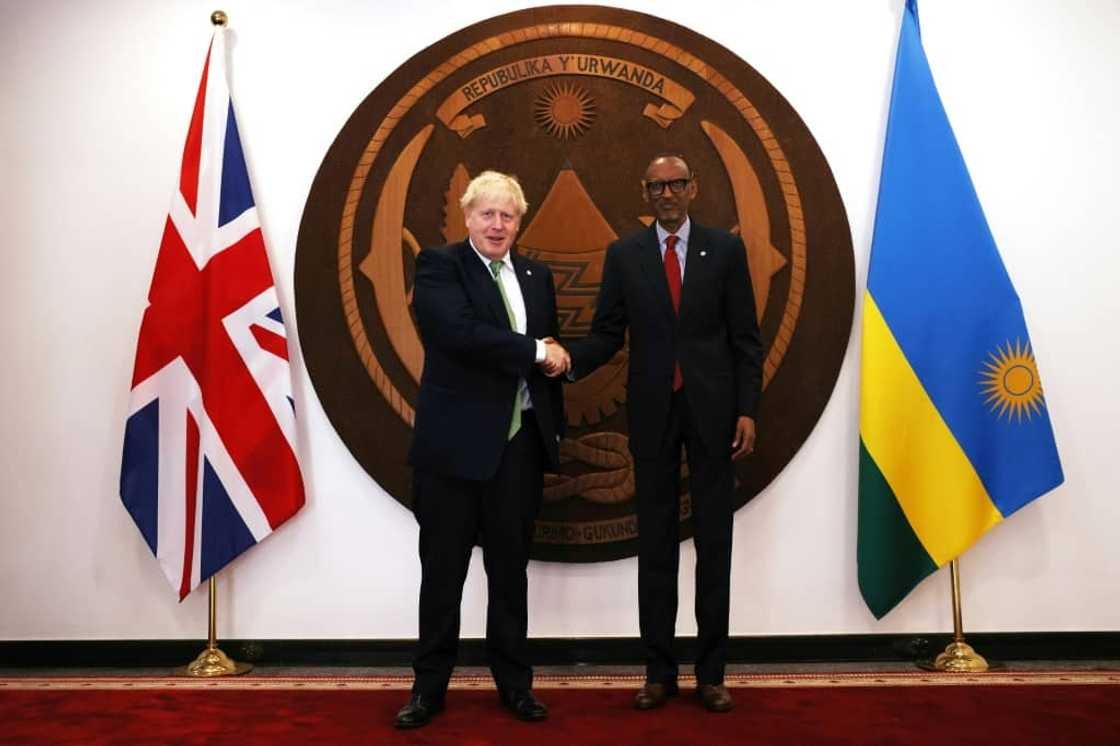
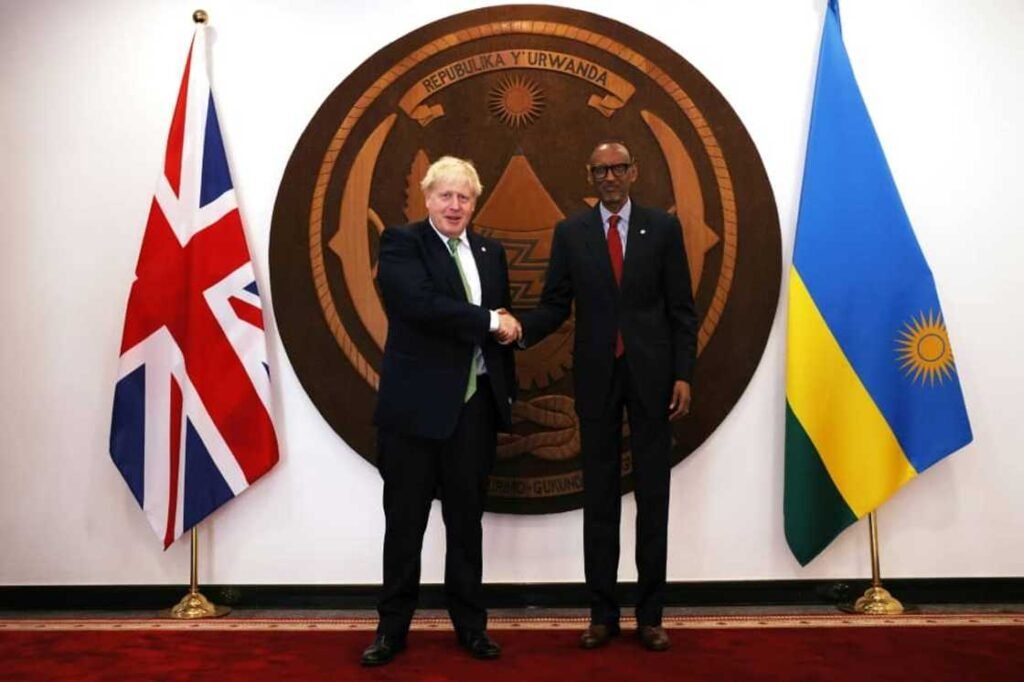
The dispute traces back to the 2022 Migration and Economic Development Partnership signed under then-Prime Minister Boris Johnson, which proposed sending asylum seekers arriving in Britain illegally to Rwanda for processing. The scheme hit legal and political obstacles almost immediately, with the UK Supreme Court eventually ruling it illegal.
When Keir Starmer took office in July 2024, he declared the plan “dead and buried” on his first full day in office, calling it a “gimmick.” During the two years the scheme was nominally in operation, only four people actually went to Rwanda — all voluntarily.
About £290 million had already been paid to Rwanda by the time the deal collapsed. But that is not the end of the story. Rwanda and the UK agreed, through a binding exchange of diplomatic notes in June 2024, on financial arrangements to support refugee hosting and economic integration.
Under those arrangements, two payments of £50 million each became due one in April 2025 and one in April 2026. Kigali says neither has been paid.
What Rwanda Is Asking the Court to Do
Rwanda’s demands before the PCA are specific and pointed. In its 37-page submission, Kigali is asking for three things: the two unpaid £50 million instalments, an additional £6 million for Britain’s failure to resettle vulnerable Congolese refugees under a reciprocal clause in the deal, and perhaps most strikingly a formal written apology from the British government.
Rwanda told the court: “The UK’s termination of the deal does not change the UK’s obligation to pay any amount that was already due and payable.” On the apology, Kigali has been just as direct. “Rwanda considers that it was wrong for the UK to walk away from its obligations simply because its internal political assessment of the agreement’s convenience had changed,” its submission states.
That line deserves to be read carefully. Rwanda is not just arguing breach of contract. It is arguing that a change of government in London does not erase the legal obligations a previous government willingly signed. The apology demand underscores that point Kigali wants a public acknowledgement, on the record, that Britain acted wrongly.
Rwanda’s formal arbitration notice to the PCA, filed in November 2025, listed three specific breaches: that the UK violated a diplomatic exchange of notes by publicly disclosing confidential financial arrangements; that it failed to honour its obligations under Article 18 of the treaty covering those financial commitments; and that it refused to fulfil Article 19 of the treaty, which required Britain to resettle the most vulnerable refugees currently hosted in Rwanda. These were not ambiguous provisions they were written obligations.
Britain’s Defence in Court
Britain’s position is equally firm. London has pointed to what it calls “obvious weaknesses” in Rwanda’s legal argument and alleges that Kigali’s “real motivation” is retaliation for Britain’s decision to suspend most of its financial aid over Rwanda’s reported support for the M23 rebel group in eastern DRC.
Rwanda’s government spokeswoman Yolande Makolo called that suspension “unjustified punitive measures” that broke trust between the two nations. The UK has also sought to frame the entire partnership as a costly political failure one that produced almost no results despite enormous expense.
That argument may play well at home, but it does not necessarily hold legal weight before an international arbitration panel. Courts at The Hague assess treaty obligations, not political optics.
Why Rwanda Went to Court at All
Michael Butera, chief technical adviser to Rwanda’s minister of justice, was direct: “Rwanda regrets that it has been necessary to pursue these claims in arbitration, but faced with the United Kingdom’s intransigence on these issues, it has been left with no other choice.” Butera confirmed that Kigali had sought diplomatic engagement first, repeatedly, before filing its notice of arbitration.
The MEDP was established at the request of the United Kingdom to explore new approaches to addressing irregular migration. Rwanda joined the partnership in line with its long-standing commitments to refugee protection including cooperation with UNHCR and a policy approach centred on dignity, self-reliance, and socio-economic inclusion.
In other words, Rwanda entered this agreement on UK terms, built its commitments around UK needs, and now finds itself in court trying to collect what was promised.
The Bigger Picture
What makes this case important beyond the money is the precedent it could set. The arbitration is effectively asking whether a democratically elected successor government can simply walk away from a treaty signed by its predecessor because the policy became politically inconvenient.
For Rwanda, a ruling in its favour would reinforce confidence in bilateral agreements and strengthen its hand in future negotiations. For Africa more broadly, the case asks a direct and uncomfortable question: when a Western government finds a deal with an African country politically inconvenient and walks away, what recourse does that African country actually have?
Rwanda’s decision to pursue legal arbitration rather than absorb the loss quietly and preserve diplomatic niceties is itself a signal. The demand for a formal apology makes it even clearer. Kigali is not just seeking money. It is seeking acknowledgement that it was treated wrongly, and it wants that acknowledgement on the public record of an international court.
With proceedings now underway and a ruling expected later this year, the outcome will matter well beyond these two countries.
Editor’s Note
This story was published on March 18, 2026 the same day Rwanda’s legal team opened proceedings at the Permanent Court of Arbitration in The Hague. INTO RWANDA will follow this case closely through every stage of the arbitration, including the UK’s response on Thursday and the closing submissions on Friday.
We will update this article as new information becomes available and publish a full analysis once the PCA issues its ruling. If you have information related to this case, contact us directly.
The INTO RWANDA Editorial Team
About the Author