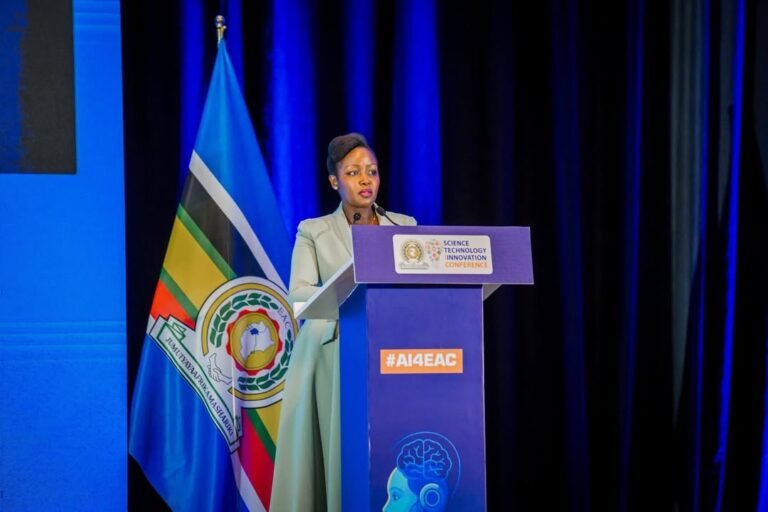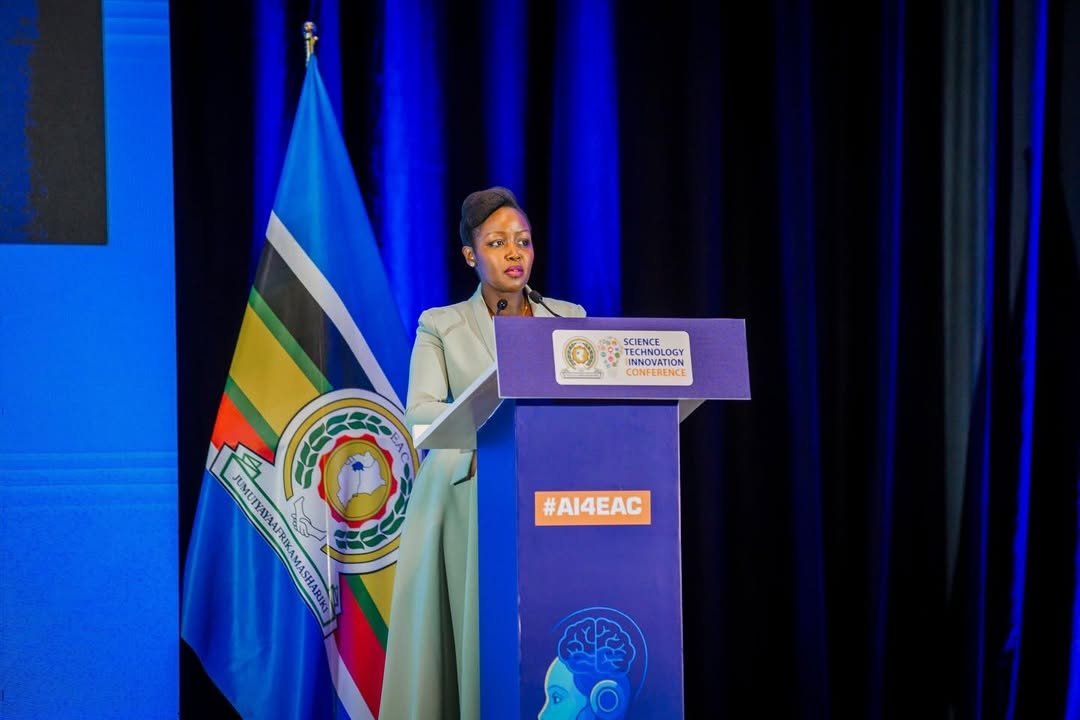
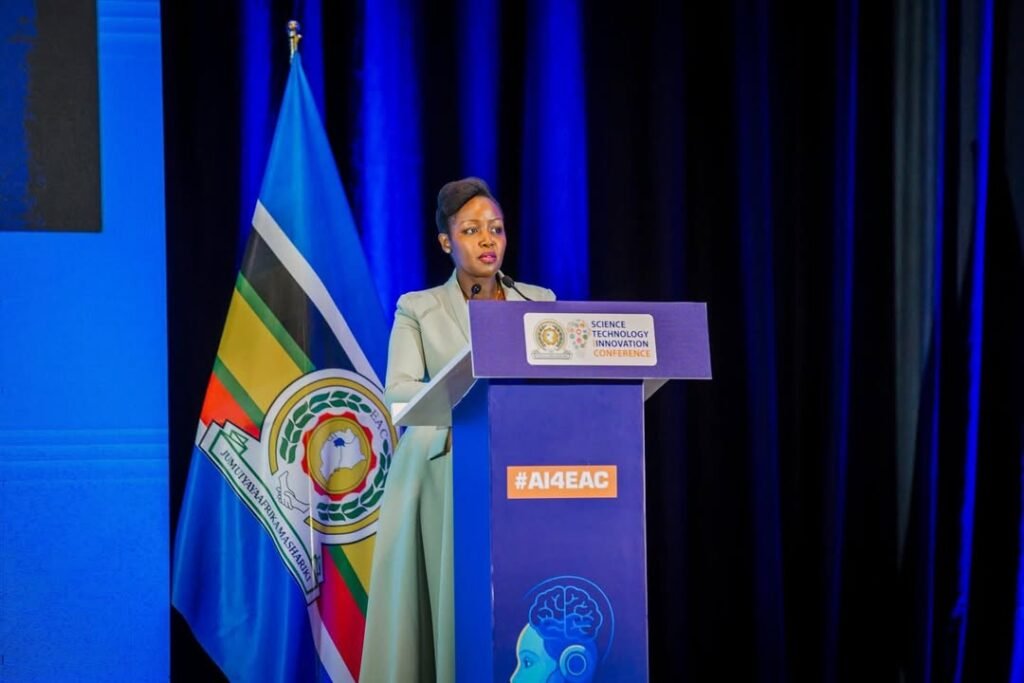
Kigali- Rwanda Rwanda’s Minister for ICT and Innovation Paula Ingabire has called on East African nations to stop building their digital futures on systems designed elsewhere and to treat artificial intelligence as a question of sovereignty, not just technology adoption.
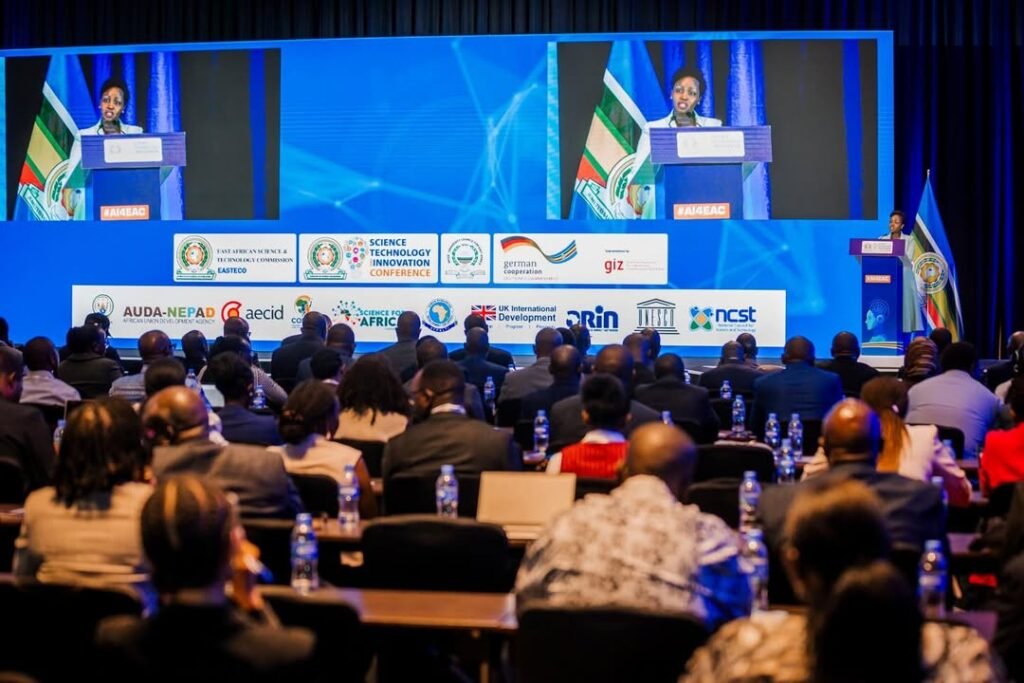
Speaking at the 4th EAC Regional Science, Technology and Innovation Conference, which opened Monday at the Kigali Convention Centre, Rwanda’s ICT Minister argued that the region’s best chance at capturing the value AI creates lies in acting as a unified bloc rather than eight separate nations chasing the same goal independently.
“The greatest risk is remaining consumers of AI systems built elsewhere,” she said. “Systems trained on foreign data may misdiagnose patients, misread markets, and misclassify crops.”
Her framing was direct: AI sovereignty, the ability of a region to design, govern, and benefit from its own intelligent systems is not a distant ambition but an immediate policy priority. She pointed to concrete examples already taking shape across the region, from AI tools protecting farmers against harvest losses to platforms extending financial services to populations previously locked out of the formal economy.
Rwanda itself, she noted, is already applying AI in healthcare logistics and disease surveillance.
But infrastructure alone is not enough. Rwanda’s ICT Minister’s core argument was about control: who owns the data, who writes the rules, and who captures the economic returns.
“Our data stays in our hands, our citizens’ rights are protected by our laws, our AI systems reflect our values, and the economic value generated by AI in East Africa accrues to East Africans,” she said.
She called for pooled regional research capacity, shared data infrastructure, and investment in local talent and drew a clear line on the terms of engagement with global partners. “Partnership must be built on equity, not dependency,” she said.
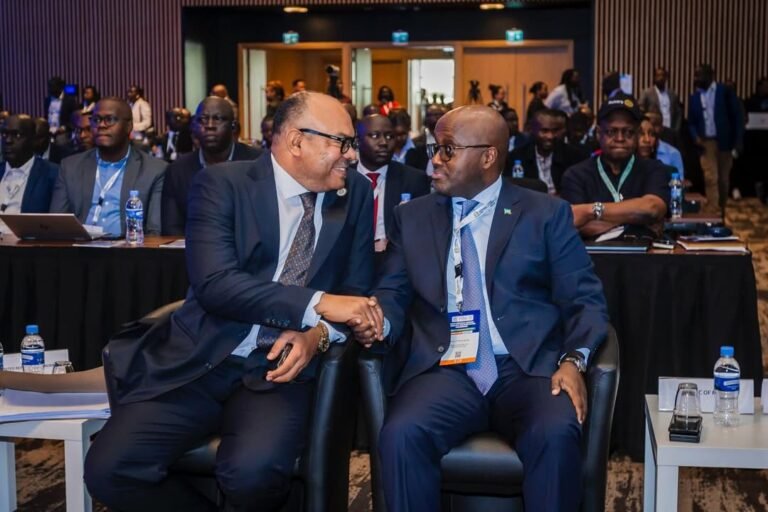
The three-day conference, hosted jointly by the East African Science and Technology Commission and the Inter-University Council for East Africa, is the first edition of the biennial gathering to place AI at the centre of its agenda. More than 680 delegates are attending, including ministers, heads of EAC institutions, private sector leaders, development partners, and civil society actors from all eight EAC Partner States.
Rwanda’s ICT Minister’s remarks land at a moment when the global AI race is accelerating fast, and the gap between nations that control their own data and those that do not is already beginning to show. For East Africa, the window to get on the right side of that divide is open but it will not stay open indefinitely.
Whether the political will expressed in Kigali this week translates into binding regional commitments will become clear before the conference closes on April 1.
About the Author