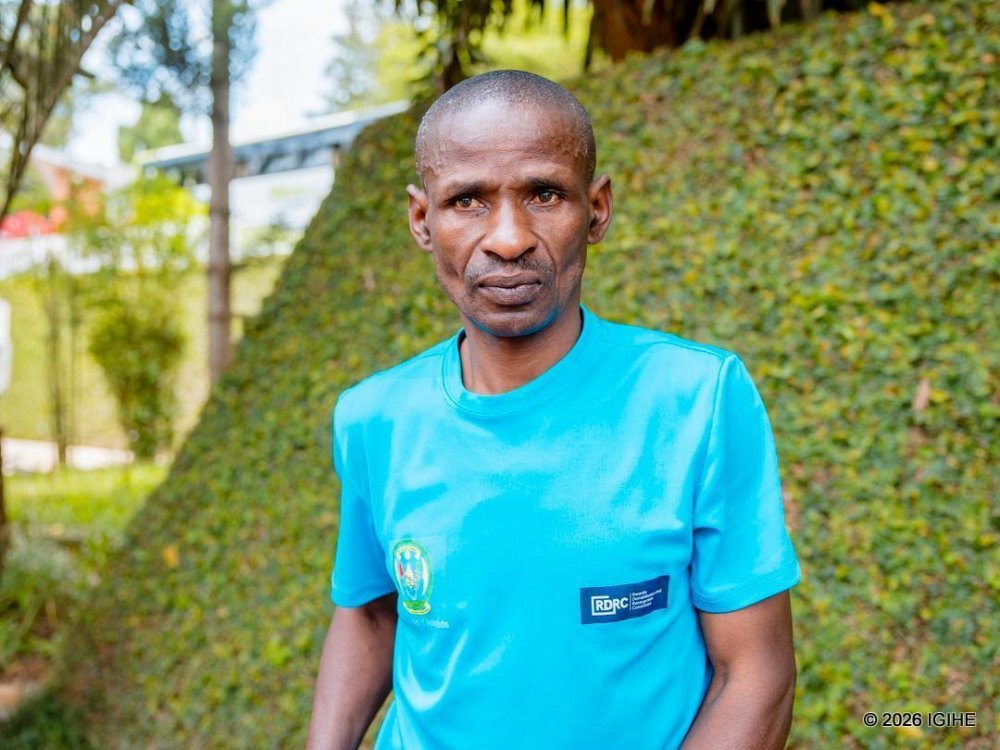
Emmanuel Twagirumukiza, a former FDLR fighter who defected from the forests of the Democratic Republic of Congo (DRC), says the group remains entrenched, continues to recruit youth, and has not abandoned its longstanding plan to destabilise Rwanda.
Twagirumukiza’s statements come as the DRC government has repeatedly downplayed the FDLR’s strength, arguing that the group consists mainly of elderly fighters and poses little threat.
Last month, Patrick Muyaya, spokesperson for the DRC government, denied any cooperation between his country and the FDLR. He told journalists that Rwanda should not continually cite the FDLR issue, as many of its members are now located in areas controlled by the AFC/M23, which often attribute regional instability to Rwanda.
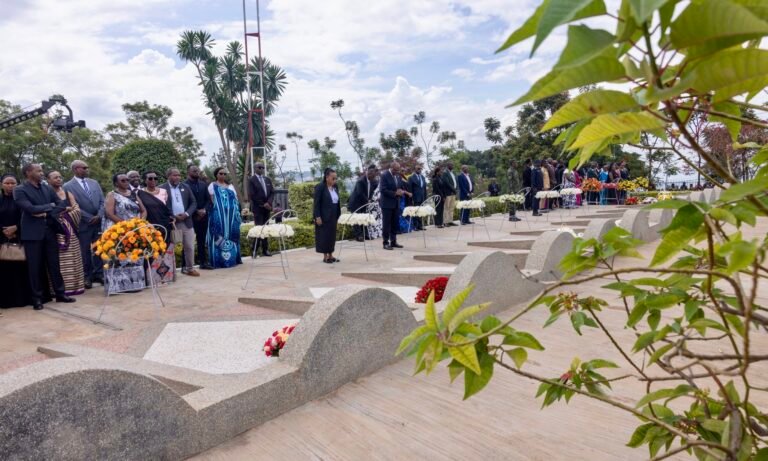
Twagirumukiza, however, challenges that view. He is currently completing reintegration training through the National Commission for Demobilisation and Reintegration (RDRC). On March 20, 2026, during a visit to the Kigali Genocide Memorial, he recounted his return to Rwanda in October 2025 after realising that the forests of the DRC, where he had lived for 31 years, offered no future prospects.
A native of Kigali, Twagirumukiza explained that during the 1994 Genocide against the Tutsi, he served in the former Rwandan Armed Forces (Ex-FAR) but fled to the DRC, like many others. In the Burungi camp in South Kivu, he underwent military training alongside both soldiers and civilians before joining the FDLR, which aimed to undermine Rwanda’s security.
He described the FDLR as a resilient organisation that continues to renew itself through recruitment, noting that many fighters are the children of former members.
“Those who claim the FDLR no longer exists are genocide deniers trying to weaken Rwanda,” he said. “The group has never disappeared. Even during my time in the DRC, we continued to train new soldiers, mostly young men. Today, they are still present, and the FDLR is reasserting itself.”
Twagirumukiza acknowledged that internal divisions have long affected the group. In 2016, a faction broke away to form a new group called CNRD. This group later merged into the MRCD alliance, led by Paul Rusesabagina, which included the military wing FLN. In 2018, the alliance carried out several attacks in Rwanda, killing nine civilians.
He recounted that while he was part of the CNRD, he was not among those sent to carry out attacks. “I stayed behind, but we understood that people were killed in Rwanda,” he said.
Twagirumukiza left the forests in 2025 after realising that, aside from the promises of their leaders, continuing the fight would achieve nothing. He reflected on the group’s internal divisions and decided to return to Rwanda to rebuild his life.
“I left to find unity and help rebuild my country,” he said. “I urge others still in the group to go home. I will return and support rebuilding without harming anyone.”
Twagirumukiza also described the lasting impact of the 1994 Genocide against the Tutsi. “What happened cannot happen again. Witnessing the genocide’s horror firsthand motivates me to prevent anyone from trying to repeat it,” he said.
He noted that many older fighters in the DRC remain unwilling to settle down or pursue normal lives, focusing solely on armed struggle. He praised Rwanda for the progress it has made since 1994.
The insecurity in the region dates back to 1994, when the Ex-FAR and Interahamwe forces murdered more than a million people in the Genocide against the Tutsi and fled to Zaire (now DRC). These groups were allowed to establish camps near Rwanda in Goma and Bukavu, which soon became military bases.
There, they recruited new fighters, trained them, and launched attacks back into Rwanda. This coalition later evolved into FDLR.
Today, it is estimated that between 7,000 and 10,000 FDLR fighters remain in the DRC, harboured by the Kinshasa government and collaborating with government forces in the fight against the M23 rebel group.
About the Author