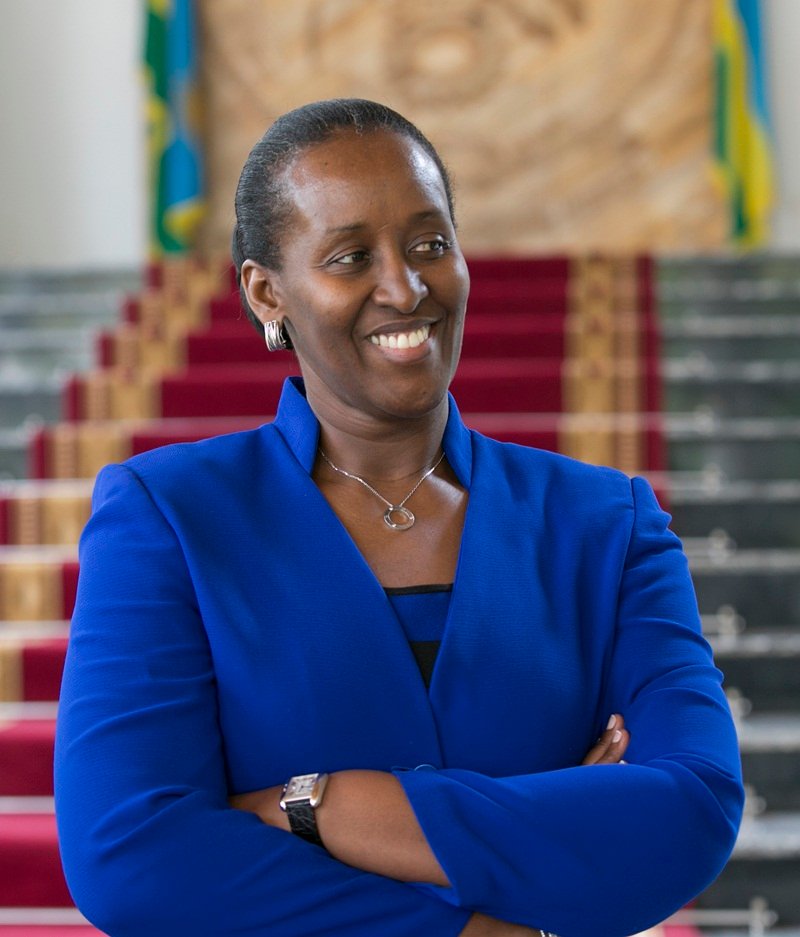
In a speech that went well beyond a routine party assembly, First Lady Jeannette Kagame offered one of the clearest public articulations yet of how Rwanda thinks about national identity, and who is responsible for keeping it alive.
Speaking at the recently concluded 6th General Assembly of the RPF-Inkotanyi Women’s League, Mrs. Kagame addressed the concept of Ubunyarwanda (Rwandanness), directly and at length. It is not, she said, simply a word describing ethnic or national belonging.
It is a mindset, a set of behaviours, and a way of relating to others that is grounded in Rwandan cultural values and language. And crucially it does not transmit itself.
“Rwandanness is inherited, but more importantly, it is taught,” she told the 2,000 delegates gathered at Intare Conference Arena in Rusororo. “This is where we have a major responsibility as parents raising Rwanda.”
To illustrate what is at stake, she pointed to the generation of Rwandans who spent years in exile before 1994. They lived in foreign countries, raised children there, and faced constant pressure to assimilate. Many of those children grew up speaking other languages, attending foreign schools, and absorbing other cultures. It would have been easy, she said, to simply let Rwanda go.
They refused. Families in the diaspora built informal cultural groups what she called amatorero, specifically to pass on Rwandan values, traditions, and language to children who had never set foot in the country. Those cultural groups, she said, became serious schools of identity, held together by families who understood that without deliberate effort, something essential would be lost.
That history is not ancient. Many of the women in the room on Saturday lived it. And Mrs. Kagame’s point was direct: the same deliberate effort that preserved Rwandan identity in exile is required today, at home, in a world where foreign influences arrive not through migration but through a phone screen.
She closed this thread of her speech with a verse from the late poet and songwriter Rugamba, whose work is among the most cherished in Rwandan cultural memory. His message, she said, is still the right one: take what is good from what you encounter elsewhere, discard what does not serve you, and never abandon what made you.
For a country that has staked much of its development narrative on openness to investment, to technology, to global integration, Mrs. Kagame’s remarks are a quiet but firm counterweight. Rwanda wants the world, but on its own terms, with its own values intact.
About the Author