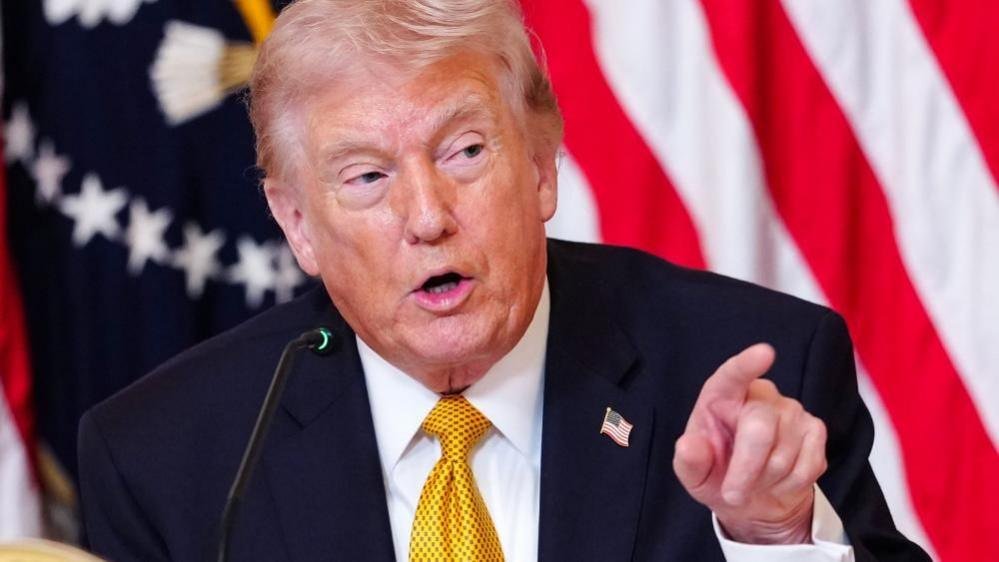
US President Donald Trump has reignited debate over Africa’s global importance after praising the continent’s economic potential during remarks at an investment forum, as world powers intensify competition for influence and resources across the region.
Speaking at an event organised by the FII Institute, known for hosting the Future Investment Initiative in Riyadh, Trump said Africa held significant untapped value, particularly if countries worked more closely together.
“Africa has tremendous value on its land and if they can unify and get together, I think it’s got tremendous potential. I have a lot of very smart friends putting everything into Africa,” he said, responding to a question about his vision for the continent.
The remarks contrast with his 2018 comments, when he reportedly referred to some African nations as “shithole countries” during a White House meeting.
The remarks were not made in a public speech but leaked to the media afterward and were first reported by outlets including The Washington Post and The New York Times.
The comments sparked global backlash, particularly across Africa, with the African Union condemning them as offensive and unacceptable, while several African governments demanded clarification or issued diplomatic protests.
Trump later denied using those exact words, although multiple attendees said he did.
Analysts say the latest comments reflect a broader recognition among global powers of Africa’s growing strategic and economic importance.
According to insights shared by Emeka Ajene (@eajene) on X, citing a recent publication by The Economist, global interest in Africa is intensifying across multiple fronts.
The United States is seeking access to critical minerals such as copper, lithium and cobalt to reduce reliance on Chinese supply chains, using a mix of commercial diplomacy, financing and aid, with countries including the Democratic Republic of Congo, Zambia, Namibia and Guinea on its radar.
China, meanwhile, continues to deepen its footprint across the continent, investing in mining assets, infrastructure and consumer markets.
Chinese firms have acquired stakes in resources ranging from rare earths in Tanzania and the Democratic Republic of Congo to gold in Ghana and Ivory Coast, while also expanding into real estate and agriculture across multiple African markets.
European energy companies are also increasing investments, with firms such as TotalEnergies, Eni, Shell, BP and Equinor advancing major oil and gas projects in countries including Mozambique, Libya, Nigeria and Angola.
At the same time, Gulf states are expanding their presence in Africa’s food systems and logistics networks, even as some face ongoing regional tensions.
Saudi Arabia’s Public Investment Fund has invested heavily in agribusiness, while companies such as DP World and AD Ports Group have taken strategic positions in key ports across Tanzania, Egypt and Angola.
Other Gulf-backed firms, including Vision Invest and Olam Agri (backed by Saudi investors), have expanded into agribusiness and industrial infrastructure across multiple African markets.
Meanwhile, Qatar Airways has secured a majority stake in Rwanda’s Bugesera International Airport, while Emirates Airlines and Etihad Airways continue to strengthen aviation and trade links with key African economies.
The convergence of these interests underscores a broader shift, with African economies increasingly positioned at the centre of global supply chains and investment strategies.
Reactions on X, formerly Twitter, reflected mixed sentiment. Some users viewed Trump’s remarks as a recognition of Africa’s rising global relevance. “Everyone wants a piece of Africa right now,” wrote Emeka Ajene.
Others reacted directly to the change in tone. “Africa is not a shithole anymore?” wrote Ceeya Mchunu DE (@RealCeeya), referencing past controversy.
There were also calls for strategic unity. “No lies there, but unified states should be culturally aligned. West Africa AES is the best framework we have now,” wrote @lloyd jong.
Analysts say the contrasting reactions reflect a broader debate across the continent, whether Africa can translate rising global interest into long-term economic gains.
About the Author