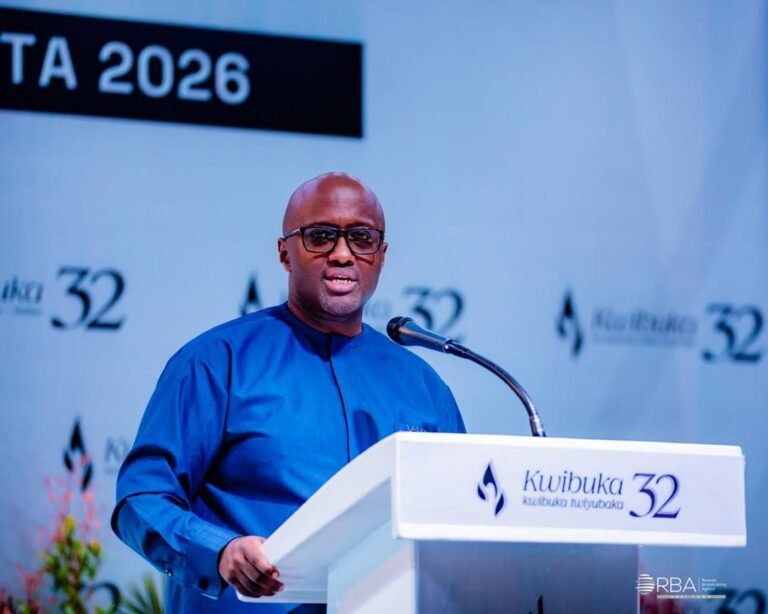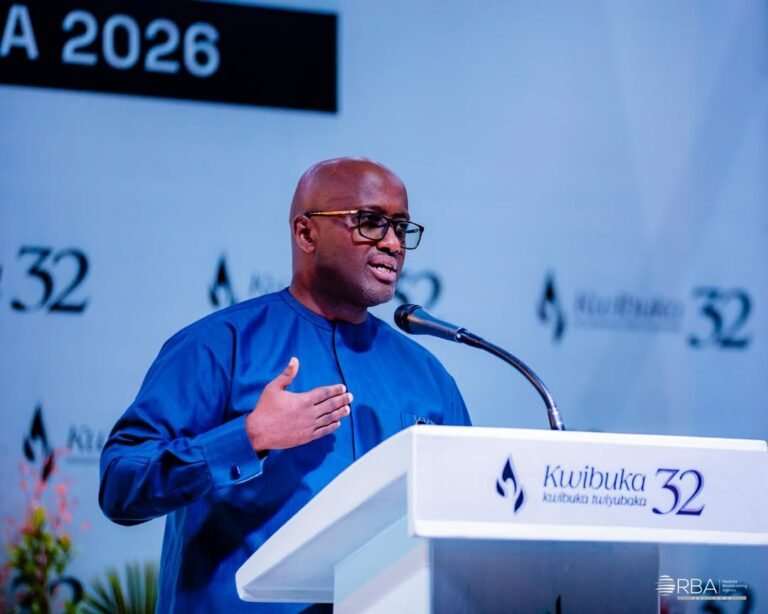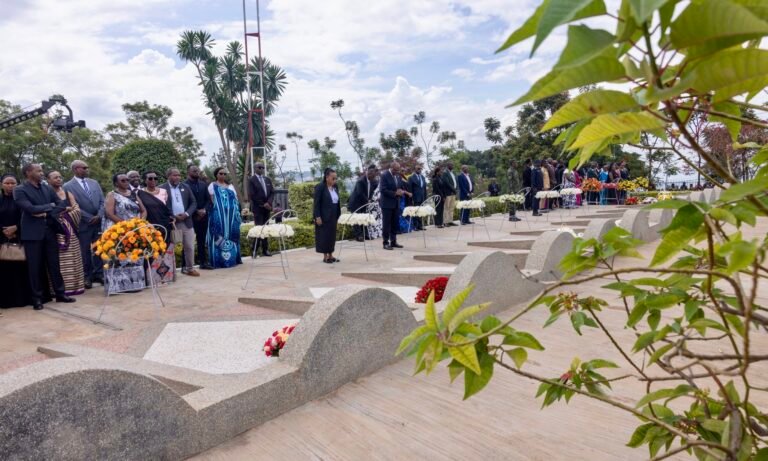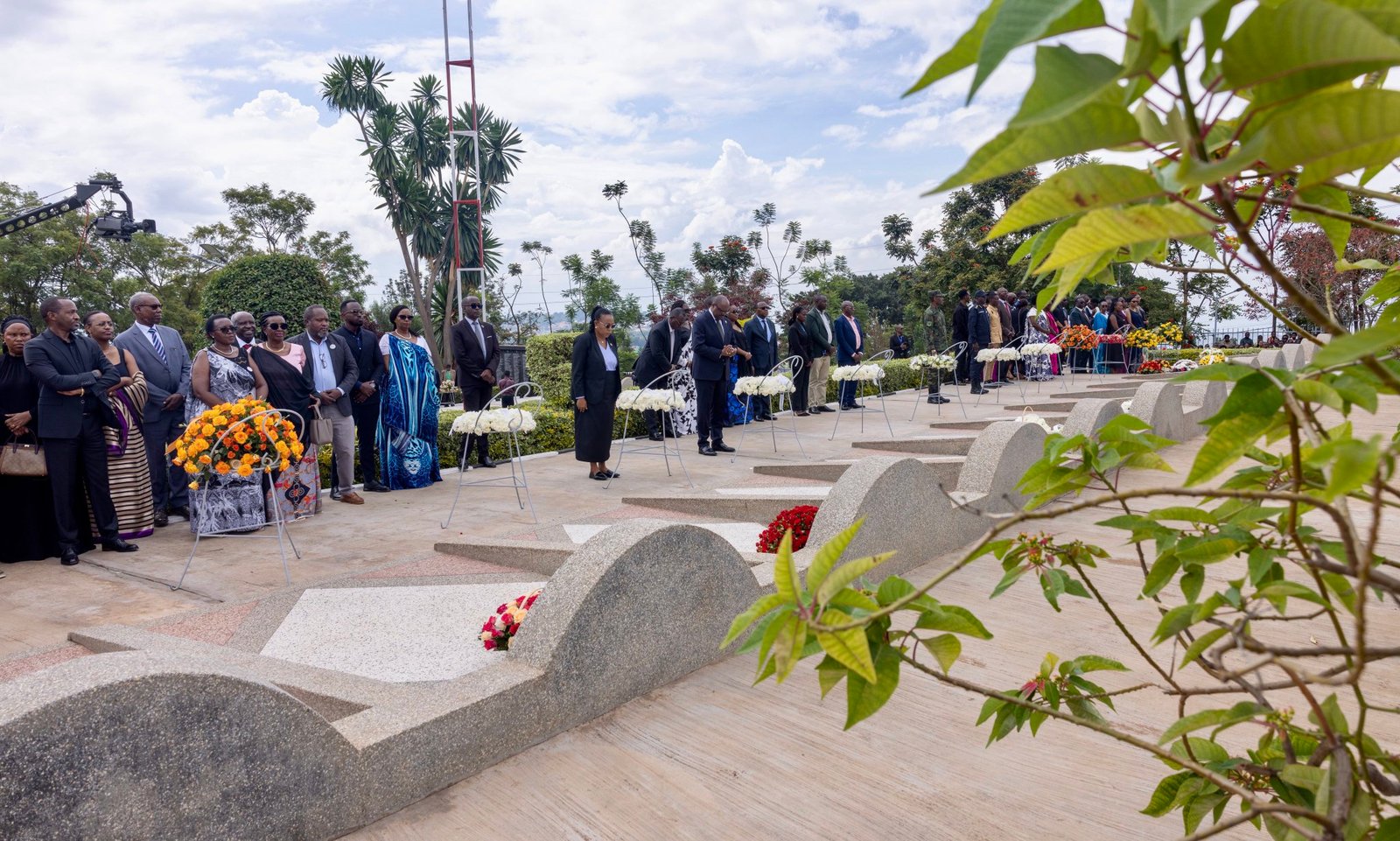
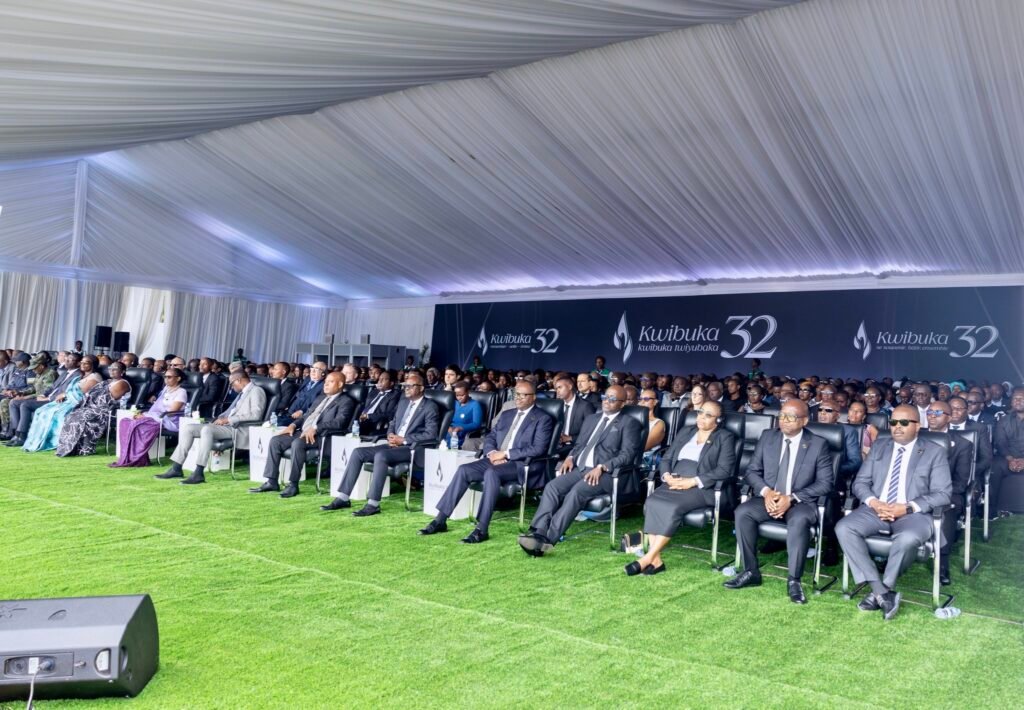
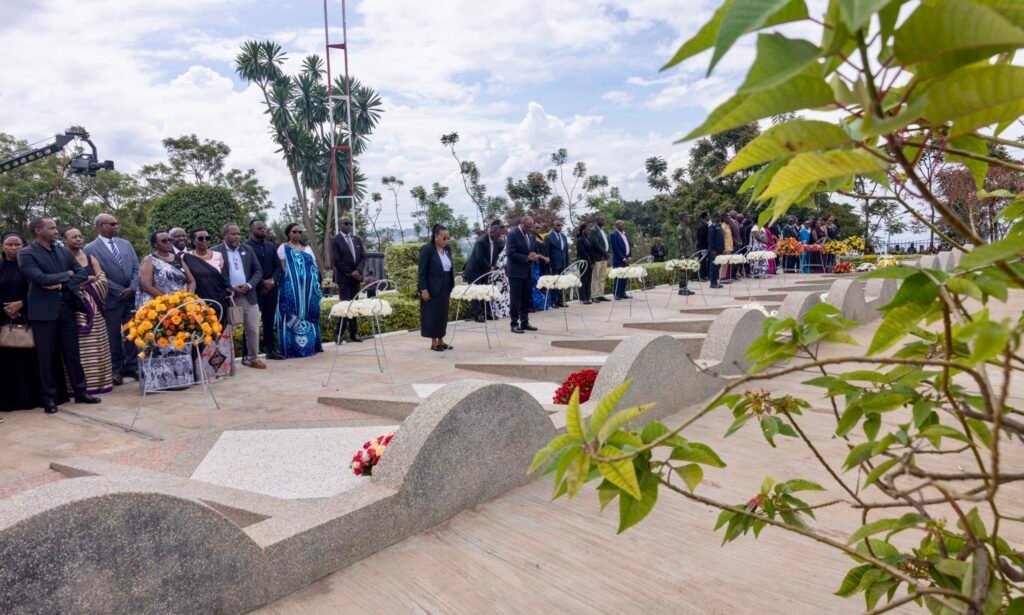
Rwanda’s Prime Minister Dr. Justin Nsengiyumva led senior government officials on in a solemn ceremony at the Rebero Genocide Memorial in Kigali, closing the National Mourning Week of Kwibuka32 by honoring the politicians who were killed in 1994 for refusing to take part in the Genocide against the Tutsi.
The Rebero ceremony was the scheduled national closing event of the week of mourning, which ran from April 8 to 13, bringing the formal first chapter of the 100-day commemoration period to a close.
The Prime Minister was joined by senior officials and diplomatic representatives, who gathered at the memorial site in Kicukiro District to lay wreaths on the graves of political figures who paid with their lives for standing on the right side of history.
Rebero is not just a burial ground, It is the one site in Rwanda’s national commemoration calendar specifically dedicated to political conscience.
The memorial holds the remains of more than 14,400 genocide victims, and the ceremony each April 13 honors the prominent politicians among them moderates from across party lines who were assassinated at the very start of the genocide for opposing it.
These were men and women who knew what was coming and chose not to run. They were killed not because of their ethnicity, but because of their convictions.
Their graves at Rebero carry a message that cuts through every political era: power used to protect the innocent is the only power worth having.
Each year, the closing ceremony at Rebero specifically remembers politicians who were killed because of their opinions, which stood firmly against genocide ideology.
The week of mourning featured a series of national events, including the Kwibuka International Conference at Intare Conference Arena, the Our Past event at Nyanza Genocide Memorial, and a Walk to Remember in Kicukiro District.
The week opened on April 7 when President Paul Kagame launched Kwibuka32 with a firm warning against the distortion of Rwanda’s history, telling the nation that those attempting to rewrite the past “have a real challenge on their hands.”
Prime Minister Nsengiyumva himself was active throughout the week. He presided over a commemoration in Ngororero District, urging residents to strengthen unity and confronting the fact that the district ranks 25th out of Rwanda’s 30 districts in unity and reconciliation indicators.
His presence at both Ngororero and the Rebero closing underscored the government’s intent to use Kwibuka not only as remembrance, but as a real diagnostic tool for reconciliation gaps still to be closed.
This year’s commemoration was held under the theme “Remember – Unite – Renew,” with the African Union marking Kwibuka32 at its Addis Ababa headquarters, including the official launch of the AU Human Rights Virtual Memorial, which now carries a dedicated component on the 1994 Genocide against the Tutsi.
In London, more than 400 people gathered at St Marylebone Parish Church for Kwibuka32, with the Commonwealth Secretary-General among the dignitaries present.
In Seoul, the Rwandan Embassy hosted an official commemoration featuring a Walk to Remember and a call from Rwanda’s Ambassador to the international community to treat genocide denial not as opinion, but as a continuation of the genocide itself.
The global footprint of Kwibuka32 signals something clear: Rwanda has successfully internationalized the memory of 1994, transforming what was once a story the world ignored into one it now marks from New York to Nairobi to Seoul.
Commemoration activities will continue in both public and private institutions through July 3, marking the full 100 days during which the genocide unfolded in 1994.
That means schools, workplaces, local governments, and community organizations across Rwanda will continue holding events, testimonies, and educational sessions for nearly three more months.
About the Author