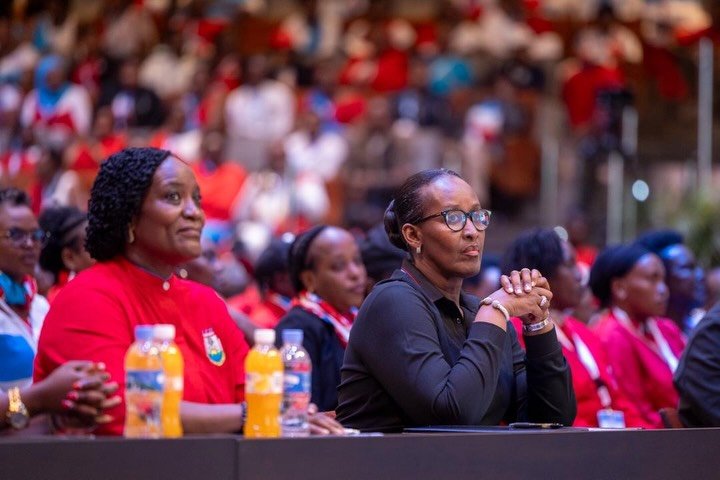
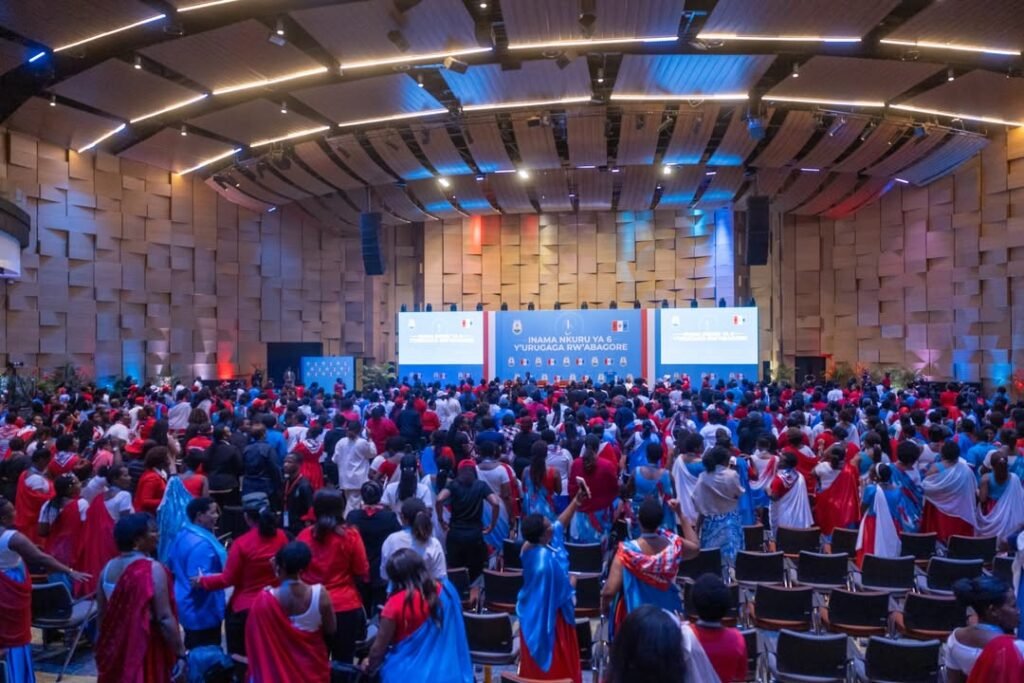
Speaking at the 6th General Assembly of the RPF-Inkotanyi Women’s League on Saturday, Mrs. Kagame set aside the policy language and asked the 2,000 women in the room at Intare Conference Arena to pause with her and honour a group of people who rarely receive formal recognition: the women who made the liberation of Rwanda possible without ever carrying a gun.
“I cannot go further without thanking the parents who gave birth to the liberators,” she said, “the women who fought alongside their men, the parents who raised children while the Inkotanyi were fighting to bring us back home, and those children who lived through the absence caused by that long struggle. She asked the room to join her in thanking them.
The tribute covered three distinct groups. First, the mothers, women who raised sons and daughters who would go on to join the liberation struggle, often without knowing what lay ahead, and who bore the weight of that choice long after their children had left.
Second, the women who stood beside their husbands on the frontlines, sharing not just the sacrifice but the cause. And third, a group that is almost never spoken of in formal settings: the children. The ones who grew up with a parent-shaped hole in their lives, who lived through years of a father or mother being absent for a war they were too young to fully understand, and who carried that absence into adulthood.
ALSO READ: First Lady tells 2,000 women that loving the country must be a daily act, not a slogan
Mrs. Kagame also honoured the broader diaspora families who refused to let Rwanda disappear in exile. Scattered across Uganda, Congo, Burundi, and further afield, many of these families built informal cultural schools amatorero to ensure that children born outside Rwanda would still know where they came from.
That effort, she said, was itself an act of resistance. “They refused to lose the heart of Rwanda,” she said.The tribute was not incidental to the speech. Mrs. Kagame wove it directly into her argument about why Rwandan identity must be actively maintained today.
The women of the liberation did not have stable institutions or government programmes to rely on, they had family, culture, and will. The message to the Women’s League was clear: that inheritance is yours. Do not put it down.
March is Women’s Month in Rwanda. Saturday’s assembly was its most significant public event yet.
About the Author