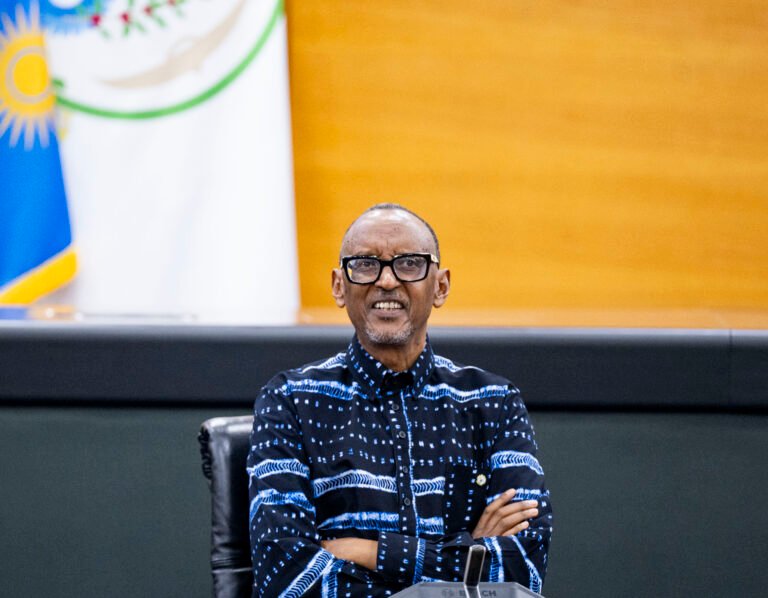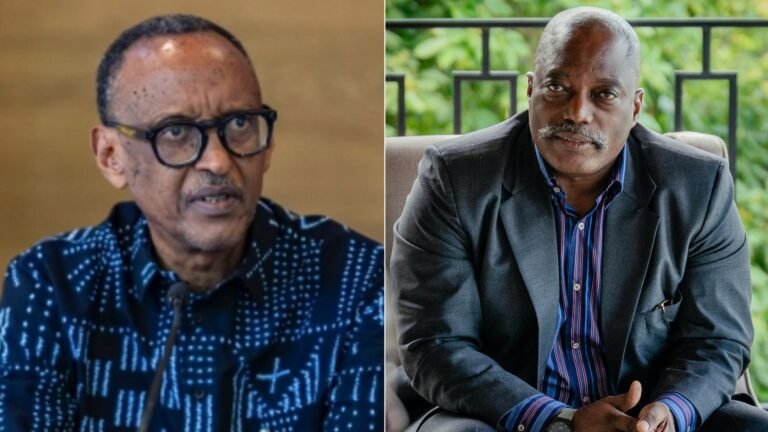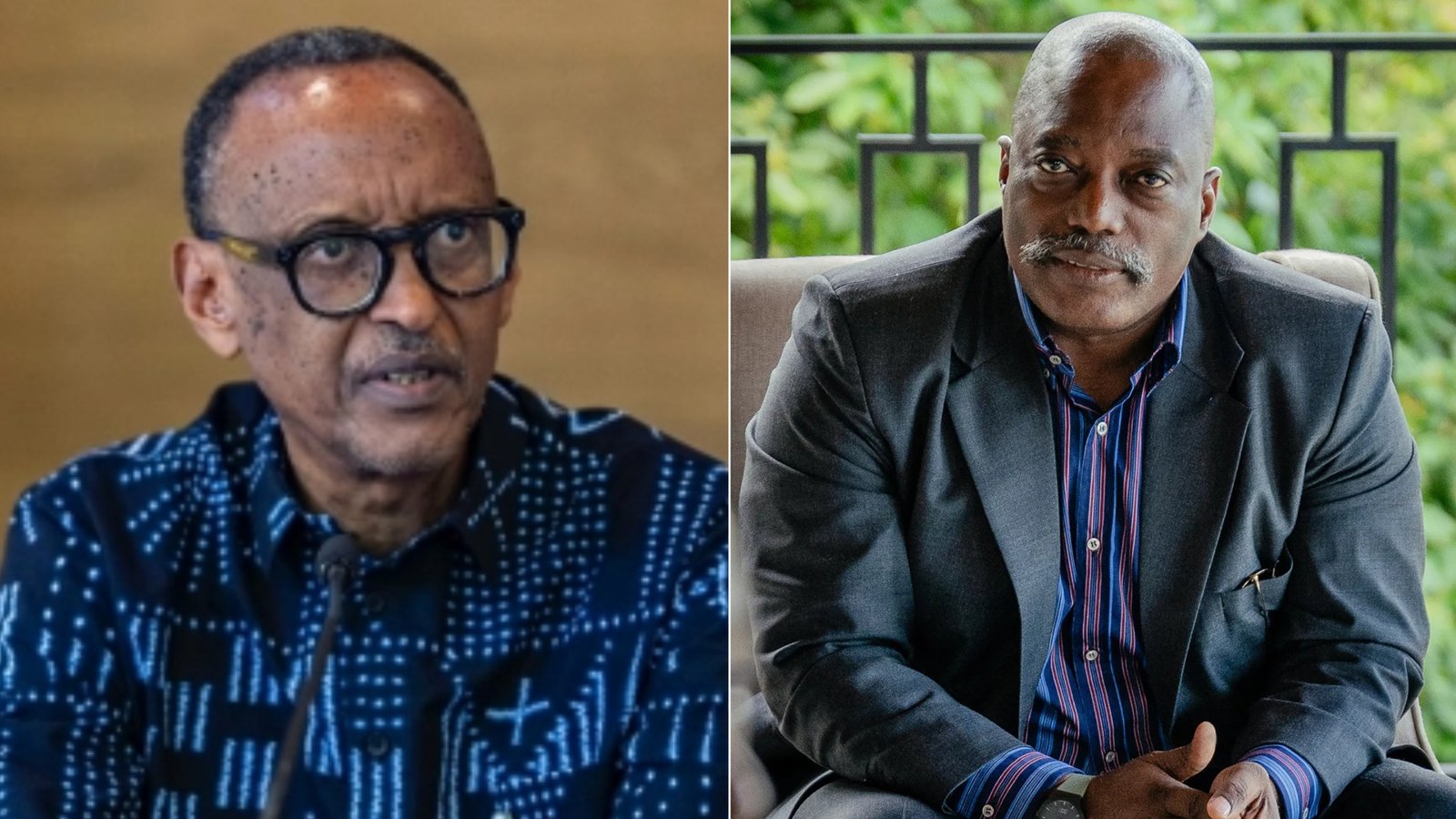
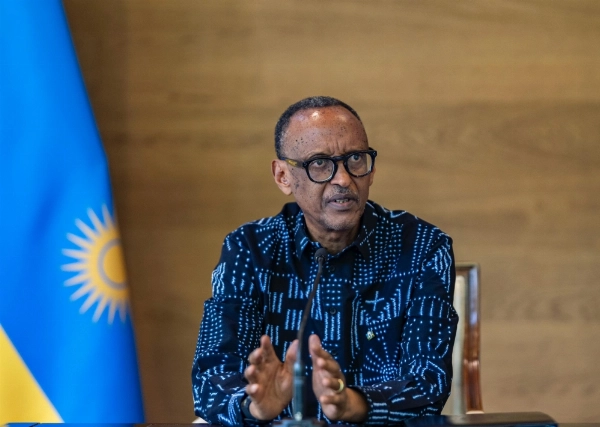
President Paul Kagame said he would welcome any Congolese figure who wants to contribute to stability in eastern Congo and questioned why he would block the passage of former DRC President Joseph Kabila, given the political circumstances Kabila faces at home.
Asked whether Kabila’s presence in M23-held Goma meant he received a green light from Kigali, Kagame did not give a direct answer. Instead, he said, “I would be happy to ensure that those who want to come and be part of eastern Congo, who belong there or belong to Congo and want to be part of the struggle to get a stable Congo, I would welcome them. It doesn’t have to be Kabila.”
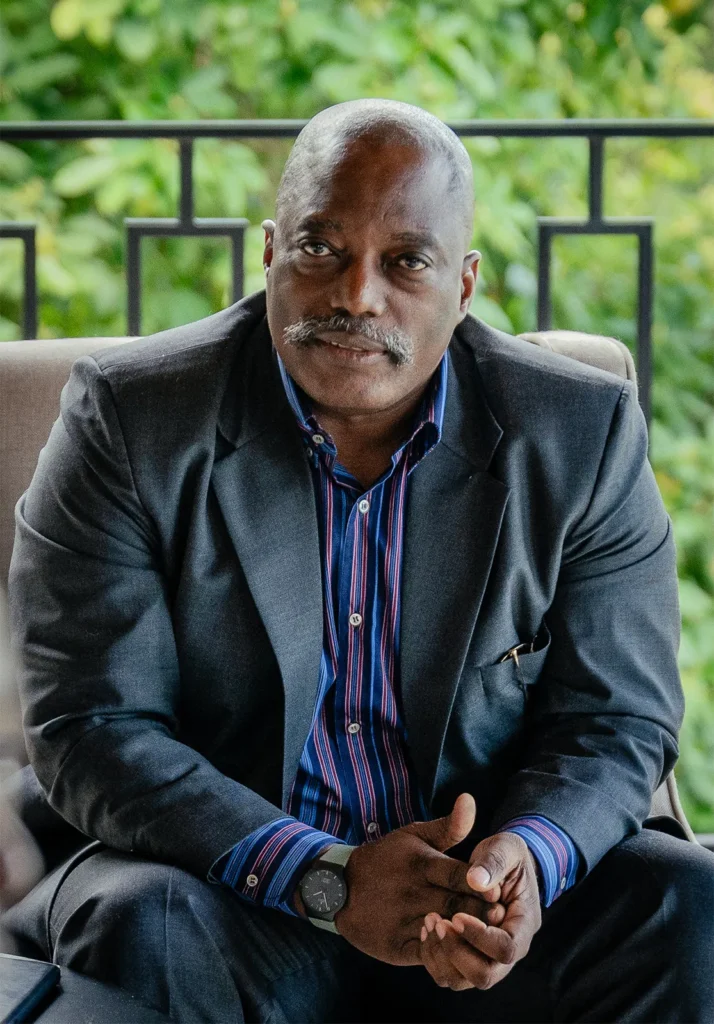
On Kabila specifically, Kagame described the former president’s situation as a product of the current Congolese government’s actions against him. “The current government has been running after him, has prosecuted him, has taken over some of his assets, or whatever they did,” he said. “So how does this person say he wants to confront this situation in his country, and I refuse him passage? What sense would it make?”
Kagame did not directly confirm or deny that Kabila received any form of clearance from Rwanda. This comes at a time when tensions between Rwanda and the Democratic Republic of the Congo are already high, especially after repeated accusations from Kinshasa that Kigali backs the March 23 Movement, something Rwanda continues to deny. In recent months, the government of President Felix Tshisekedi has intensified pressure on Kabila, including legal action, asset seizures, and political isolation. That campaign has pushed Kabila out of the center of Congolese politics and into a more uncertain position, which now overlaps with the ongoing M23 crisis in eastern Congo.
For Rwanda and the region, this moment matters because it mixes two sensitive issues: armed conflict in eastern Congo and internal Congolese power struggles. If Kabila is now moving closer to areas controlled by M23, even symbolically, it risks reinforcing Kinshasa’s narrative that Rwanda is indirectly shaping Congolese politics. At the same time, Kagame’s position signals that Kigali wants to frame itself as open to any Congolese actor who claims to support stability, rather than being seen as choosing sides.
What happens next will likely depend on how Kinshasa reacts. If Tshisekedi’s government escalates its pursuit of Kabila while tensions with M23 continue, the situation could become more political than military. Regional mediation efforts, already fragile, may face new pressure as more actors enter the equation. The real question now is whether Kabila remains a sidelined figure or re-emerges as part of the broader power struggle shaping eastern Congo’s future.
About the Author