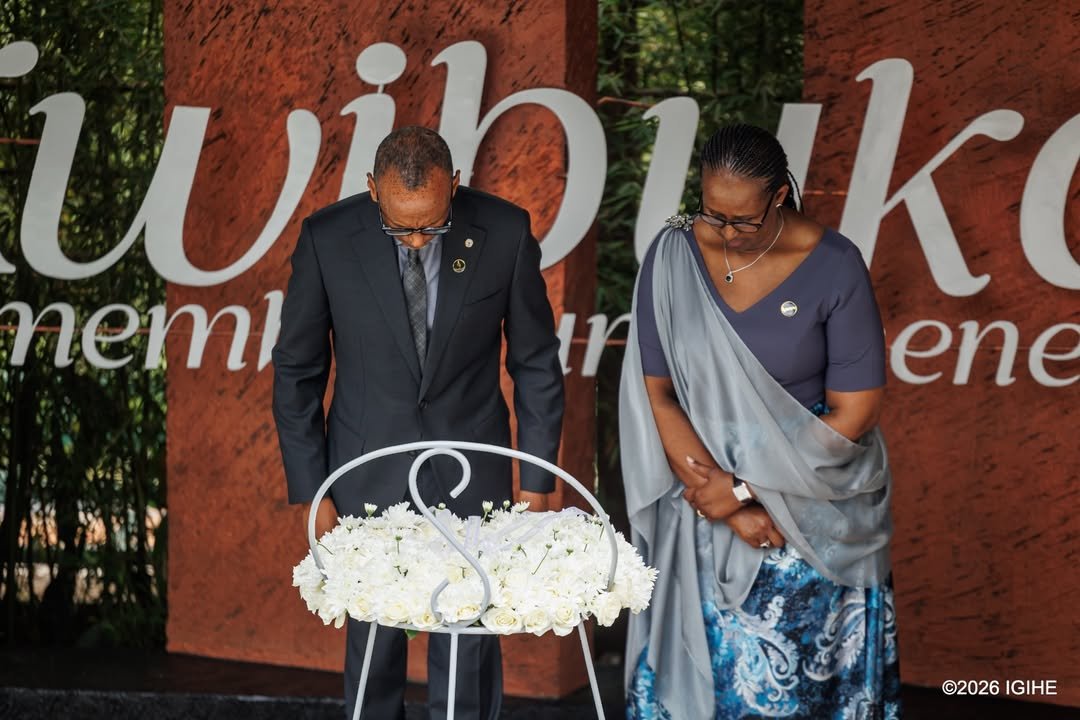
April 7, 2026 | Kigali
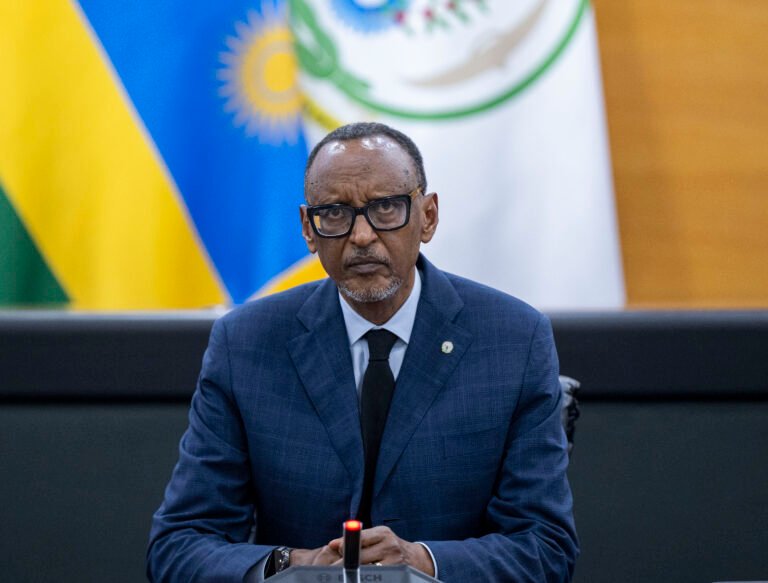
Rwanda’s President Paul Kagame issued a pointed warning on Tuesday that genocide denial is not simply a distortion of history; it is an active danger because denial follows the same pattern as the preparation for genocide itself, and that pattern, he said, is repeating in Rwanda’s region today.
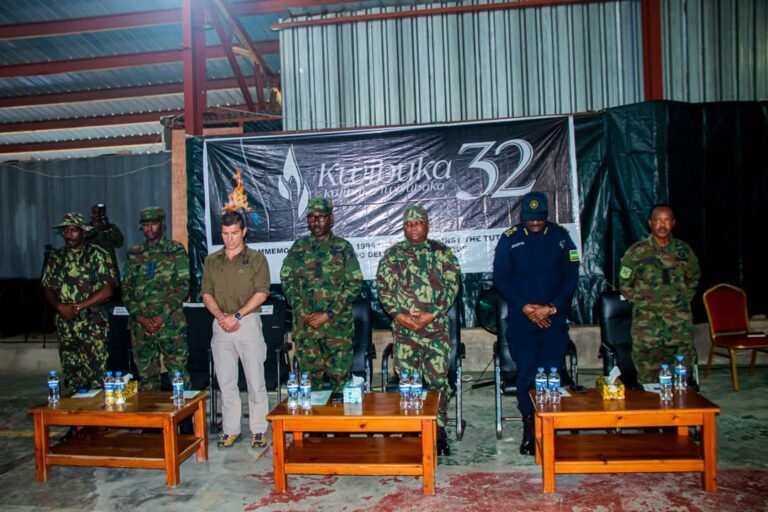
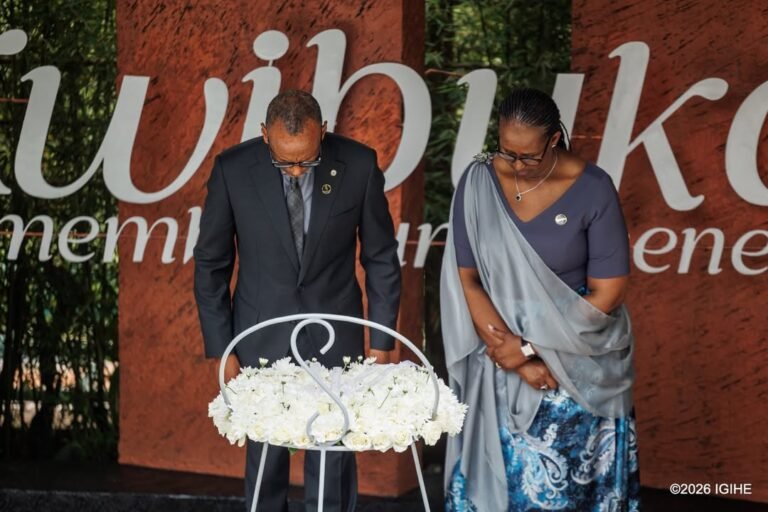
Speaking at the Kwibuka 32 national ceremony in Kigali, President Kagame described denial not as ignorance but as something much deeper: a deliberate choice that signals continued danger. “Genocide denial begins long before the genocide itself is committed,” he said.
He laid out the pattern with precision. Hate speech is dismissed as popular discontent. Behavior that should be condemned is rationalized. The preparations are masked by narratives of popular grievance and fear. A false moral equivalence is constructed between the targets of the genocide and the people planning it. “All of these elements were present in our own story,” President Kagame said.
He pushed back on the claim circulating in some political and academic circles that the 1994 genocide was spontaneous. It was not, he said. It was carefully prepared and carried out in plain sight. Militias were openly trained and indoctrinated. Weapons were imported in large quantities. Rwandans who opposed the preparations were threatened or killed. Before 1994, smaller massacres were used to normalize killing and measure the world’s reaction. The world, with very few exceptions, was indifferent.
President Kagame acknowledged what he described as a particularly troubling dimension: some who knew the truth at the time, who were even eyewitnesses, later became peddlers of distortion. He attributed this to political motivation. He noted that the legal record of the genocide is unambiguous: ringleaders were convicted in international courts based on rigorous evidence.
The Gacaca process documented the course of the genocide in every village and neighborhood across Rwanda, producing over fifty million handwritten pages across ten years of proceedings. In 2018, the United Nations General Assembly passed a resolution adopting the proper name, the genocide against the Tutsi, with support from every member state but one.
“The truth is undeniable,” President Kagame said, “and yet we still find people sowing doubt and twisting the facts up to today.” The United Nations has installed a permanent “Kwibuka Flame of Hope” at its New York headquarters, the first permanent installation at the UN dedicated specifically to the genocide against the Tutsi, as a lasting reminder of the international community’s duty to reflect on the consequences of indifference. President Kagame’s remarks on denial place that memorial in a sharper context: memory without accountability, he argued, is not enough.
About the Author