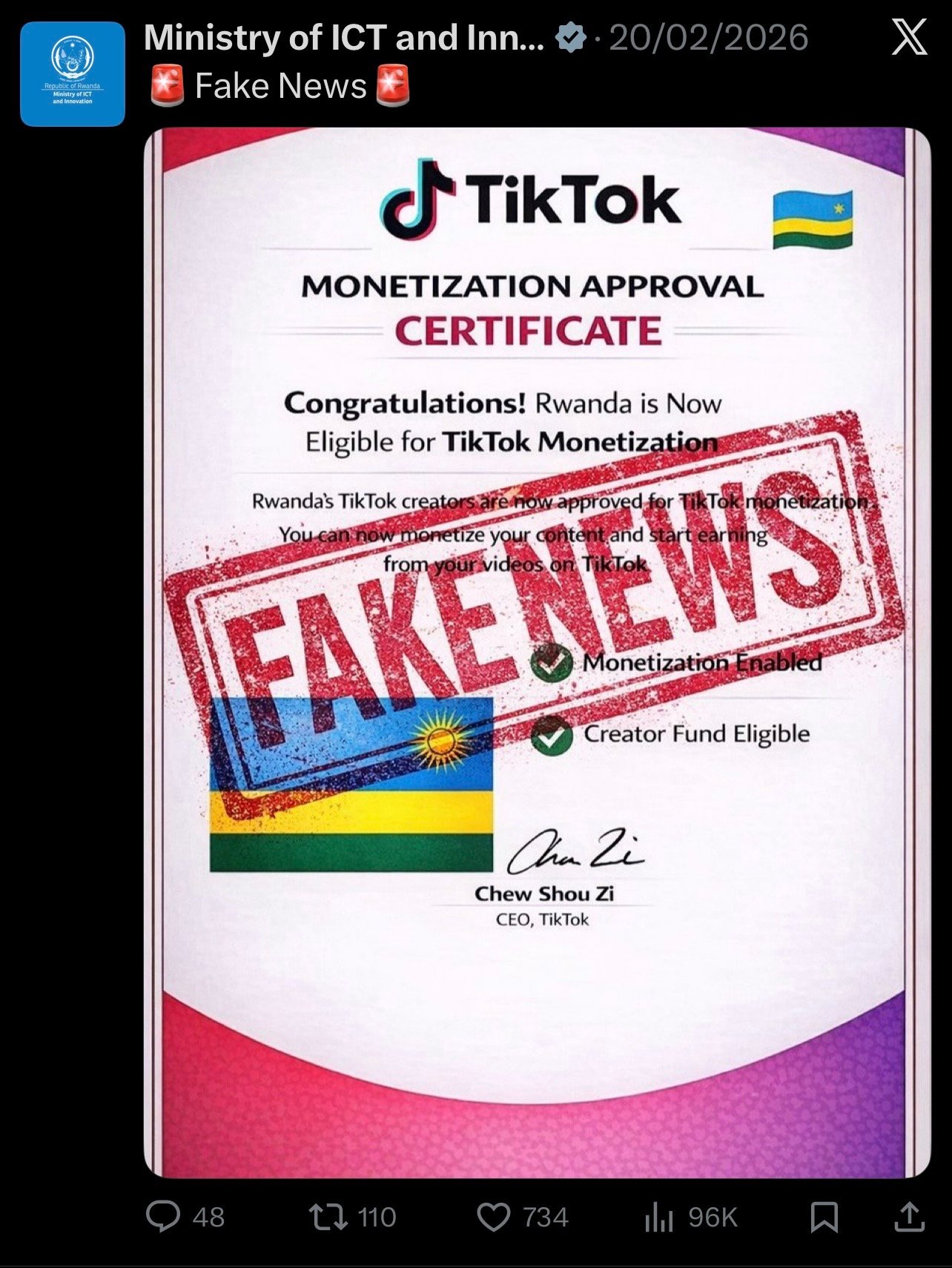
Screenshot
In recent weeks, many creators across Africa have circulated claims suggesting that TikTok has finally enabled monetization for creators in Rwanda. The claim spread widely through posts showing a supposed “TikTok Monetization Approval Certificate” bearing the Rwandan flag and a signature attributed to the platform’s CEO.
But the information is not true.
Nearly two weeks ago, on 20 February 2026, the Ministry of ICT and Innovation publicly dismissed the circulating graphic, labeling it fake news through a post on its official page on X.
The viral certificate claimed that Rwanda had been officially approved for TikTok monetization and that creators could start earning through programs such as creator funds and video revenue. However, the ministry clarified that TikTok has not announced any monetization approval for Rwanda.
Despite the clarification, the rumor has continued to circulate among creators and digital communities across the continent, creating confusion about whether Rwandan users can now earn directly from the platform.
The discussion around TikTok monetization in Rwanda is not new. In the past, Rwandan music star Bruce Melodie publicly appealed to Paul Kagame, to help push for social media monetization in the country so that local creators could benefit financially from the content they produce.
Bruce Melodie raised the issue during the 20th National Dialogue Council (Umushyikirano) in Kigali on 6 February 2026. While speaking in front of Paul Kagame and other leaders, he asked the government to help make it possible for Rwandan creators to earn money from social media platforms.
His point was simple: creators in other countries make money from platforms like TikTok, YouTube, and Facebook, but many Rwandans cannot access those earnings directly. He said some creators even have to register accounts under foreign nationalities to withdraw money from these platforms.
In response, President Kagame asked what requirements were needed for Rwanda to access those monetization systems. The Minister of ICT and Innovation, Paula Ingabire, explained that global platforms usually require a strong advertising market and other technical conditions before enabling monetization in a country.
For now, however, monetization tools such as creator rewards and similar revenue programs remain unavailable to Rwandan creators on TikTok. Most influencers and digital creators in the country continue to rely Live Gifts, on brand partnerships, advertising deals, and other external collaborations to earn income from their online presence.
The clarification from the government serves as a reminder that, despite the rapid growth of the creator economy in Rwanda, official monetization access on TikTok has not yet been granted.
About the Author