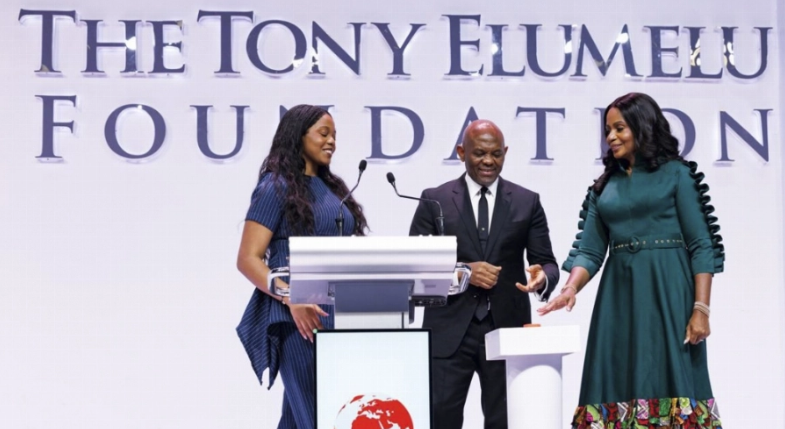
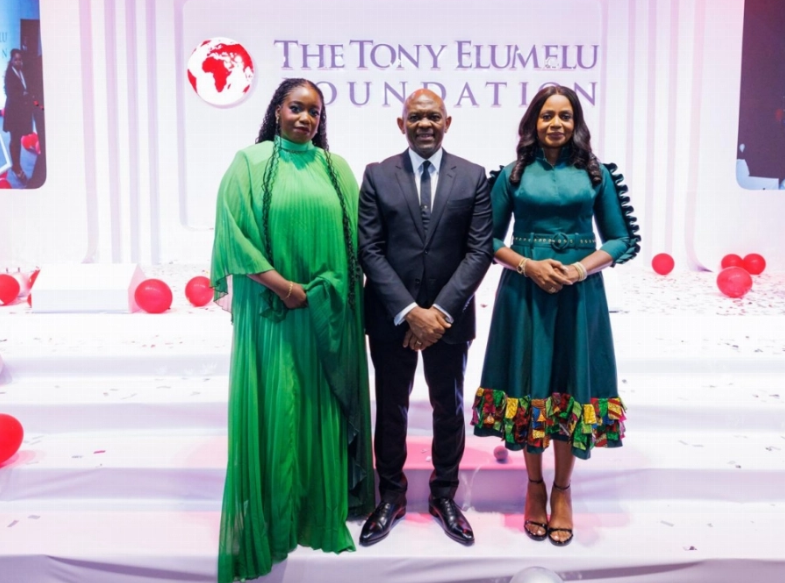
The Tony Elumelu Foundation has unveiled its 2026 cohort of entrepreneurs at the Transcorp Hilton in Abuja, selecting 3,200 founders who will be supported across four groups through partnerships spanning the continent, from Nigeria to Rwanda and beyond. TNT reports.
For Rwanda, the announcement carries local significance. Twelve entrepreneurs were selected, placing the country alongside Uganda, Tanzania, Zambia, Mozambique and South Africa, which also recorded 12 beneficiaries each, while Kenya led the region with 14.
The 12 Rwandan entrepreneurs cut across several sectors, with agriculture and agribusiness accounting for the largest share. That group includes Jacques Habimana, Kudakwashe Chikovo, Liliane Niyigena, Yanice Murangwa, Roy Guillain Nshuti and Obed Rurangirwa.
In food and beverage processing, the selected founders are Ben Fred Ineza and Rosine Mugisha, while other beneficiaries include Elyssa Tuyishimire in construction and the built environment, Innocent Bugingo in health care and health tech, Moise Izerimana in logistics and mobility, and Jean Pierre Ntakirutimana in energy and cleantech.
The selection shows Rwanda’s steady presence within the foundation’s network and its growing role in Africa’s entrepreneurial ecosystem. Each founder will receive $5,000 (about Rwf7.3 million) in seed capital, along with training, mentorship and access to a pan-African business community.
Throughout the event, speakers highlighted the foundation’s long-standing commitment to supporting young Africans. Founder Tony Elumelu reiterated a consistent message: Africa’s challenges will be solved by Africans who build businesses, create jobs and sustain them over time.
This year’s programme drew more than 265,000 applications from all 54 African countries, spanning sectors such as agriculture, artificial intelligence, healthcare and the green economy.
The final cohort reflects a strong focus on inclusion and youth empowerment, with 51 percent women, 75 percent aged between 18 and 35, and 13 percent persons living with disabilities. Selected entrepreneurs were chosen through a rigorous process assessing the clarity of their ideas, market feasibility, scalability, innovation and financial understanding.
For Elumelu, the scale of applications demonstrates that young Africans are rich in ideas but constrained by limited access to capital, mentorship and structured support.
“What we do is about improving lives and transforming our society,” he said, while thanking partners and supporters of the initiative.
He added that the foundation’s work is rooted in a broader mission of “democratising luck” and “democratising prosperity,” a philosophy that underpins the Tony Elumelu Foundation Entrepreneurship Programme.
Elumelu linked this mission to communities where the foundation and its partners operate, emphasising the goal of spreading lasting and visible prosperity. He also praised Nigeria’s President Bola Tinubu for fostering what he described as an enabling environment for enterprise and for supporting young entrepreneurs.
He stressed that Africa’s next phase of growth will be driven by small and medium-sized enterprises, not rhetoric.
“No one but us will develop Africa,” Elumelu told the new cohort. “The future of our continent is in your hands.”
The foundation’s 2026 support will be rolled out in four cohorts. The first, comprising 1,951 entrepreneurs, will be backed through partnerships with Heirs Energies, Transcorp Power, Transcorp Hotels, United Capital, Sèmè City and KfW through DEG Impulse.
A second cohort of 100 entrepreneurs will be supported in May through partnerships with the IKEA Foundation, UNICEF Generation Unlimited and the Government of the Netherlands.
In August, another 100 entrepreneurs will be selected through a partnership with the United Nations Development Programme and Rwanda’s Ministry of Youth and Arts. This group will consist entirely of Rwandans under the Aguka Ideation Programme, a local initiative that demonstrates how the foundation tailors its model to specific countries.
The final cohort, set for November, will include 1,049 entrepreneurs supported by the European Commission, the Organisation of African, Caribbean and Pacific States, the German Federal Ministry for Economic Cooperation and Development and GIZ.
Nadi Albino, deputy director of UNICEF Generation Unlimited, said the more than 265,000 applications reflect a continent full of young people eager to shape their future.
“It’s not just about the 3,200 selected,” she said. “The 265,000 applicants show the strength of young people’s ambition to make a difference in Africa.”
She added that Africa’s future lies not in aid, but in systems that enable young people to create value for themselves and others.
Prince Hangi, a green economy entrepreneur from the Democratic Republic of Congo and chief executive officer of YOUPENDI Group, offered a personal account of the foundation’s impact. He said its support has helped his company assist more than 15 small and medium-sized enterprises, including ventures in clean energy and sustainable agriculture.
Founded in 2021, the company has generated over $160,000 in revenue since 2024 and created more than 13 jobs.
Beyond financial gains, Hangi highlighted the broader community impact, including projects that reduce carbon emissions, curb deforestation and promote sustainable development.
Dr Owen Omogiafo, group chief executive officer of Transcorp Group, said the partnership with the foundation reflects a shared commitment to expanding opportunity and delivering practical impact. She noted that the group has already supported more than 500 entrepreneurs with about $2 million and plans to scale up its efforts.
She urged the new cohort to make the most of the opportunity.
“To whom much is given, much is expected,” she said.
By the end of the event, a clear message emerged: the foundation is not just funding businesses, but building a pipeline of African entrepreneurs capable of creating jobs, solving problems and driving inclusive growth.
In Abuja, the occasion was framed not merely as a celebration, but as a call for the next generation to carry that mission forward.
About the Author