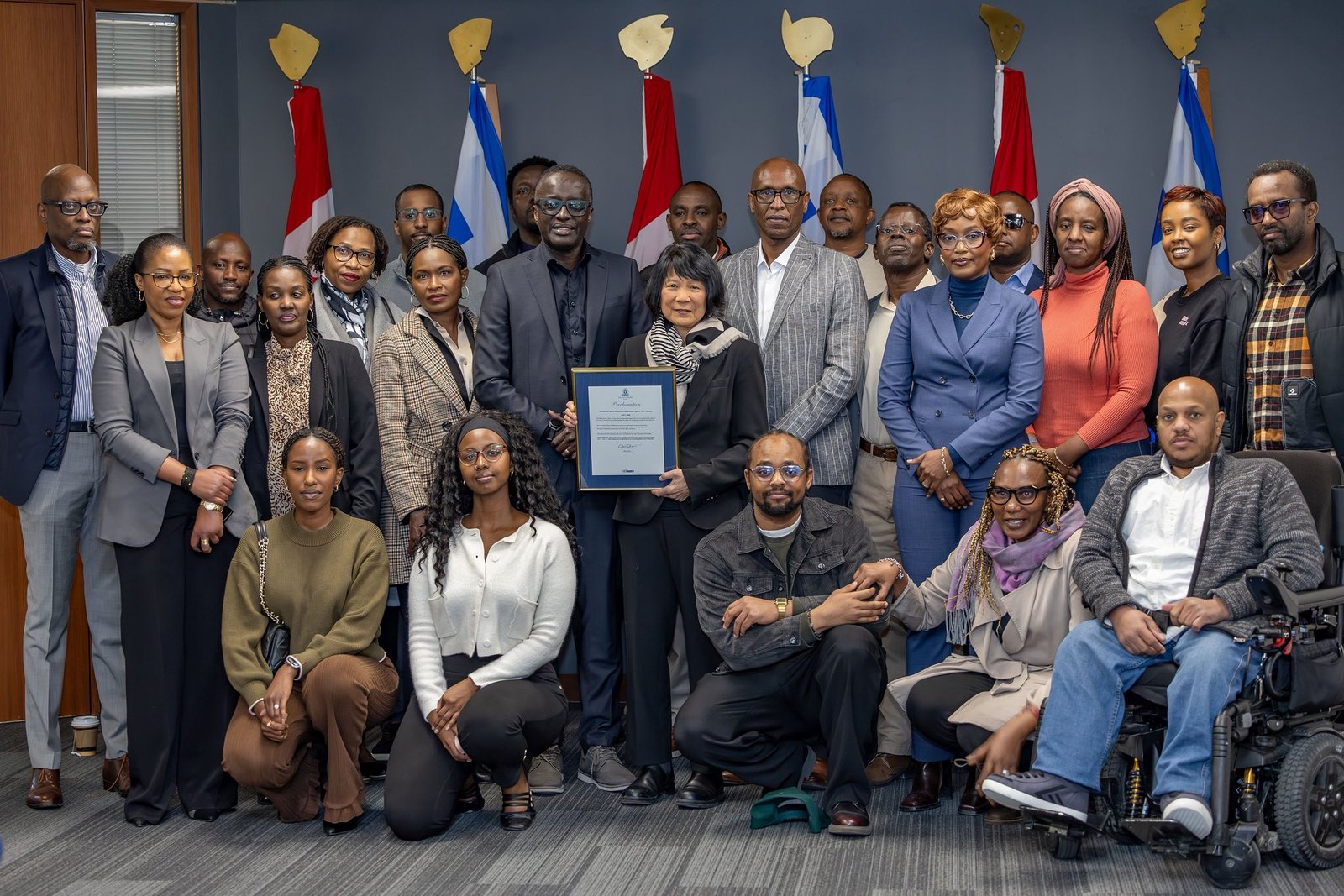
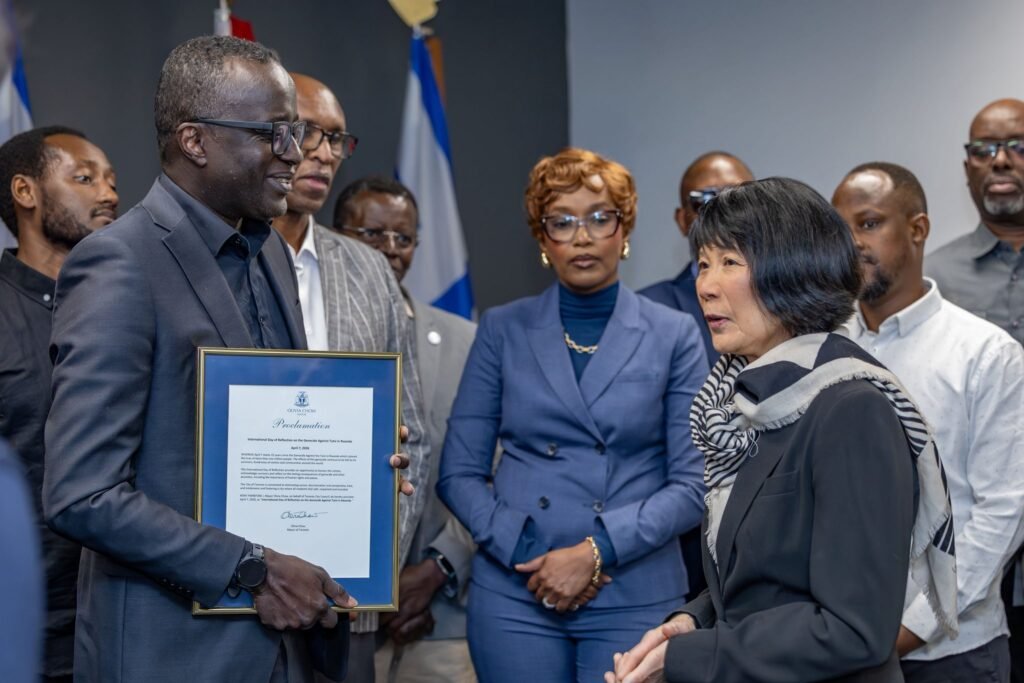
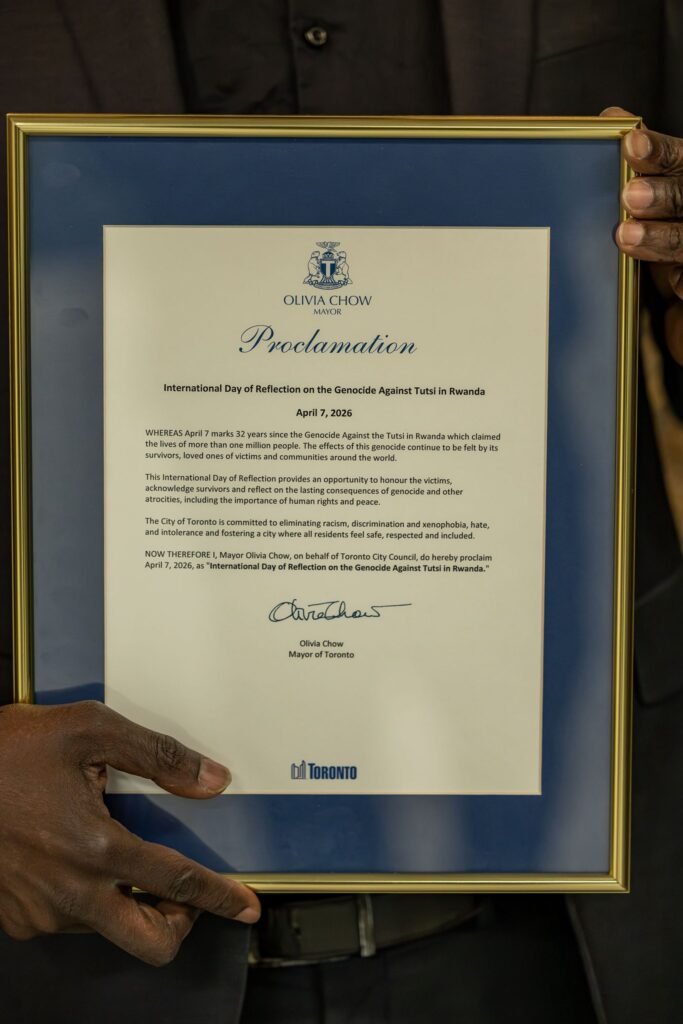
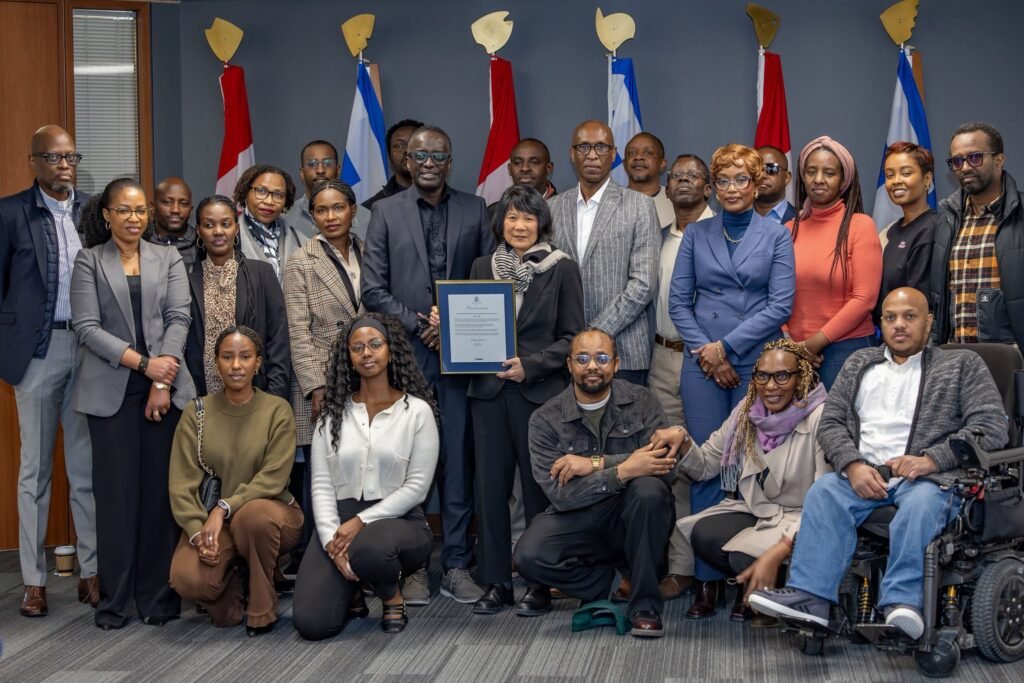
Toronto Mayor Olivia Chow stood before the Rwandan community at City Hall on April 7, 2026, and personally handed over an official city proclamation declaring the day as the International Day of Reflection on the Genocide Against the Tutsi in Rwanda.
The gesture, shared by the Rwanda High Commission in Canada, was witnessed by community leaders and survivors gathered to mark Kwibuka 32.
“NOW THEREFORE I, Mayor Olivia Chow, on behalf of Toronto City Council, do hereby proclaim April 7, 2026, as ‘International Day of Reflection on the Genocide Against the Tutsi in Rwanda,'” the proclamation read.
The event brought together Alphonse Barikage, Chair of the Rwandan Community Association in Toronto, Leo Kabalisa of Ibuka Canada the survivors’ organization, and members of the broader Rwandan diaspora in the city.
The room was not just marking a date, It was closing a loop. genocide survivors who rebuilt their lives in Canada, now standing inside one of the country’s most powerful civic buildings, with its mayor holding a document that says their history matters.
This comes directly in line with the global Kwibuka 32 theme: Remember – Unite – Renew. The African Union, alongside the Embassy of Rwanda in Ethiopia, marked the same day at AU Headquarters in Addis Ababa under that very theme, stressing that the commemoration “reminds African peoples and the international community of the sanctity of life and the value of humanity.”
Toronto’s proclamation adds to a growing list of North American cities formally recognizing April 7. Just days earlier, the City of Kentwood, Michigan, issued a similar proclamation, with its Mayor urging “all citizens of Kentwood and West Michigan to learn from the past so that these types of atrocities may never take place in the world again.”
These city-level recognitions matter. Political recognition carries symbolic weight under the principles of the Genocide Convention, where the duty to prevent and punish genocide arises when states and public officials become aware of a serious risk that such crimes may occur and municipal recognition helps affirm a country’s commitments under international law.
Canada’s Parliament has previously recognized the Genocide Against the Tutsi at the federal level, Cities like Toronto are now reinforcing that position from the ground up.
The 1994 Genocide Against the Tutsi claimed more than one million lives in just over 100 days and decades later, the battle to keep that history accurately documented and internationally recognised continues. Denial and distortion remain active threats, often amplified online and across borders.
For Rwandans living in Canada one of the largest diaspora communities in the West, a proclamation from Mayor Olivia Chow is not ceremonial, It is a civic record. It is Toronto saying: this happened, it was genocide, and we will not look away.
At the AU level, the AUC Commissioner for Political Affairs, Peace and Security, Ambassador Bankole Adeoye, expressed solidarity with “the victims, the survivors and all Rwandese across the globe,” commending Rwanda’s resilience in rebuilding “a just, reconciled, and inclusive society that stands as a beacon of hope for the entire continent and beyond.”
Kwibuka 32’s 100-day commemoration period runs through mid-July. Expect more diaspora events across North America, Europe, and Africa in the weeks ahead. The Rwanda High Commission in Canada is likely to leverage Toronto’s proclamation as a diplomatic and advocacy milestone pushing for similar recognition in other Canadian cities and at the provincial level.
About the Author