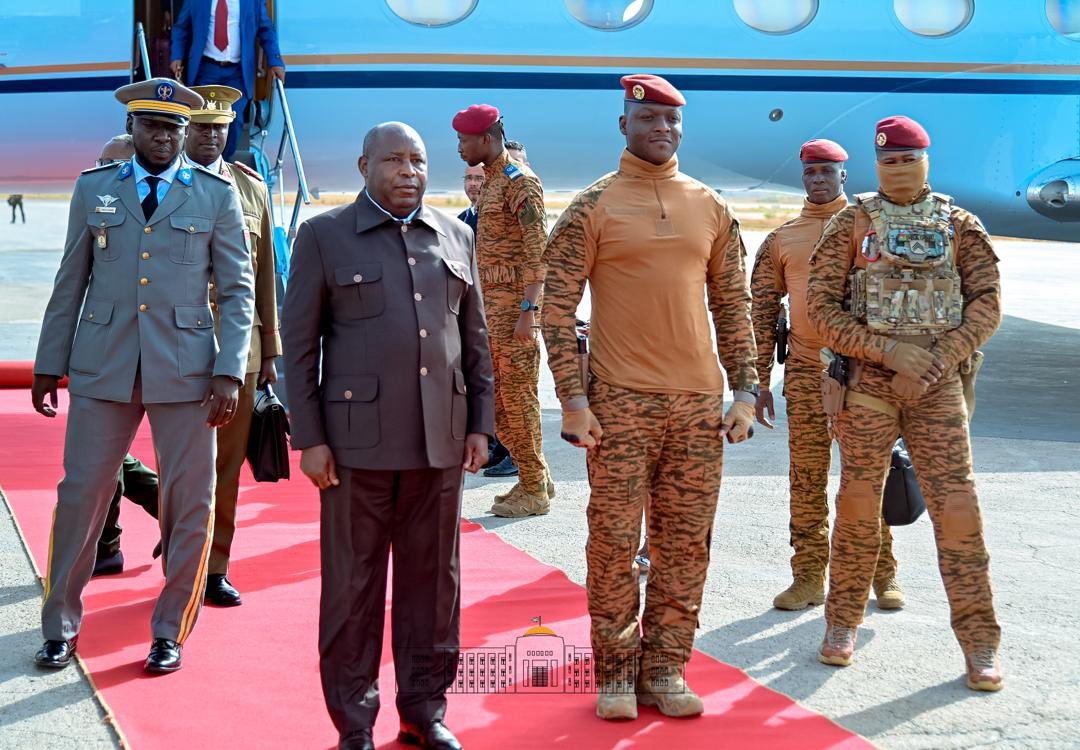
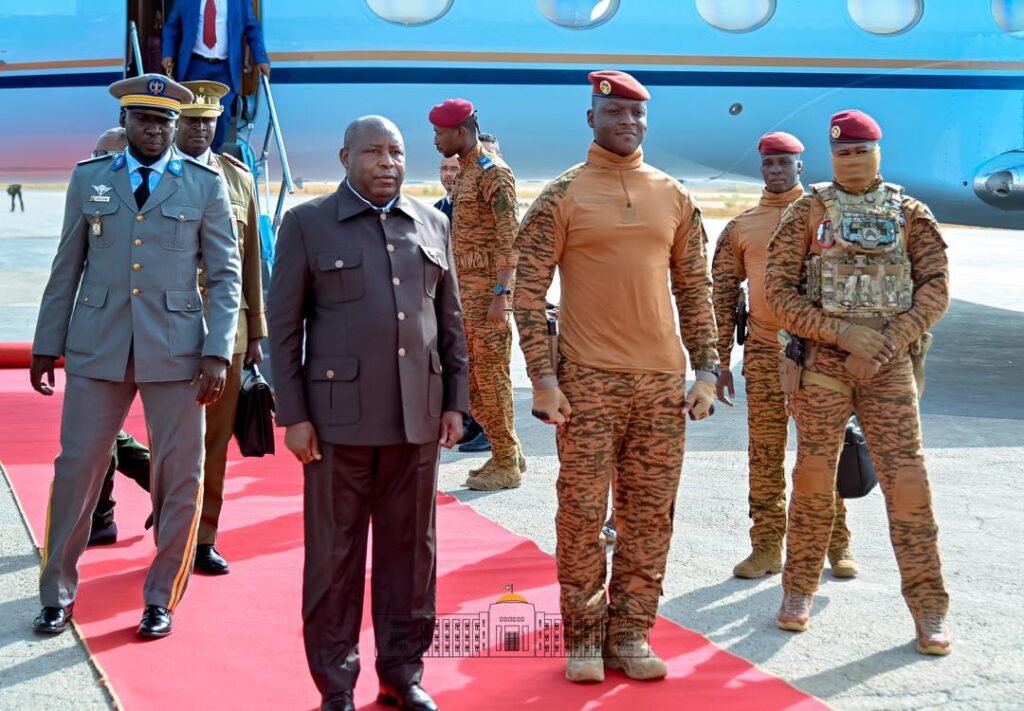
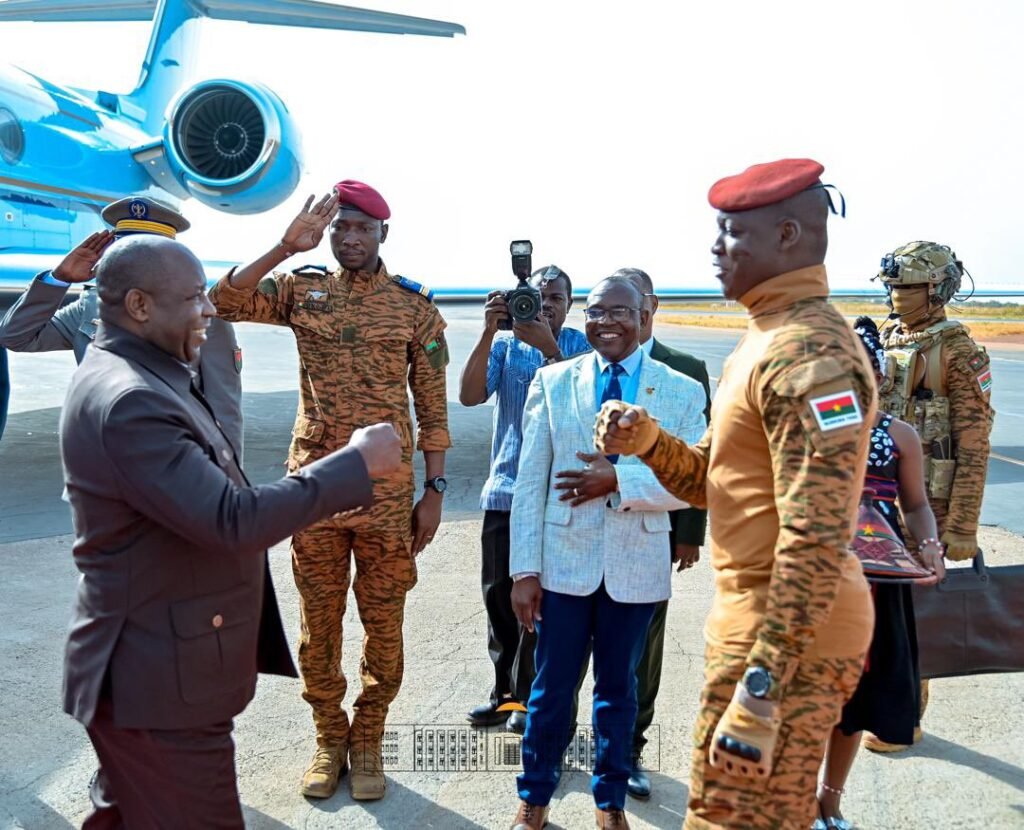
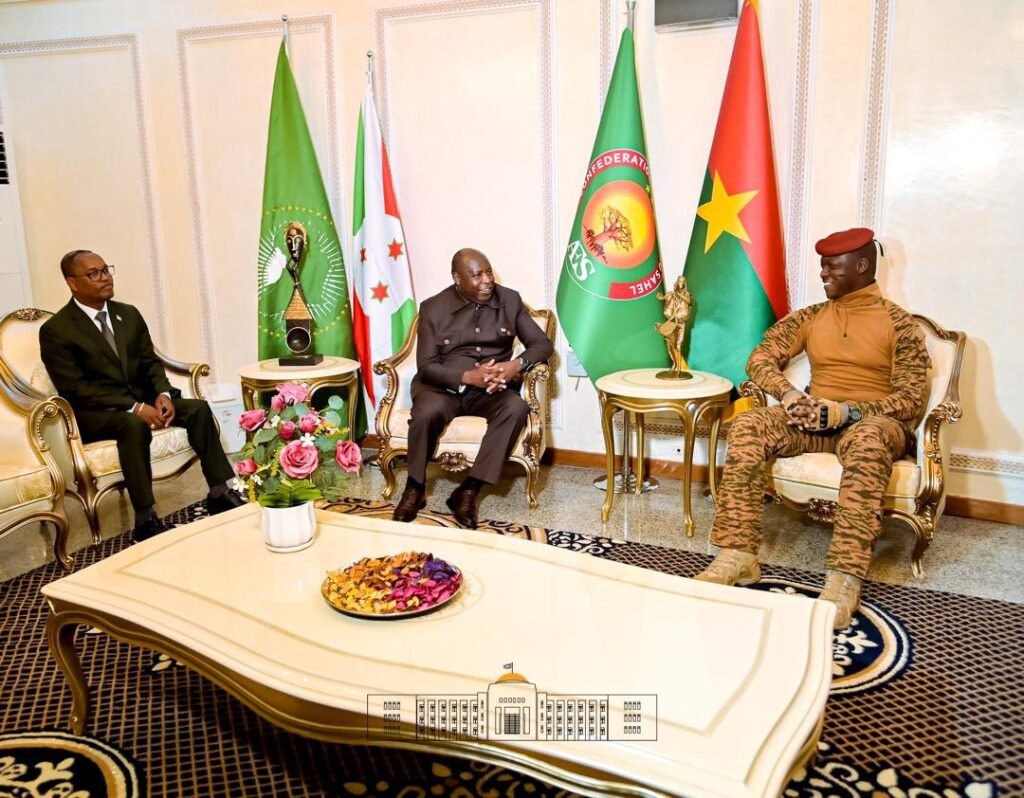
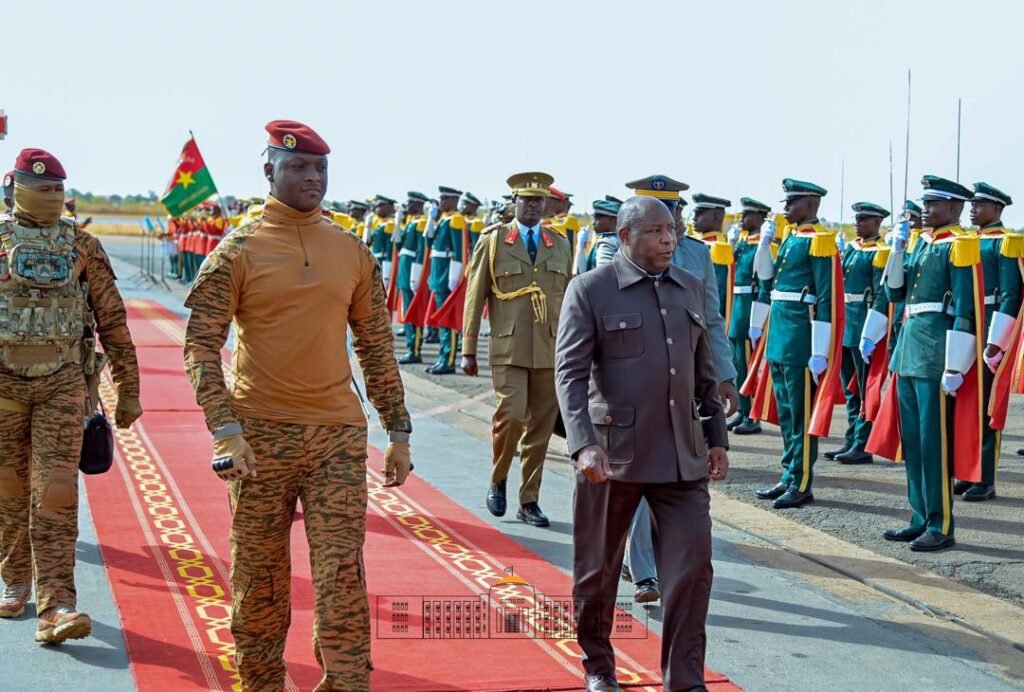
Burundian President Évariste Ndayishimiye, current Chairperson of the African Union, arrived in Ouagadougou on Monday April 20 for a working visit with Captain Ibrahim Traoré, who currently heads the Alliance of Sahel States (AES).
The imagery from the tarmac, a uniformed Traoré receiving an African Union head of state was unmistakable: after years of institutional estrangement, the AU is choosing dialogue over distance.
Ndayishimiye took over as AU Chairperson in February 2026, having previously served as AU Special Envoy for the Sahel region, a role that gave him more direct familiarity with the Burkina Faso, Mali, and Niger juntas than most of his continental peers.
His original 2025 appointment as Sahel envoy was specifically tasked with enhancing dialogue with governments suspended from the AU due to unconstitutional changes of government.
His trip to Ouagadougou today is, in many ways, a continuation of that assignment, now with the added weight of the AU chairmanship behind him.
The bloc he is engaging is increasingly consolidated and confrontational
Burkina Faso, Mali, and Niger withdrew from ECOWAS to form the AES in 2024, and in December 2025 launched a 5,000-strong unified military force while vowing large-scale joint operations against jihadist groups linked to al-Qaeda and ISIL.
At home, Traoré has moved aggressively to tighten his grip: Burkina Faso’s transitional parliament in early 2026 approved a bill banning all political parties, repealing the charter governing them and seizing their assets, a move observers describe as the junta consolidating unchecked control.
The AU’s own norms prohibit recognition of unconstitutional governments, making today’s meeting a diplomatic tightrope.
Three suspended member states sitting on some of the continent’s most volatile territory, and increasingly aligned with Russia cannot be left entirely outside the continental conversation.
Ndayishimiye has publicly offered to share Burundi’s own experience in reconciliation and institutional stabilization with member states facing similar challenges, including in the Sahel. Whether Traoré receives that framing as an offer or a lecture will likely determine how far today’s visit actually goes.
A joint communiqué, if any is issued, will be the clearest signal of whether this represents a genuine opening or a choreographed photo opportunity.
About the Author