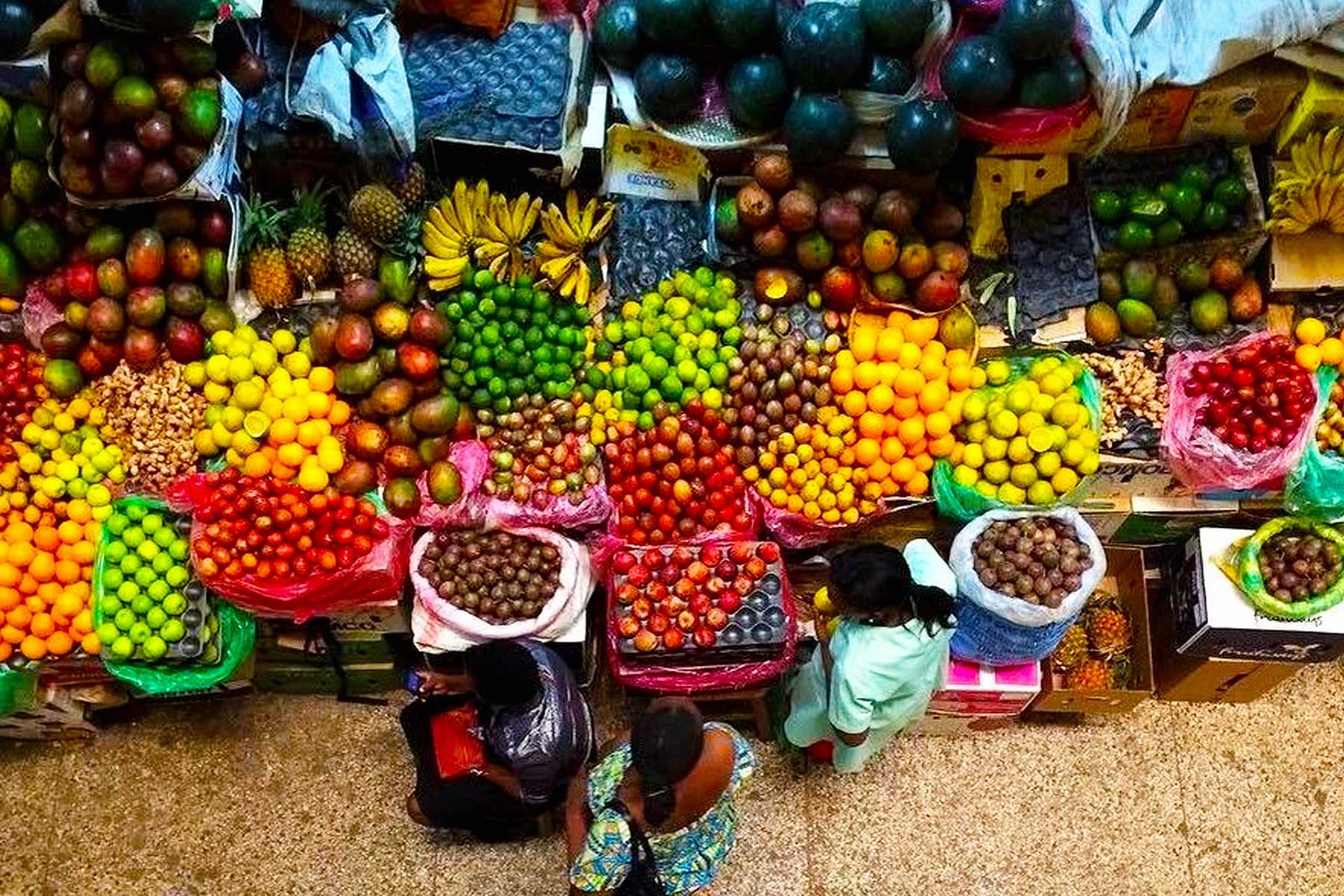
If you shopped at Nyabugogo Market last week and something felt off about the prices, you were not imagining it. Traders across Kigali are adjusting what they charge quietly, incrementally, consistently upward, and the reason traces a straight line from their fuel bills to a blocked waterway in the Middle East.
Rwanda’s petrol price has just hit its highest point on record: Rwf 2,303 per litre, up from Rwf 1,989 in early March — a jump of Rwf 314 in under a month. Diesel has also risen to Rwf 2,205 per litre, reflecting an increase of Rwf 257.
For context, the average gasoline price in Rwanda between 2016 and today was Rwf 1,281 per litre. The current price of Rwf 2,303 is the highest ever recorded.
For the traders who load food onto trucks before dawn and drive it into Kigali from the hills of Musanze, Huye, or Karongi, that is not an abstraction. It is a cost they pass on to the vendors at the market, who pass it on to you.
As of April 3, 2026, the price of a barrel of crude oil on the international market had reached $112.4, up from about $70. The ongoing conflict involving the United States, Israel, and Iran, now entering its second month, has led to the blockage of the Strait of Hormuz, a critical passage through which 20 percent of the world’s daily oil supply passes.
Rwanda imports all of its fuel. It has no oil of its own. Every litre that arrives in Kigali travels by road from Dar es Salaam or Mombasa, itself a fuel-heavy journey after being shipped across oceans where prices are now set by geopolitics, not supply and demand.
Prime Minister Dr. Justin Nsengiyumva told journalists on April 3 that the situation was already impacting Rwanda’s economy. “This issue is affecting international trade, particularly in energy and transport, and has already caused noticeable changes in global market prices, especially for petroleum products and gas,” he said. “This will also contribute to rising prices in Rwanda, meaning it will affect nearly every Rwandan. We must be prepared, but without panic.”
Transport fares are now officially higher
The Rwanda Utilities Regulatory Authority (RURA), in a statement signed by Director General Evariste Rugigana, announced the new prices would take effect from April 4 at 6:00 a.m. RURA noted that the changes in fuel prices have led to a revision of the base fare in public transport.
In Kigali, the base fare is now Rwf 59.28 per passenger per kilometre, while intercity transport stands at Rwf 41.58 per kilometre. The Nyabugogo–Kamembe route via Huye is now the most expensive at Rwf 11,445.
Other major routes: Nyabugogo–Musanze at Rwf 3,821, Nyabugogo–Huye at Rwf 5,068, Nyabugogo–Kagitumba at Rwf 7,900, and Nyabugogo–Rusumo at Rwf 7,029.
Higher transport costs matter for food prices in a very specific way. Rwanda is a landlocked country where most fresh produce, vegetables, beans, fruit, cassava, moves by truck from farming districts into Kigali. Every fare adjustment is effectively a food delivery fee hike.
The inflation picture is already uncomfortable
This fuel shock is landing on top of an inflation rate that was already testing the National Bank of Rwanda’s comfort zone. According to the National Institute of Statistics of Rwanda, the urban Consumer Price Index rose by 9.2 percent in March 2026 compared to the same period last year.
Food prices, while increasing at a more moderate annual rate, are showing consistent upward movement on a monthly basis. Transport costs have also risen, further compounding the challenges faced by urban residents who rely on mobility for work and daily activities.
The energy index increased by 17.8 percent year-on-year. Imported goods inflation reached 9.6 percent, outpacing the 8.7 percent increase in locally produced goods highlighting the impact of external price shocks.
The National Bank of Rwanda targets inflation at between 2 and 8 percent. It is currently above that band. National Bank of Rwanda Governor Soraya Hakuziyaramye said inflation is expected to stay elevated until the second half of 2026.
“We have increased our central bank rate by 75 basis points since August in response to inflationary pressures,” she said. “We are also closely monitoring new risks, particularly rising oil prices linked to the Middle East conflict and potential shortfalls in agricultural production, which could further drive inflation.”
Kigali’s response: the $250 million buffer
Rwanda’s government has not been sitting on its hands. In early April, it secured a major financial safety net. The IMF and Rwandan authorities reached a staff-level agreement on a 38-month Extended Credit Facility of SDR 185 million equivalent to $250 million, to support Rwanda’s economic policies and reforms. Final approval by the IMF Executive Board is expected in June 2026.
Under the new program, the National Bank of Rwanda will maintain tight monetary policy to bring inflation down to its medium-term target of 5 percent.
Authorities also plan to allow greater exchange rate flexibility, tighten controls on foreign-funded capital spending, and pursue a credible medium-term budget plan, including a new revenue strategy.
Finance Minister Yusuf Murangwa has been direct about what the funds are for. “When it comes to fertiliser — if the government does not intervene, prices could rise sharply and that would be a serious problem,” he said. Fertiliser, like fuel, has become significantly more expensive because of the Middle East conflict a double blow for a country where agriculture employs nearly 70 percent of the population.
Rwanda’s economy grew at 9.4 percent in 2025, well above expectations, but growth is forecast to moderate to 6.8 percent in 2026. Inflation remains a pressing concern, reaching 9.2 percent in February 2026, above the National Bank of Rwanda’s preferred range.
What this means for ordinary Kigali
The numbers tell part of the story. The other part is lived in the markets. Traders buying wholesale and selling retail have seen their margins squeezed, fuel costs go up, transport costs go up, and their customers have the same money they had before. Something has to give, and it is usually the price on the vegetable stall.
RURA has called on the public to plan travel efficiently and avoid unnecessary trips, adding that it will continue monitoring market developments to ensure fair pricing and reliable service delivery. The regulator has left open the possibility of further adjustments if global oil prices remain elevated.
A joint policy brief by the African Union, the United Nations Economic Commission for Africa, and the United Nations Development Programme warns that Africa could lose at least 0.2 percentage points in GDP growth in 2026 if the conflict persists, particularly if disruptions to energy supply, shipping routes, and fertiliser markets continue. The brief notes that the Middle East accounts for 15.8 percent of Africa’s imports and 10.9 percent of its exports.
For Rwanda, a country that imports essentially all of its oil and a significant share of its agricultural inputs, that exposure is real and immediate. The war is not in Africa. But its price is.
The IMF program, pending final board approval in June, is the most significant institutional response Rwanda has in place.
Domestically, the National Bank of Rwanda’s interest rate stance will determine how quickly inflation can be brought back into the 2–8 percent target range. And on the ground in markets like Nyabugogo and Kimironko, the question is simpler: how long before prices stabilise, and who absorbs the cost in the meantime.
About the Author