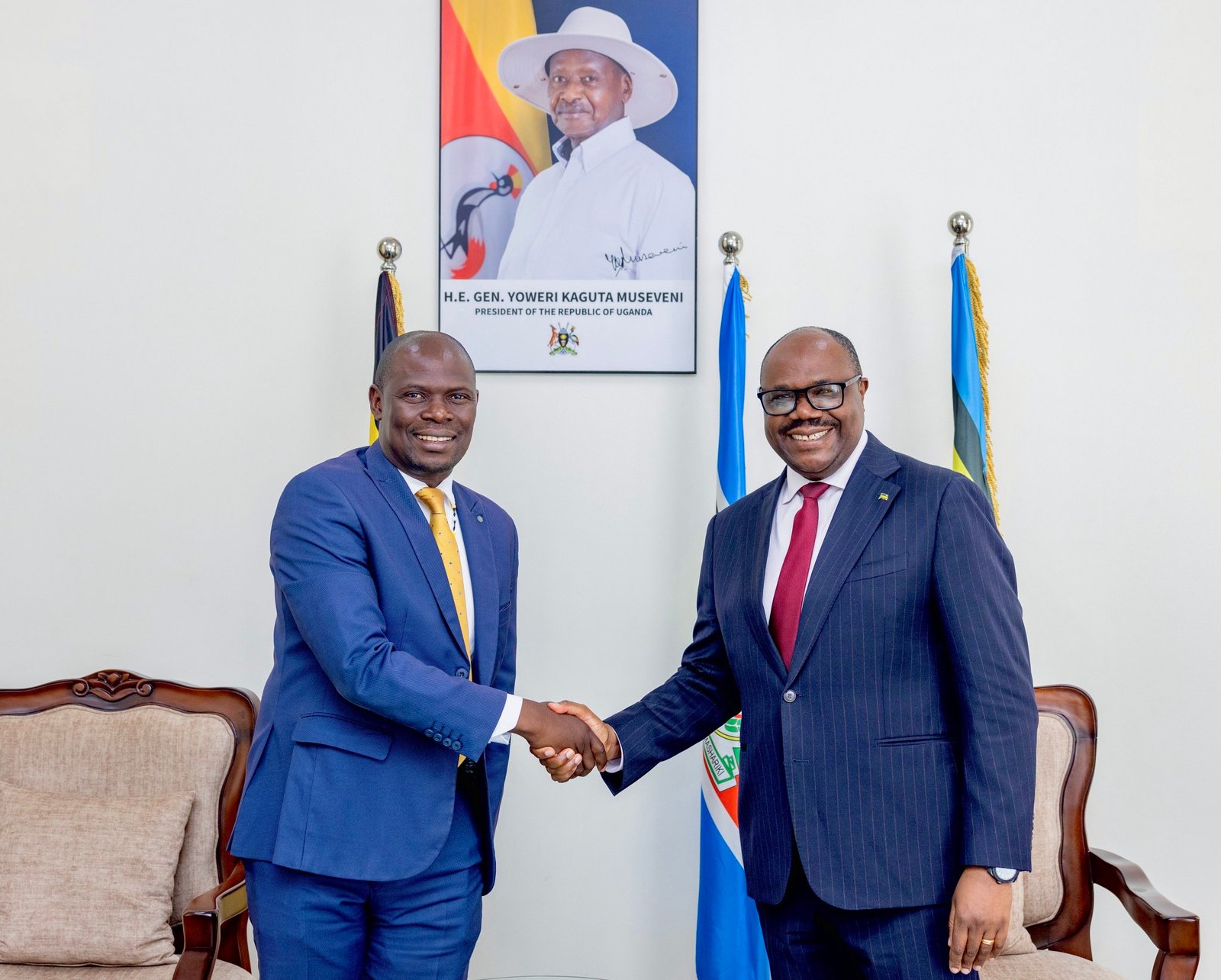
Rwanda’s Prime Minister Justin Nsengiyumva arrived in Kampala on Monday to represent President Paul Kagame at the inauguration of Uganda’s Yoweri Kaguta Museveni, who is being sworn in for his seventh elective term on May 12 at Kololo Independence Grounds.
The Rwanda Prime Minister’s Office confirmed the arrival on X, saying Nsengiyumva was dispatched to stand in for Kagame at the high-stakes ceremony.
The event, scheduled to run from 8:00 am to 2:00 pm, carries the theme “Protecting the gains, making a qualitative leap into high middle-income status.” More than 35 heads of state have been invited and confirmed to attend, making it one of the most diplomatically attended inaugurations in the region this year.
Kigali’s decision to send its Prime Minister rather than a lower-level envoy is a deliberate signal. It comes on the back of a major thaw in Rwanda-Uganda relations, formalized as recently as late April.
Uganda and Rwanda signed four memoranda of understanding in health, education, agriculture, and local government at the 12th session of the Joint Permanent Commission held in Kampala, a summit that Rwanda’s Minister of State for Foreign Affairs described as anchored in shared history and high-level political engagement between the two presidents.
The next Joint Permanent Commission session is set to take place in Rwanda at a mutually agreed date, meaning Kigali will soon be the host of the next chapter in this bilateral process.
This is also the second inauguration in less than a week where Nsengiyumva has represented Kagame. Just days earlier, the Prime Minister traveled to Djibouti to stand in for President Kagame at the inauguration of President-elect Ismaïl Omar Guelleh on May 9.
The pattern speaks to the pace of Rwanda’s diplomatic engagements across the continent.
Kagame had personally congratulated Museveni on his re-election in January, emphasizing the importance of continued strong cooperation between the two countries, a message now reinforced by the physical presence of Rwanda’s head of government in Kampala.
The Rwanda-Uganda relationship carries real economic weight. Uganda exports goods worth about $260 million per year to Rwanda, including food, construction materials, and electricity, while Rwanda’s exports to Uganda amount to about $12 million, a trade gap that Kigali wants to address through exactly the kind of institutional frameworks the Joint Permanent Commission is building.
Among the guests at Kololo are delegates from 16 liberation movements, including the Rwandan Patriotic Front, alongside the African National Congress, Chama Cha Mapinduzi, ZANU-PF, and FRELIMO, a reminder that this inauguration is as much a gathering of African liberation-era solidarity as it is a diplomatic event.
PM Nsengiyumva’s presence in Kampala is expected to set the tone for Rwanda-Uganda cooperation heading into the second half of 2026.
With the next Joint Permanent Commission to be hosted by Rwanda, Kigali will have the opportunity to push for concrete timelines on the four MoUs signed in April, particularly in health and agriculture, areas where both countries have declared shared priorities.
Museveni’s new term, themed around a “qualitative leap” to middle-income status, aligns in several areas with Rwanda’s own Vision 2050 goals, creating space for joint programming and trade facilitation.
About the Author