
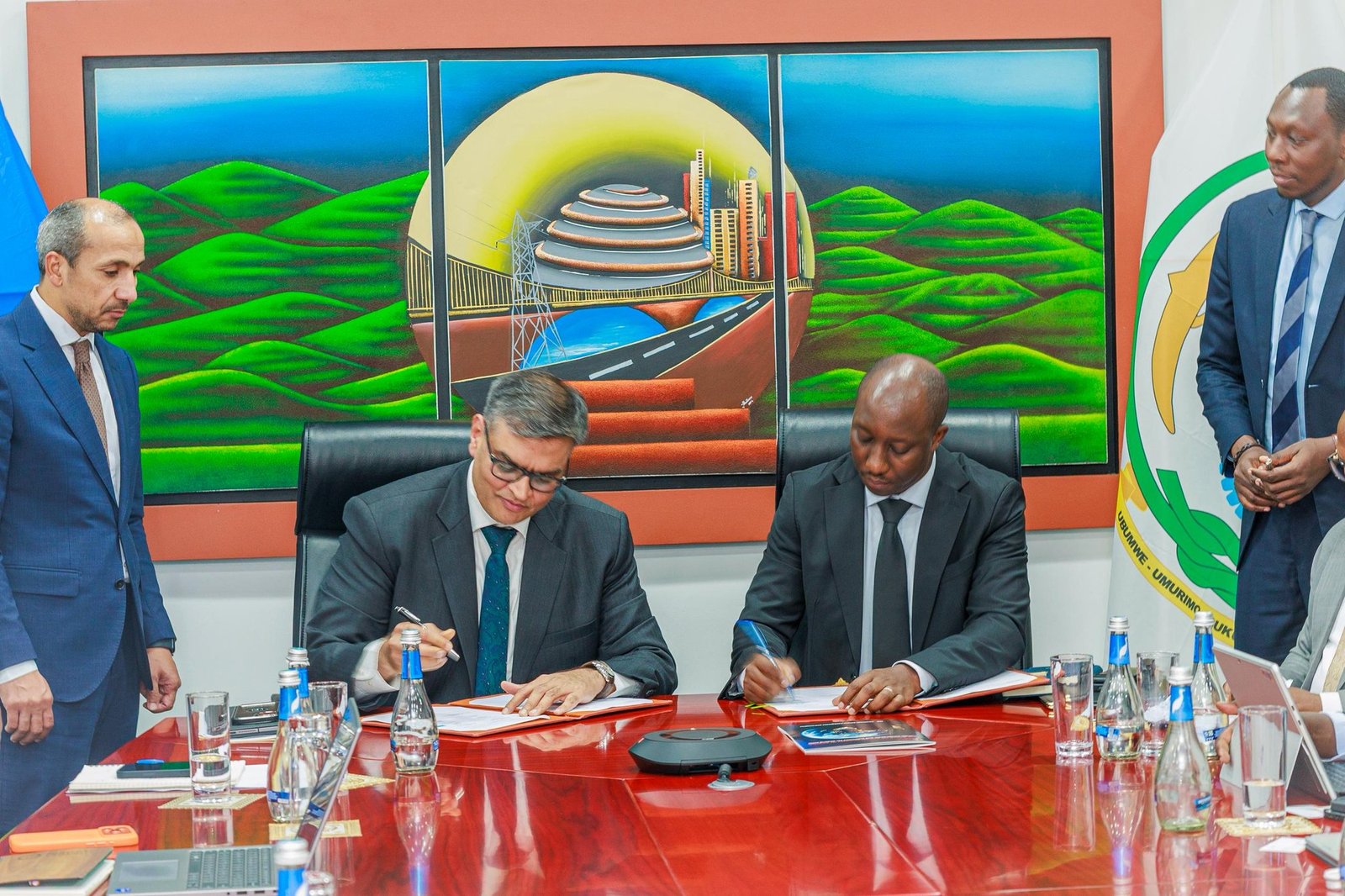
Rwanda has signed a Country Partnership Framework with the International Solar Alliance, unlocking a structured three-year collaboration to accelerate solar energy deployment across agriculture, rooftop installations, and energy financing with the ISA’s Director General leading a high-level mission to Kigali to seal the agreement.
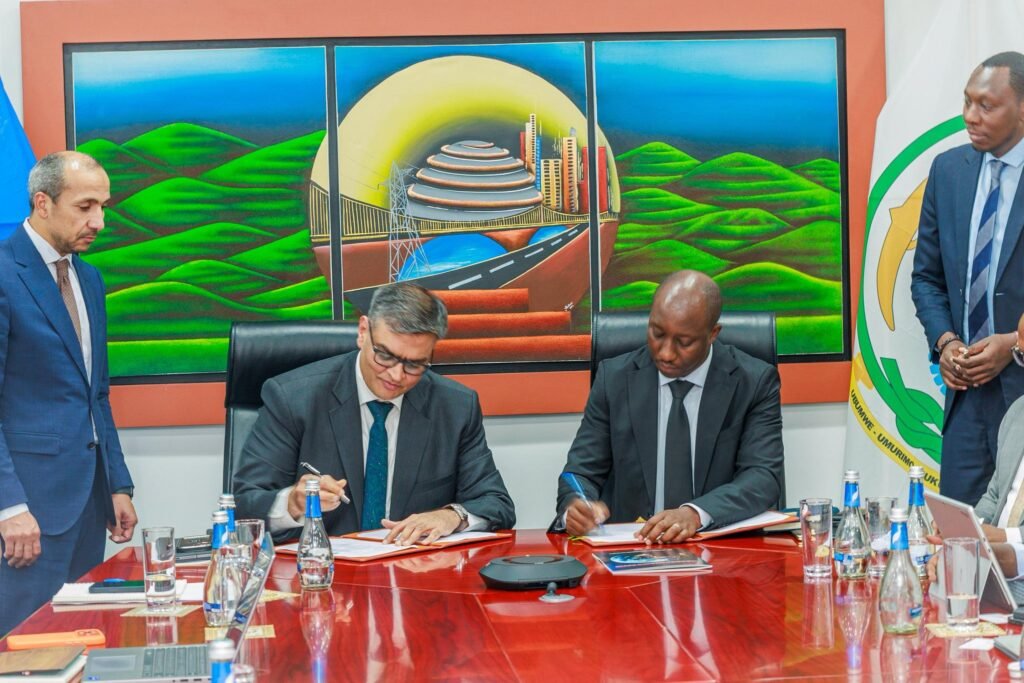
Rwanda’s Minister of Infrastructure, Dr. Jimmy Gasore, signed the Country Partnership Framework alongside ISA Director General Ashish Khanna during an ISA high-level mission to Rwanda.
According to the Ministry of Infrastructure’s official posts on May 7, the framework sets a clear roadmap focused on solarizing agriculture, expanding energy access, promoting rooftop solar, strengthening skills, and enhancing policy and financing frameworks.
The ministry added that the CPF will also unlock private sector investment across value chains from solar irrigation to productive-use technology driving real livelihoods and development impact on the ground.
The CPF is a strategic tool developed by ISA to establish long- and medium-term cooperation with its member countries, according to ISA Director General Ashish Khanna. It is valid for three years and can be extended by mutual agreement.
The framework is not just a diplomatic gesture, it leads to a country-specific partnership strategy that shapes solar roadmaps, regulatory reform, and capacity building across technical, policy, and financial domains. Khanna has described the instrument as a strategic yet flexible tool that supports member countries with tailored solar roadmaps and investment frameworks capable of enabling real public-private collaboration.
Rwanda’s solar moment
The agreement arrives as Rwanda sits at an inflection point in its energy transition. As of July 2025, Rwanda’s cumulative household connectivity rate stood at 84.6%, with 59.6% connected to the national grid and 25% accessing electricity through off-grid systems, mainly solar.
The country still targets 100% electrification by 2030, and a quarter of all current connections already run on solar, meaning the ISA partnership lands precisely where the gap is widest and the need is sharpest: productive use, agricultural application, and financing access rather than basic grid extension.
Where Rwanda fits in the ISA’s Africa push
Rwanda is not the first African country to sign a CPF with the ISA, but it is among a small, fast-growing group. Mauritius became the first African country and the fourth globally after Bangladesh, Bhutan, and Cuba to sign a Country Partnership Framework with the ISA, doing so in April 2025.
Since then, Ethiopia and Nigeria have followed. Nigeria’s CPF was signed at the ISA’s Seventh Regional Committee Meeting for Africa held in Accra, Ghana in September 2025, establishing a three-year action plan focused on agricultural solar, rooftop installations, mini-grids, and a Solar Technology and Application Resource Centre. Rwanda’s framework mirrors many of those same priorities.
The framework now moves into implementation: Rwanda will work with ISA to develop a country-specific partnership strategy that translates the CPF’s broad goals into concrete project pipelines, regulatory adjustments, and financing mechanisms.
Based on the ISA’s model in other countries, the next phase involves formulating a comprehensive, country-specific strategy that will include developing solar roadmaps, establishing regulatory frameworks to encourage solar adoption, and enhancing capacity across technical, policy, and financial areas.
For Rwanda, the most immediate watch will be whether ISA engagement accelerates the deployment of solar irrigation for farmers a sector where diesel pumps remain the default and the productivity gap with solar alternatives is significant.
About the Author