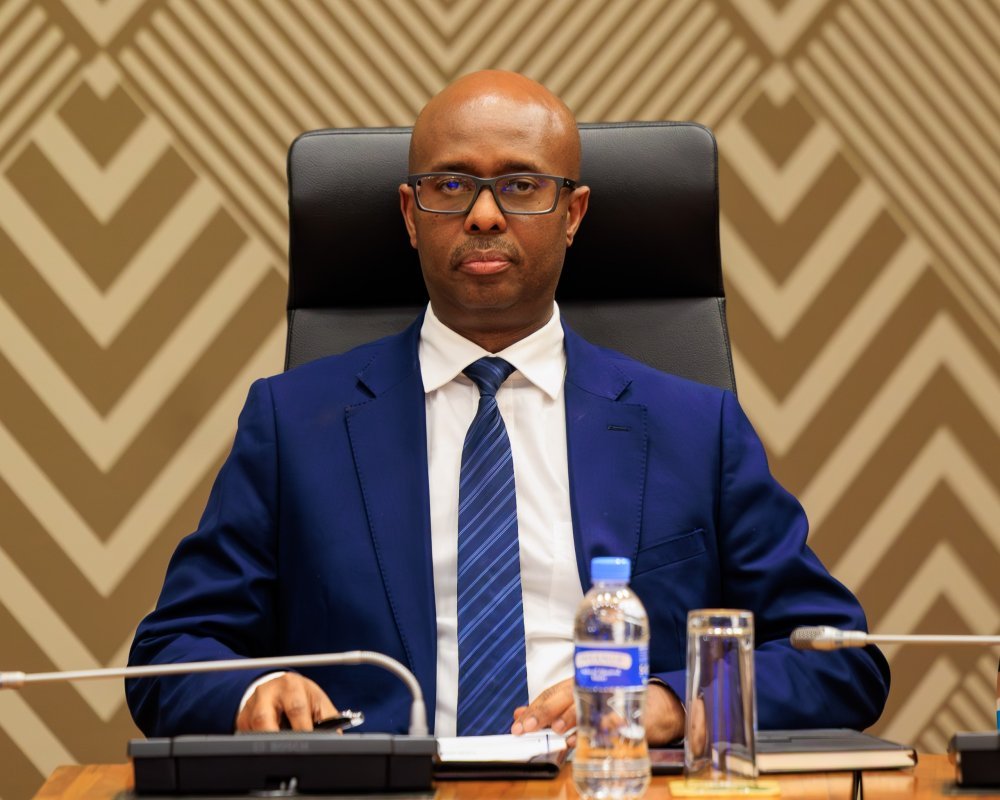
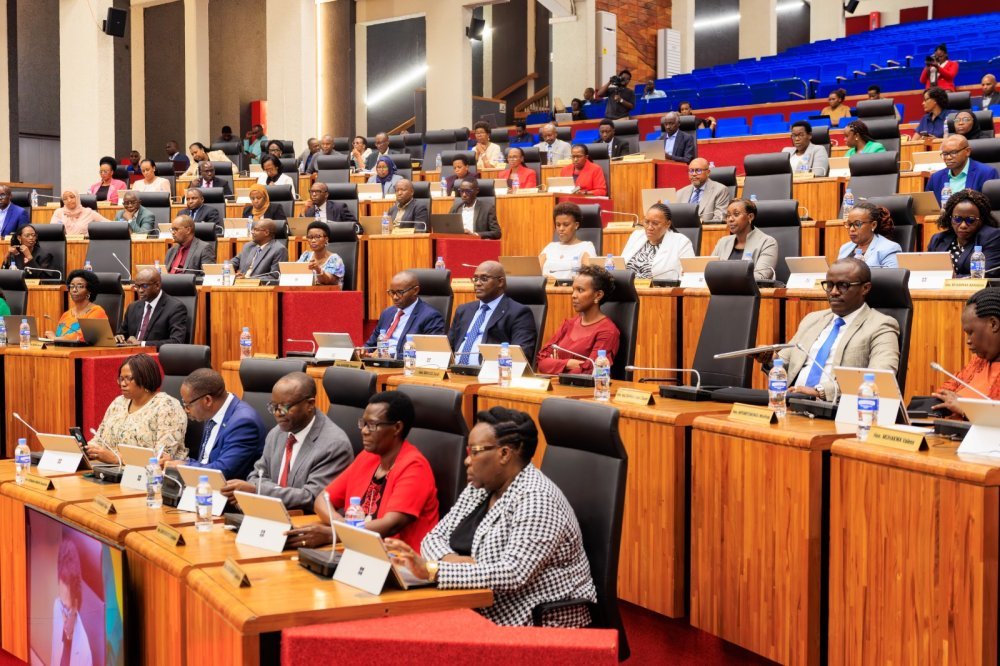
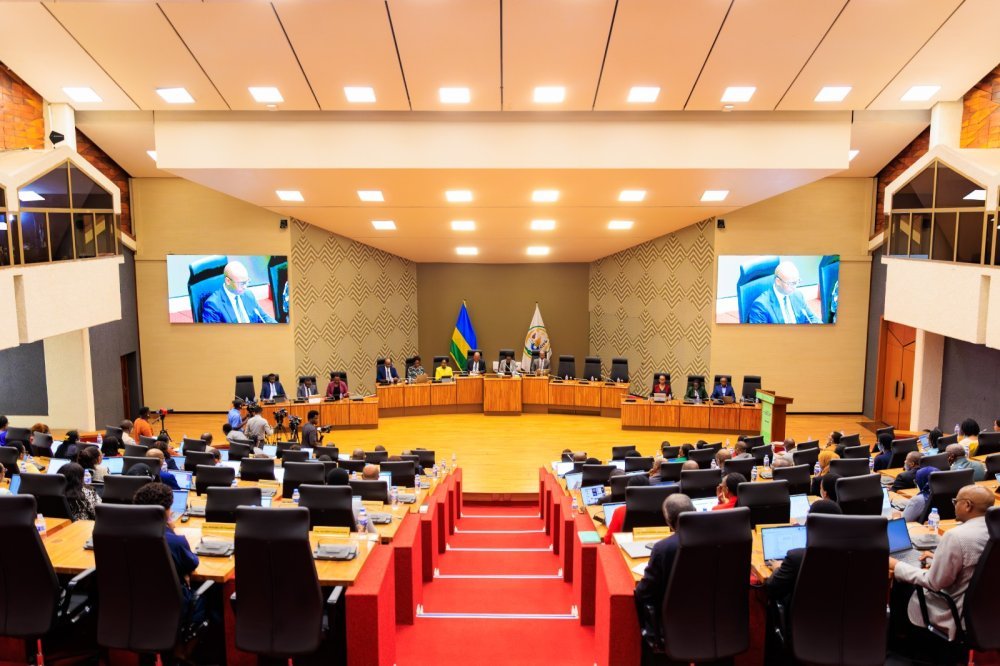
Rwanda’s Finance Minister Yusuf Murangwa has presented Parliament with a Budget Framework Paper (BFP) proposing national spending of Rwf 7,796.3 billion for the 2026/27 fiscal year.
The figure represents an increase of Rwf 844.2 billion over the currently approved 2025/26 budget of Rwf 6,952.1 billion, a year-on-year rise of roughly 12.1 percent, and the largest spending envelope in Rwanda’s fiscal history.
To put the jump in context: the 2025/26 budget was itself revised downward from Rwf 7,032.5 billion to Rwf 6,952.1 billion, a net reduction of Rwf 80.4 billion even as development expenditure was increased from Rwf 1,862.6 billion to Rwf 2,115.8 billion.
That revision was driven by adjustments to airport financing and a rescheduling of the RwandAir loan repayment. The new 2026/27 proposal effectively corrects course, pushing the overall envelope well past the original Rwf 7 trillion mark and into new territory.
The BFP is not the final budget, it is the government’s medium-term policy roadmap that Parliament reviews before formal appropriations are tabled in June. Under Rwanda’s budget calendar, the BFP is typically presented in May, with the full budget speech following about a month later.
This means the Rwf 7,796.3 billion figure is a proposed ceiling that Parliament will scrutinize and, following the pattern of previous years, likely approve with minor amendments.
The upward push is consistent with the trajectory set under the Second National Strategy for Transformation (NST2). Rwanda’s economy grew at 9.4% in 2025, surpassing a 7.0% target and Finance Minister Murangwa stated that under NST2, the government expects the economy to grow at 9.3% on average.
That pace of growth demands a correspondingly ambitious public investment posture, particularly in infrastructure, health, and agriculture.
The IMF projects Rwanda’s 2026 GDP growth at 7.2%, which is conservative relative to Rwanda’s own recent track record but still places the country among Africa’s fastest-growing economies.
With a larger budget, Kigali will need to sustain strong revenue collection, mid-year execution of the 2025/26 budget was at 65%, and revenue collection between July and September 2025 hit Rwf 1,156.6 billion against a target of Rwf 1,157.2 billion, effectively full achievement.
The 2026/27 budget arrives at a moment of heightened fiscal scrutiny. Fitch Ratings, in a March 2026 assessment, warned that government debt could rise to around 79% of GDP by 2027, and projected the current-account deficit at roughly 15% of GDP in 2026, driven partly by infrastructure imports.
About 89% of Rwanda’s public external debt is owed to official lenders, with official external loan commitments estimated at nearly $1 billion annually, equivalent to 5.5% of GDP for the fiscal years 2026 and 2027.
Parliament will now debate the BFP and issue its formal opinion typically within two to three weeks. The full budget speech, expected around June 2026, will confirm final allocations across sectors.
About the Author