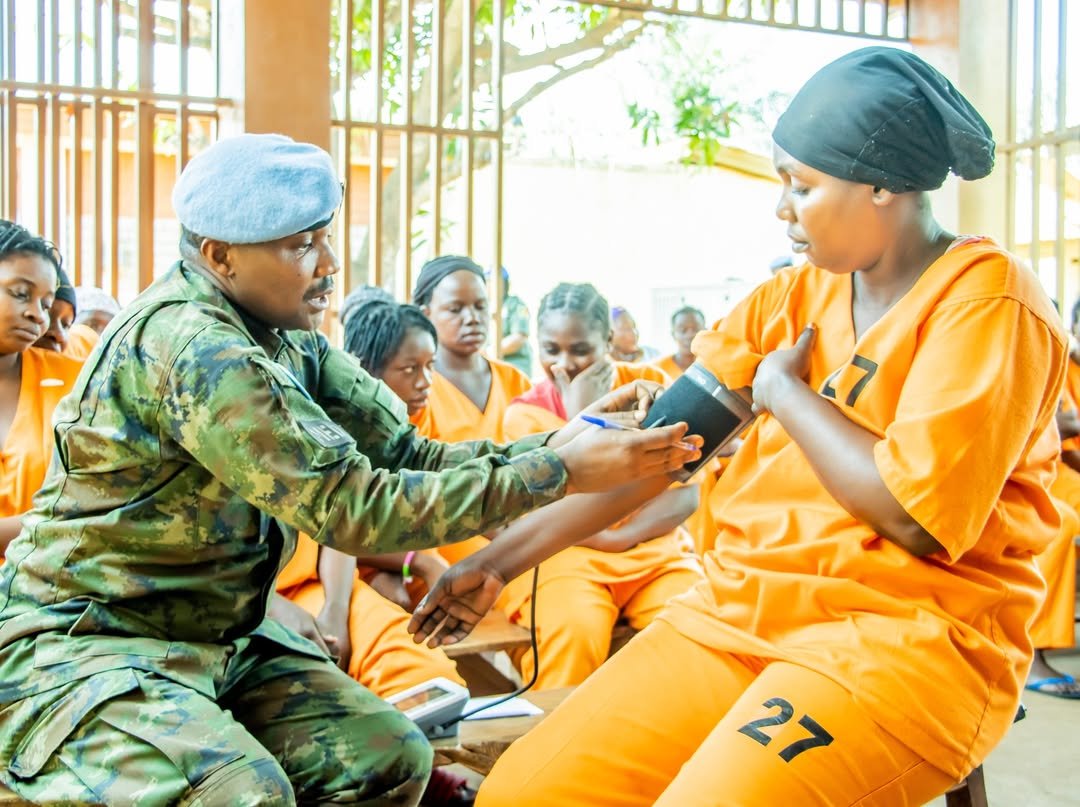
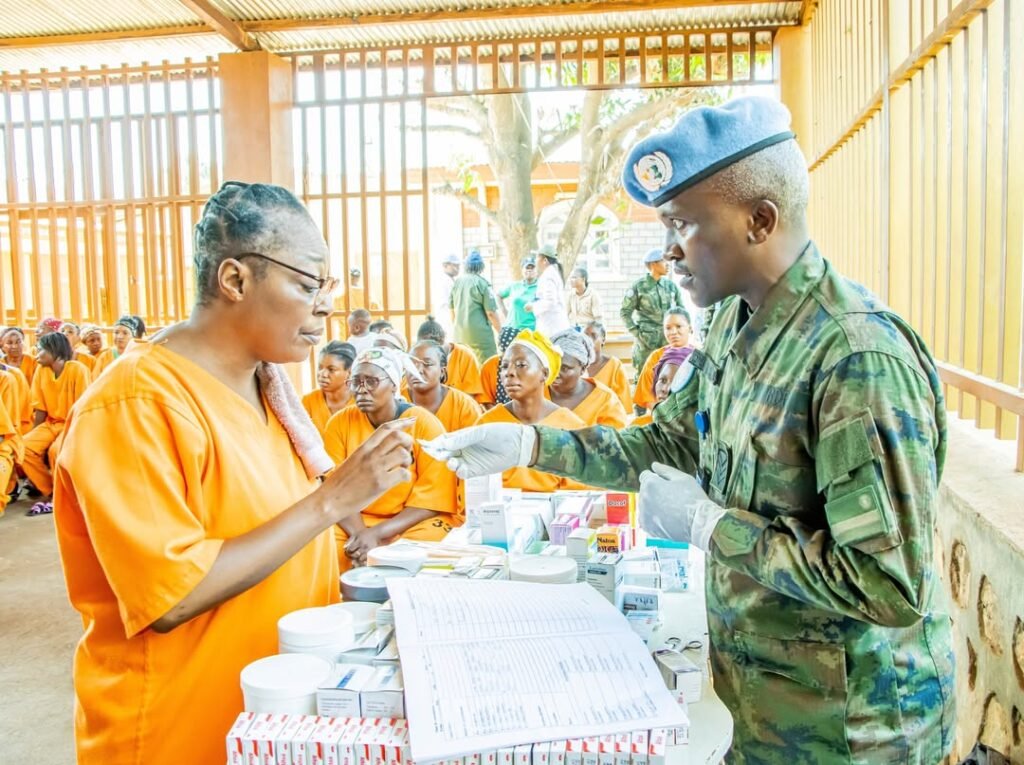
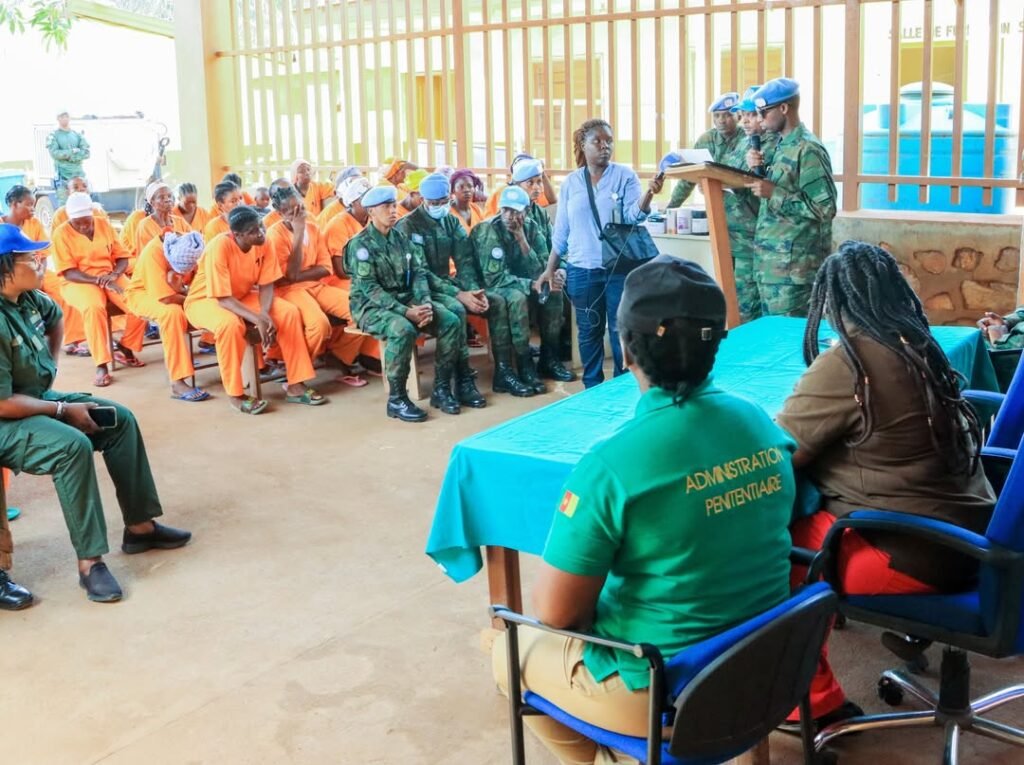
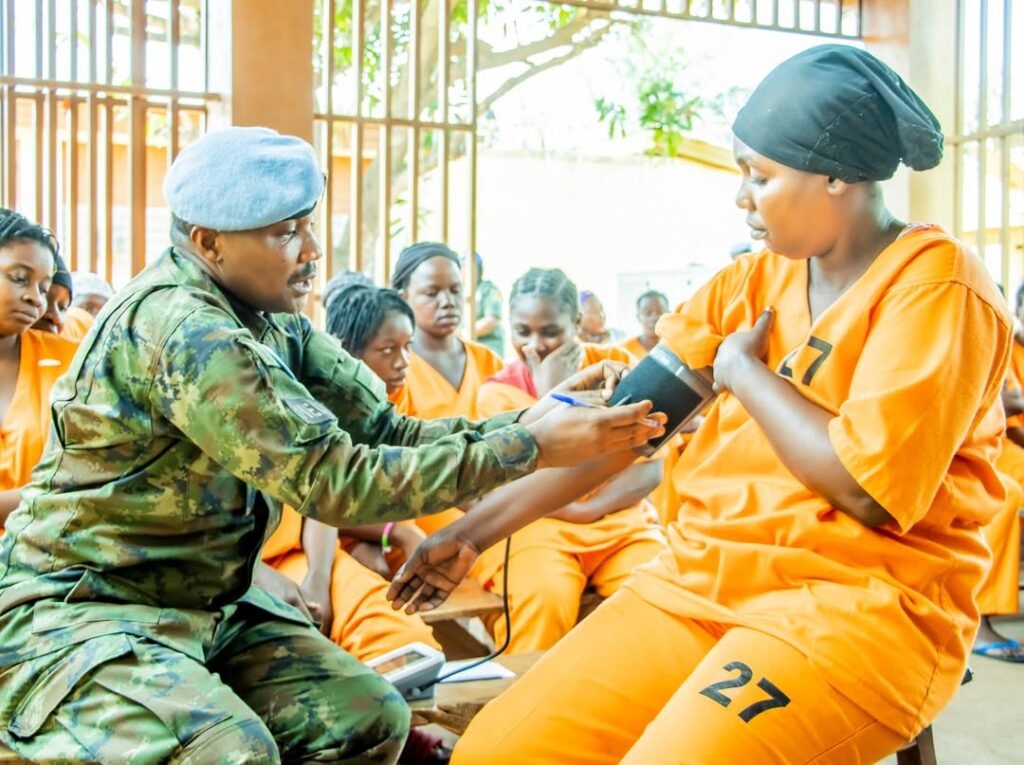
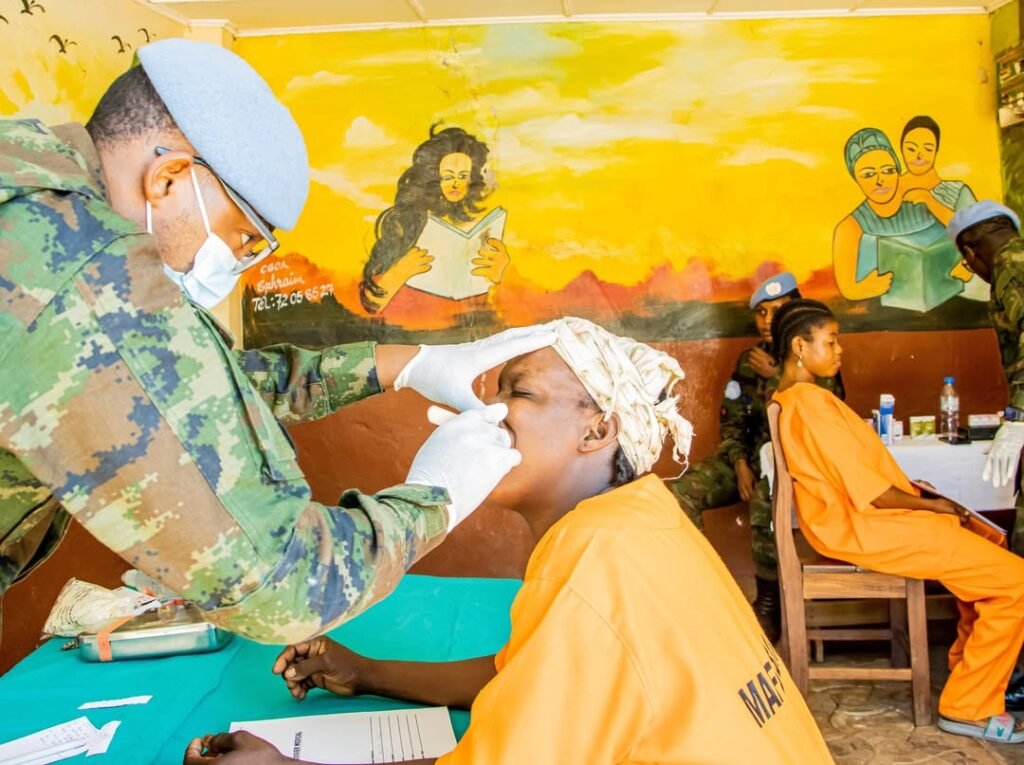
Rwandan peacekeepers deployed under the UN Multidimensional Integrated Stabilization Mission in the Central African Republic (MINUSCA) have conducted a medical outreach at Bimbo Women’s Prison on the outskirts of Bangui, delivering specialist healthcare to female inmates at the direct request of prison authorities.
The intervention, carried out by the RWABATT-1 contingent, went beyond routine consultations. Inmates received specialised services in stomatology, dental care, and ophthalmology, two areas chronically underserved in Central African correctional facilities. Essential medicines were also distributed on-site.
Addressing the women, RWABATT-1 Contingent Commander Lt Col Paul Gasasira framed the mission in terms of principle: “Our presence here today reflects the commitment of MINUSCA not only to support peace and security in the Central African Republic, but also to promote human dignity, inclusion, and respect for all individuals, including those in places of detention.” He urged the inmates to remain hopeful and resilient.
Prison Director Djadde Clotilde thanked the Rwandan contingent specifically, citing their spirit of cooperation and the consistency of their humanitarian engagement.
The outreach fits a clear pattern. Rwanda has had more than 2,000 peacekeepers contributing to MINUSCA since 2020, where they conduct patrols and support stabilisation efforts — but the RDF’s footprint in CAR has increasingly extended into civil-military work: community clean-ups, free medical outreaches in remote towns like Bambouti, and now structured healthcare delivery inside a women’s prison.
Bimbo Women’s Prison is one of only three government-operated detention facilities in or near Bangui , and it has historically struggled with inadequate medical access.
For Rwanda, this is not charity work dressed in uniform. It is a deliberate expression of what Kigali has positioned as a values-driven model of peacekeeping — one that prioritises human dignity alongside hard security.
The optics also matter: Rwanda aims to project itself as a reliable security provider, leveraging deployments to forge economic ties and enhance its influence in forums like the African Union. Actions like the Bimbo outreach reinforce that brand at the grassroots level, where it counts most.
With the DRC-Rwanda peace process still fragile and scrutiny of Kigali’s regional role running high in Western capitals, the RDF’s track record in CAR, where its contributions are unambiguously welcomed, continues to serve as a counterweight to the criticism.
Expect more of these civil-military engagements as Rwanda deepens its footprint ahead of any potential restructuring of MINUSCA’s mandate, where contingent performance and community trust will shape troop contribution decisions.
About the Author