The DRC government and the AFC/M23 movement emerged from five days of talks in Switzerland this week with concrete commitments on humanitarian access, prisoner releases, and a ceasefire monitoring mechanism, the clearest sign yet that the Doha peace framework is producing results, however fragile.
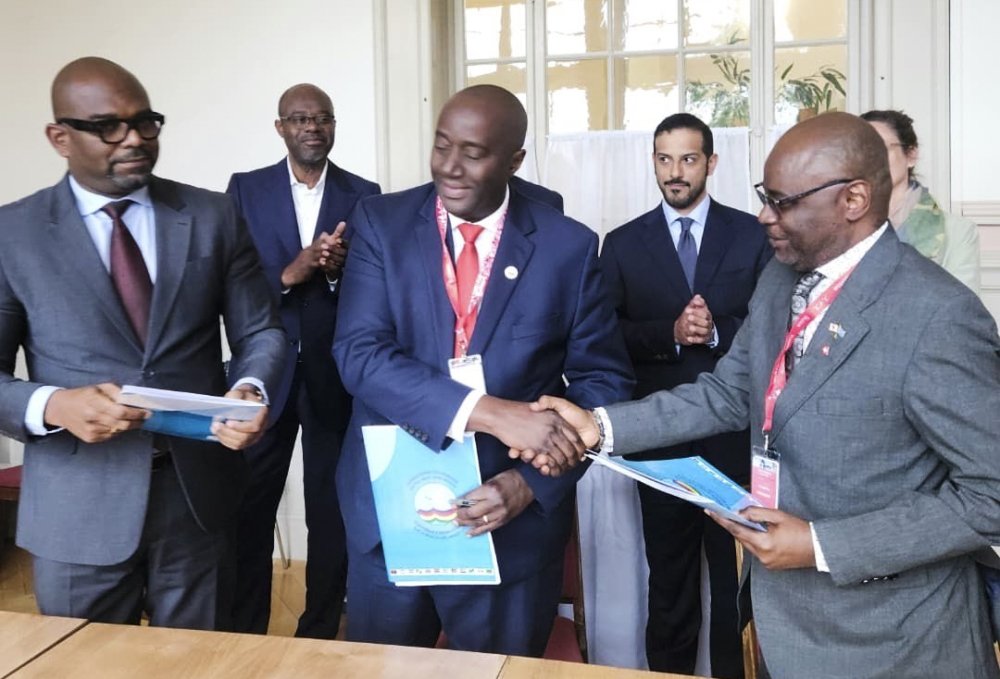
From April 13 to 17, representatives of the DRC and the Alliance Fleuve Congo/March 23 Movement met in Montreux, Switzerland, alongside mediators from Qatar, the United States, Togo as the African Union’s designated mediator, the AU Commission, and Switzerland, to work on implementation of the Doha Framework for a Comprehensive Peace Agreement signed in November 2025.
The outcome, published Saturday April,18 by the US State Department, covered three areas: humanitarian access and judicial protection, the operationalization of a ceasefire oversight mechanism, and the release of prisoners.
On paper, the Montreux talks moved the needle
The DRC and AFC/M23 agreed to facilitate the passage of humanitarian personnel and convoys and committed to refrain from attacking civilian populations and infrastructure.
More consequentially, the two parties signed a Memorandum of Understanding with the International Conference on the Great Lakes Region activating the Enhanced Joint Verification Mechanism Plus, enabling the Ceasefire Monitoring and Verification Mechanism established under the Doha Framework to begin monitoring, verifying, and reporting on the implementation of the permanent ceasefire.
That activation matters without a functioning verification mechanism, prior ceasefires in the region have collapsed within weeks.
Only two of the eight protocols outlined in the Doha Framework have been signed the Ceasefire Oversight and Verification Mechanism and the prisoner exchange.
Discussions on the remaining six have not yet begun. Meanwhile, fighting has continued even since the December agreement, most recently reaching the highland areas of South Kivu, and Human Rights Watch accused the parties of blocking aid deliveries and stopping civilians from fleeing the very issue the Montreux talks were designed to fix.
For Rwanda, this process is both central and complicated
The UN has consistently stated that M23 is supported by the Rwandan armed forces — an allegation Kigali has repeatedly denied.
The Rwandan and Congolese governments signed a full bilateral agreement at a presidential summit in December 2025, restating their pledge to end the fighting. Yet the resolution of the M23 conflict is reportedly central to significant investment from US companies in the DRC-Rwanda border region, with US envoy Boulos describing a sustainable deal as the “last piece of the puzzle” to the broader US-led peace framework.
About the Author