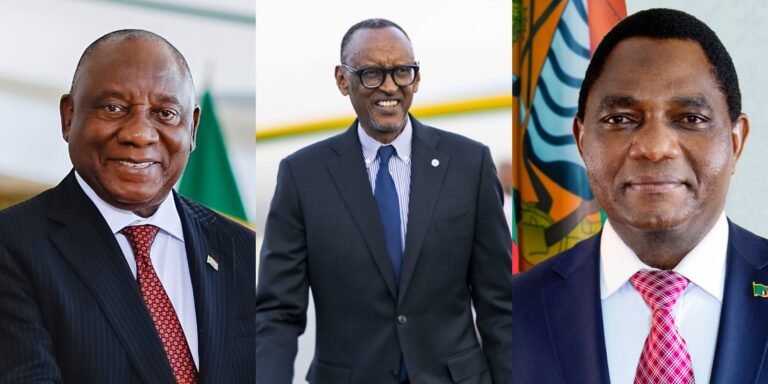
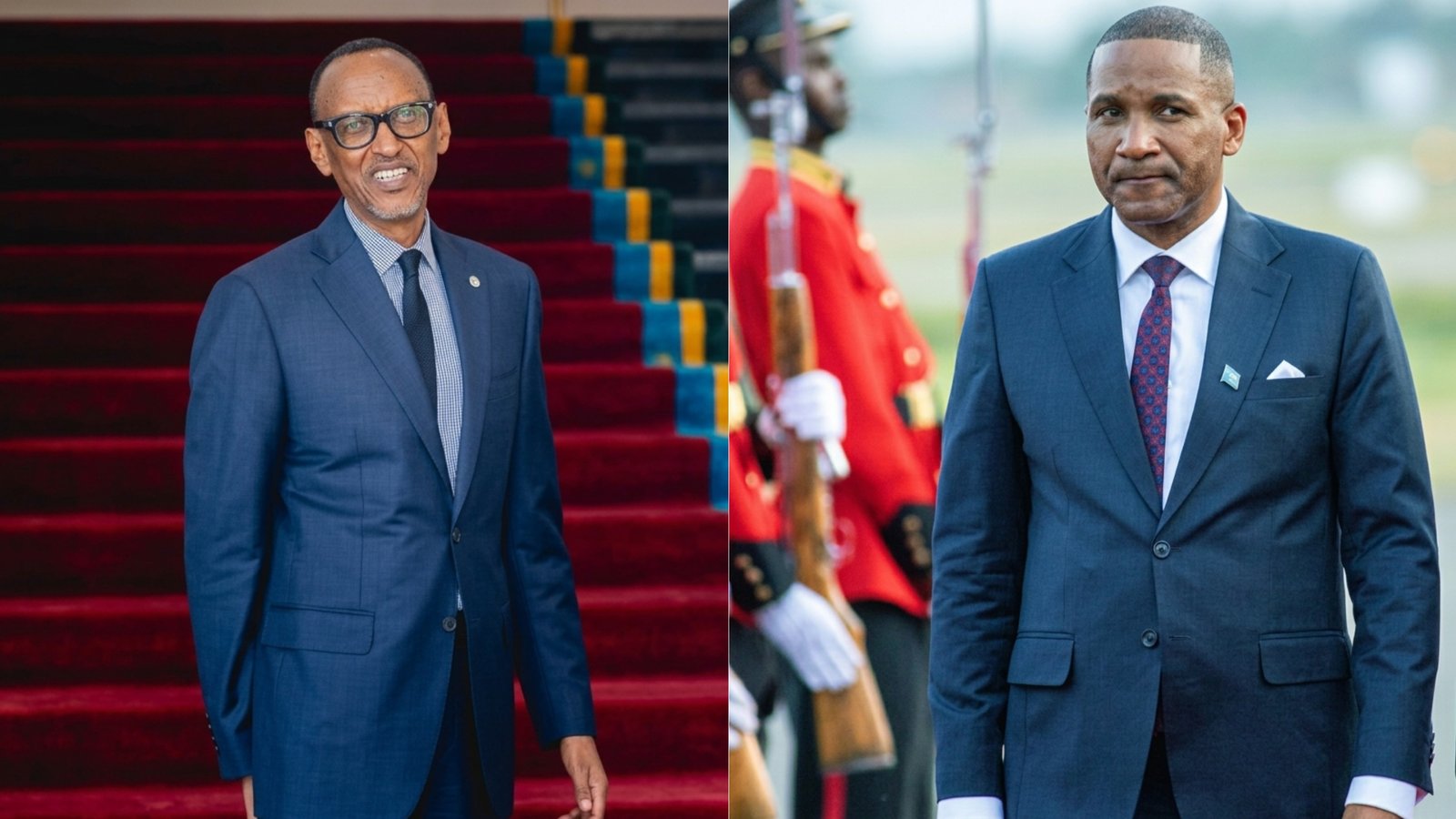
President Paul Kagame of Rwanda is scheduled to make a State Visit to Botswana from May 6 to 7, 2026, at the invitation of Botswana’s President, Advocate Duma Gideon Boko, the first such visit between the two heads of state since President Kagame’s inaugural trip to Gaborone in June 2019.
The visit, confirmed in a press release issued by the Botswana Government Communications and Information Services on April 29, will be preceded by the Second Session of the Botswana-Rwanda Joint Permanent Commission on Cooperation, known as the JPCC, running from May 4 to 5, 2026, and a business forum on May 5. President Kagame will travel with a delegation of government ministers, senior officials, and private sector representatives.
The two leaders are expected to hold Official Talks covering digital trade, tourism, animal vaccines, transport connectivity, and cooperation in Botswana’s diamond value chain. Among the agreements anticipated for signing are a framework for trade and investment cooperation, an institutional partnership between the Botswana Investment and Trade Centre and the Rwanda Development Board, Rwanda’s principal agency for investment promotion and economic growth and a Double Taxation Avoidance Agreement designed to reduce barriers to cross-border business flows. President Kagame is also scheduled to tour the Diamond Trading Company Botswana, a 50-50 joint venture between the Government of Botswana and De Beers Group that sorts and values the country’s rough diamond output.
The visit marks a significant deepening of bilateral ties that have been built up methodically over more than two decades. Botswana and Rwanda established diplomatic relations in 2004, and the framework for structured cooperation including the JPCC was formally agreed upon during President Kagame’s 2019 state visit. The inaugural session of the JPCC was held in Kigali in April 2022, when both governments described the mechanism as a foundation for deepening strategic partnership across trade, science and technology, tourism, and justice.
That session also produced a Memorandum of Agreement on defence cooperation, covering military operations, training, and the exchange of information on matters of common interest. The Second Session, which will open this coming week in Gaborone, is intended to track progress on those commitments and identify new areas of engagement ahead of the presidential summit.
For Botswana, the timing of President Kagame’s visit carries particular economic weight. The diamond sector accounts for roughly 20 percent of Botswana’s gross domestic product, more than 90 percent of its foreign export earnings, and just over 30 percent of government revenue making diversification of partners along the value chain a standing policy priority.
Botswana’s diamond output, sales, and fiscal revenues continued to fall through 2024 and into 2025 amid weak demand and rising inventories, with the government warning that U.S. tariff policy on Indian exports could delay a production recovery. Against that backdrop, the inclusion of diamond value chain cooperation as a formal agenda item in the Kagame-Boko talks signals Gaborone’s interest in broadening the range of partners engaged in what remains the country’s most economically consequential industry.
For Rwanda, which has positioned the Rwanda Development Board as a vehicle for attracting foreign direct investment across East Africa, a formal institutional link with the Botswana Investment and Trade Centre would extend its bilateral investment architecture further into Southern Africa.
The Double Taxation Avoidance Agreement under discussion holds particular relevance for investors and businesses operating across both jurisdictions. Such agreements eliminate the risk of the same income being taxed twice once in the country where it is earned and once in the country of the investor’s residence, a structural barrier that has historically discouused cross-border business between smaller African economies. Rwanda has concluded similar agreements with a growing number of partner countries as part of its broader strategy to position Kigali as a regional financial and investment hub.
With the JPCC session set to open on May 4 and the state visit beginning two days later, the practical outcome of the week will likely be a package of signed instruments that cements the legal and institutional framework for Rwanda-Botswana cooperation across at least three or four sectors. Whether the agreements are followed by tangible private sector activity will depend on implementation, a challenge that both countries have acknowledged in previous JPCC meetings. For now, the announcement confirms that the bilateral relationship, which has been built quietly and steadily since 2004, is entering a more operationally ambitious phase.
About the Author