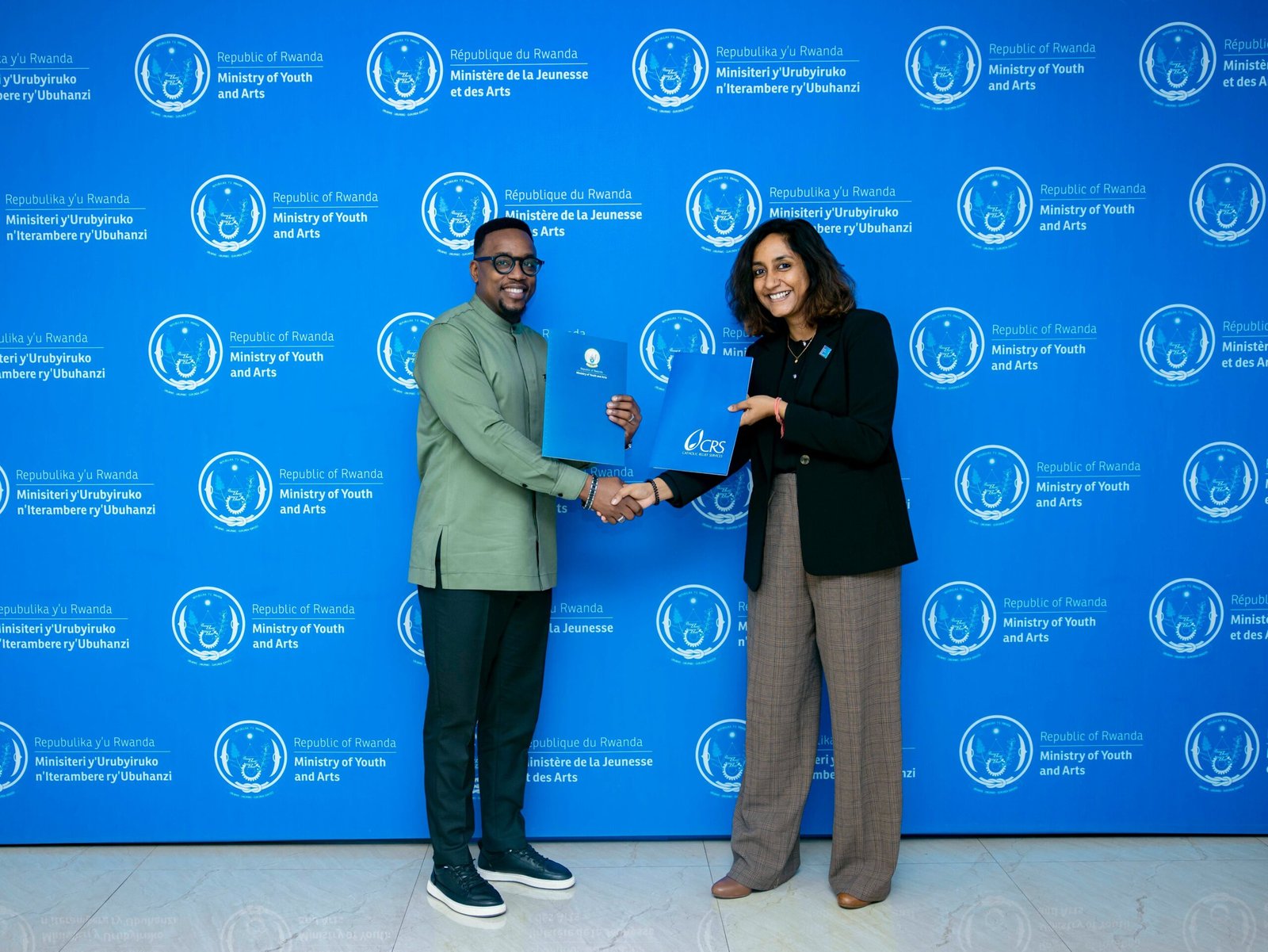
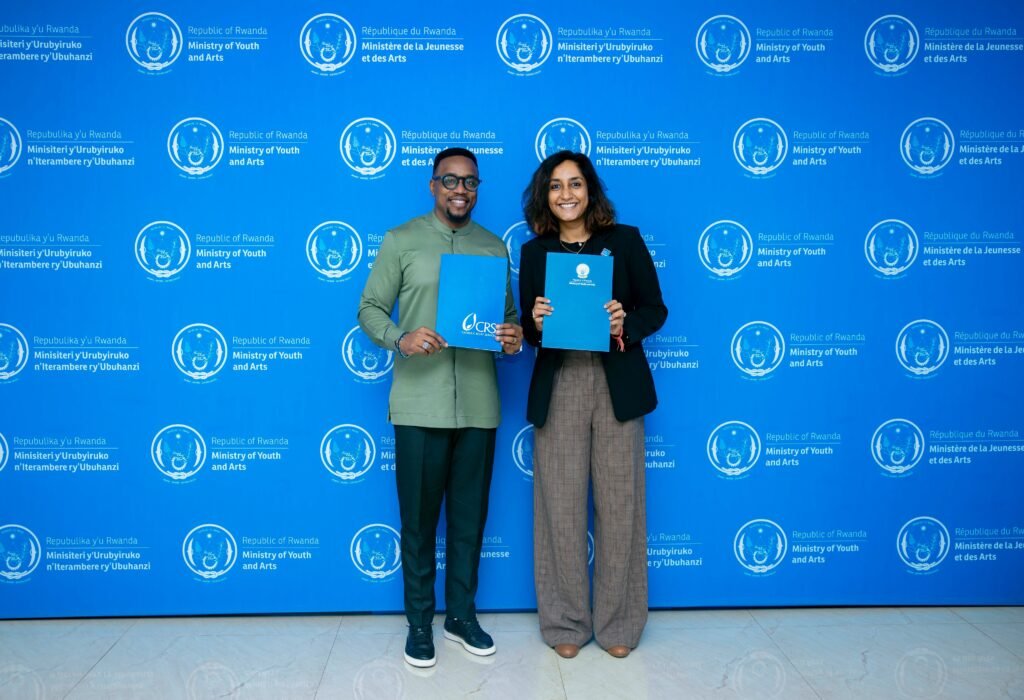
Rwanda’s Ministry of Youth and Arts and Catholic Relief Services (CRS) have signed a Memorandum of Understanding aimed at expanding youth employment, arts promotion, entrepreneurship, access to finance, and digital skills, with a specific focus on young people in rural areas who have historically been left behind by the country’s economic growth.
The agreement, announced on April 29 by the Ministry of Youth and Arts’ official account, formally commits both parties to work together on building sustainable livelihoods and fostering a more inclusive society.
The signing brings CRS, one of Rwanda’s most experienced international development operators, into a structured government partnership focused squarely on the youth economy.
The gap this deal is trying to close
Rwanda’s youth employment challenge is real and documented. According to Rwanda’s National Institute of Statistics Q1 2026 Labour Force Survey, youth aged 16 to 30 experience an unemployment rate of 13.4 percent, compared to 9.4 percent for adults, and the employment-to-population ratio among youth stands at just 52.1 percent, compared to 61 percent for adults over 30.
The rural dimension adds another layer. Labour underutilization, which captures underemployment and people who have given up searching stood at 55.9 percent of the working-age population in Q1 2026, with the burden falling disproportionately on women at 62.3 percent.
These are the communities this MoU is designed to reach.
What CRS brings to the table
CRS is not starting from scratch in Rwanda. The organization’s flagship Youth for Youth project has been operating across 10 districts, reaching 48,714 young entrepreneurs between the ages of 18 and 30, providing digital and in-person support to help solve the most pressing problems faced by rural youth entrepreneurs.
The project strengthens digital entrepreneurship and the enabling environment around youth-led businesses, helping participants become more digitally literate and benefit from accessible business development and financial services.
Tools developed through the programme including the KudiBooks mobile app, built by youth participants themselves have helped young business owners shift from paper-based bookkeeping to real-time digital management of their finances.
The MoU now formalizes this work within a government framework, which matters. CRS has historically operated through its own funding and partner networks. Tying its programming explicitly to the Ministry of Youth and Arts opens access to government-coordinated platforms including the YouthConnekt and Aguka entrepreneurship ecosystems, and creates accountability structures that can help scale impact beyond CRS’ own project reach.
Why arts and culture are part of this
The inclusion of arts promotion in the MoU is not incidental. Rwanda’s creative industries are increasingly recognized as an economic asset.
The Ministry of Youth and Arts has been building out the ArtsConnekt platform as a complement to YouthConnekt, targeting young creatives, musicians, visual artists, designers who need the same access to finance and business skills as any other youth entrepreneur, but often lack a pathway into formal support systems.
For CRS, which has deep experience in digital skills and financial inclusion, this partnership opens a new frontier: helping arts-based youth enterprises treat their creativity as a business.
MoUs between government ministries and international NGOs are often the first step toward jointly designed programs with co-financing. The language of this agreement, rural youth, sustainable livelihoods, access to finance, digital skills maps closely onto the priorities of donors like the Mastercard Foundation, and the World Bank’s IFC, all of whom are active in Rwanda’s youth employment space.
CRS Rwanda has been signalling its intent to expand into market systems development and youth digital skills, and this MoU gives it a government-backed platform to do precisely that at scale.
For Rwanda, with NST2 requiring dramatic reductions in youth unemployment by 2029, locking in implementation partners now with clear mandates and defined collaboration areas is exactly the kind of groundwork that makes national targets achievable.

About the Author