The World Bank Group has formally recognized Rwanda as one of only five countries worldwide to top its newly expanded Human Capital Index Plus (HCI+), placing it in a select group that includes Jamaica, Kenya, the Kyrgyz Republic, and Vietnam.
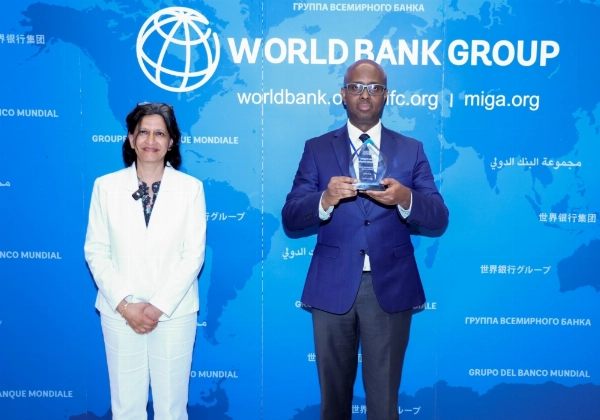
The award was handed over on April 16 in Washington, D.C., during the World Bank–IMF Spring Meetings, by Mamta Murthi, the World Bank’s Vice President for People.
Rwanda posted an HCI+ score of 157, well ahead of the Sub-Saharan Africa average of 126 and the global low-income country average of 116.
The recognition is specifically pegged to performance relative to income level, meaning Rwanda is not being compared to wealthy nations, but to countries with similar financial resources. Against that benchmark, Kigali comes out on top.
The World Bank’s People Vice President commended Rwanda’s results-driven approach, stating that “Rwanda’s performance on the Human Capital Index Plus demonstrates how sustained investments in health, education, and skills can translate into real productivity gains. It is a strong example of how countries can achieve impactful results even within limited resources.”
Rwanda’s Finance and Economic Planning Minister, Yusuf Murangwa, put it plainly: “Our focus on health, quality education, and creating pathways to productive employment is delivering measurable results for Rwandans and the economy, and we are integrating sustainability into every sector to ensure these gains endure for decades to come.”
The numbers behind the award are striking. Rwanda’s wage employment rate among youth stands at 65.2%, more than double the regional average of 26.7%.
The country has formalized its labor market by making it possible to register a business in hours and by prioritizing technical vocational training, ensuring graduates step directly into formal roles.
On school quality, Rwanda scored 417 on Harmonized Learning Outcomes, well above the regional benchmark of 341 and the low-income country average of 342.
Tertiary completion is at 22.8%, more than twice the Sub-Saharan Africa average of 10.5%.
The HCI+ measures the human capital a child born today can expect to acquire over their working life if current health, education, and employment conditions hold.
As of April 2026, the World Bank has issued country briefs for 159 nations, making Rwanda’s placement among the top performers a globally meaningful distinction, not a regional one.
About the Author