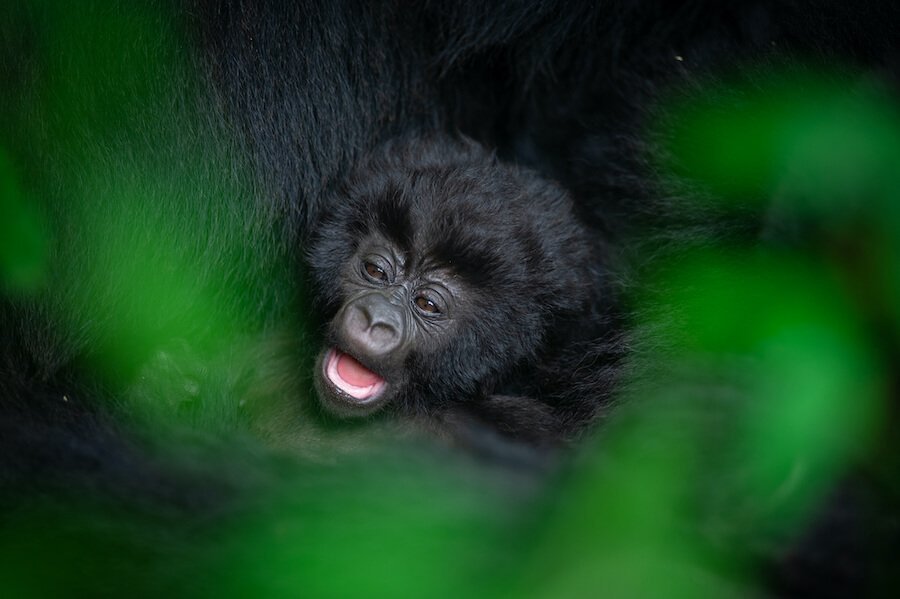
The Rwanda Development Board has officially announced that the 21st edition of Kwita Izina, Rwanda’s annual baby gorilla naming ceremony will take place on Friday, 4 September 2026, in Kinigi, Musanze District, at the foot of Volcanoes National Park.
The announcement lands as Rwanda prepares to mark more than two decades of a ceremony that started as a domestic conservation initiative and grew into one of Africa’s most internationally recognised wildlife events.
Kwita Izina is modelled on a centuries-old Rwandan tradition in which children are named in the presence of family and friends. Rwanda formally adapted the practice for mountain gorillas in 2005, and it has since become a global celebration of nature.
In Kinyarwanda, the name literally means “to give a name,” and each gorilla named carries a meaning that reflects personality, a conservation milestone, or the efforts of those protecting Rwanda’s wildlife heritage.
The 21st edition follows a ceremony tradition that has steadily expanded in both scope and symbolism. At the most recent Kwita Izina, 23 baby mountain gorillas born in the preceding twelve months were named, bringing the cumulative total since 2005 to 374 gorillas named across all editions.
Conservation success as backdrop
The 2026 ceremony takes place against a backdrop of measurable conservation progress. As of 2026, the mountain gorilla population stands at approximately 1,063 individuals in the wild, the highest figure recorded since conservation efforts began, representing a remarkable recovery from fewer than 400 gorillas in the 1980s.
Of those, approximately 604 live in the Virunga Massif, the transboundary volcanic range shared by Rwanda, Uganda, and the Democratic Republic of Congo, where the population is slowly and steadily increasing.
Rwanda’s Volcanoes National Park is central to that story. The park protects approximately one-third of the world’s remaining mountain gorilla population, with gorilla trekking permits priced at $1,500 per person, a figure that funds extensive conservation programmes, ranger salaries, anti-poaching patrols, veterinary care, and community development projects.
Holding the ceremony at the foothills of the Virunga Mountains is particularly significant because the biosphere reserve that surrounds the park is part of the World Network of Biosphere Reserves learning sites for sustainable development aimed at reconciling biodiversity conservation with economic use.
Why this matters for Rwanda and the continent
Kwita Izina is not simply a wildlife event. It is one of Rwanda’s most effective soft-power platforms, drawing international dignitaries, scientists, celebrities, and media who go on to amplify Rwanda’s conservation narrative globally.
The ceremony attracts conservationists, rangers, local communities, and the President of Rwanda making it as much a statement of national identity as a scientific event.
For the communities of Musanze and northern Rwanda, the ceremony also has direct economic consequences. Ten percent of wildlife tourism income is reinvested into local communities, meaning the ceremony and the gorilla trekking tourism it promotes are a direct funding mechanism for rural livelihoods in the shadow of the Virungas.
About the Author