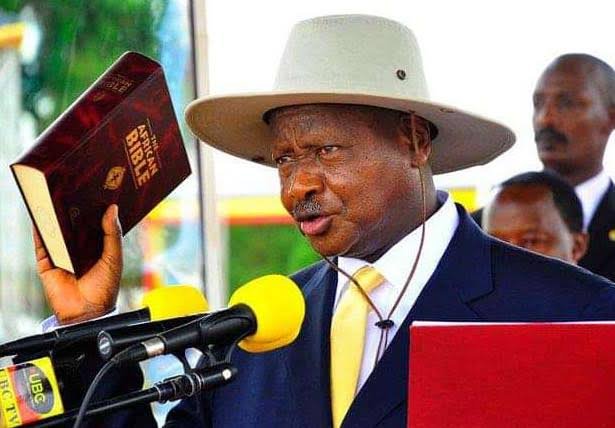
Uganda is declaring a national public holiday on May 12 and expecting 35 heads of state at Kololo Ceremonial Grounds and Rwanda’s ruling party has a seat at the table.
About 40,000 guests are expected at Kololo for the swearing-in of Yoweri Museveni for his seventh presidential term, including 35 heads of state, 30 diplomats, and delegates from 16 liberation movements, among them the African National Congress, Chama Cha Mapinduzi, ZANU-PF, FRELIMO, and Rwanda’s ruling Rwandan Patriotic Front.
The RPF’s presence on that invitation list is not incidental. It is a reminder of one of the most consequential political and military partnerships in modern African history, a brotherhood that helped shape both Uganda and Rwanda as they exist today.
Forty years and counting
Museveni, now 82, secured his seventh term in the January 15, 2026 election with 71.65% of the vote, defeating opposition candidate Robert Kyagulanyi known as Bobi Wine who received 24.72%. The 2026 result marks the first time in nearly three decades that Museveni has surpassed the 70% threshold, a level last previously achieved in 1996.
The inauguration will be held under the theme “Protecting the Gains, Making a Qualitative Leap into High Middle-Income Status.
The election itself was deeply contested. The US Senate called it “a hollow exercise, staged to legitimise President Museveni’s seventh term and four decades in power,” while Human Rights Watch stated the polls “were marred by human rights abuses.” The vote unfolded under a government-imposed internet blackout, and opposition candidate Bobi Wine said police raided his home on election night, forcing him to flee.
For Kampala’s diplomats and the heads of state arriving at Kololo next week, those facts will be part of the backdrop, not part of the ceremony.
The RPF’s invitation is rooted in history that predates Rwanda’s own independence as we know it. After Museveni’s government was formed in 1986, the NRA’s senior ranks included significant Rwandan refugee commanders, Paul Kagame was appointed acting chief of military intelligence, and Fred Rwigema was appointed Uganda’s deputy minister of defence and deputy army commander-in-chief.
The RPF itself was born from that crucible: in December 1987, the Rwandan Alliance for National Unity held its congress in Kampala and renamed itself the Rwandan Patriotic Front. Without Museveni’s Uganda, there is no RPF. Without the RPF, Rwanda’s post-genocide trajectory looks entirely different.
That debt is long-settled and mutually acknowledged. Relations between Kampala and Kigali have gone through serious strains, a border closure in 2019, mutual accusations of espionage, and competing interests in eastern DRC, but the institutional party-to-party relationship between the NRM and RPF has remained intact as a diplomatic bedrock.
The Kololo invitation is, in that sense, a ritual reaffirmation of that foundational bond.
The regional picture around the ceremony
The gathering of 35 heads of state in Kampala on May 12 is also a diplomatic snapshot of the moment. Museveni has pledged to focus on economic growth, expansion of the Parish Development Model, youth skilling, and strengthening regional security in the Great Lakes region in his new term.
That last pledge lands with particular weight given that Uganda plays a central, if sometimes opaque, role in the eastern DRC conflict, a theatre in which Rwanda’s own military and political interests are directly engaged.
Minister for the Presidency Milly Babalanda also announced nationwide prayers ahead of the inauguration, to be held Friday in mosques, Saturday in Seventh-day Adventist churches, and Sunday in Anglican and Catholic churches.
The religious calendar surrounding the event reflects the deliberate, state-orchestrated solemnity Uganda is wrapping around a ceremony that much of the international community views with considerably more ambivalence.
A Museveni seventh term running to 2031 means Rwanda has at least five more years of a neighbour whose politics, economy, and military posture it knows intimately.
The immediate diplomatic task for Kigali, whether represented at Kololo by a senior RPF official or by President Kagame himself is to use the inaugural goodwill to stabilise a bilateral relationship that has needed careful management.
With the DRC peace process at a critical juncture and the Uganda-Rwanda Joint Permanent Commission having met as recently as late 2025, the margins on Great Lakes cooperation are narrow. Showing up at Kololo, prominently, sends a message that Rwanda is still invested in the partnership, whatever the international community thinks of the election that made it necessary.
About the Author