Rwanda and the Democratic Republic of Congo have agreed to a concrete set of steps to move their fragile peace deal forward, including a scheduled withdrawal of defensive measures of Rwanda and a firm commitment by Kinshasa to go after the FDLR militia the armed group whose presence in Congo has been at the centre of the conflict for decades.
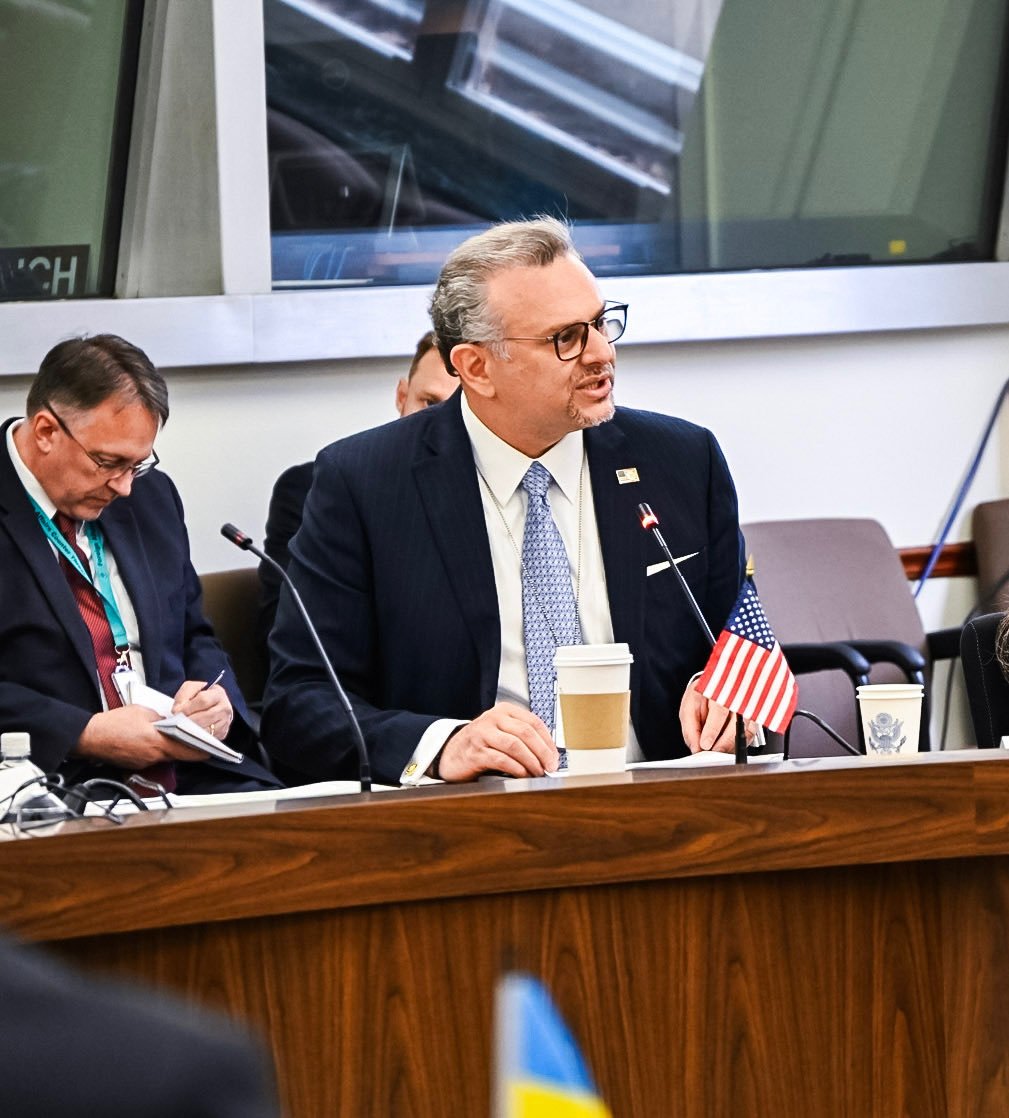
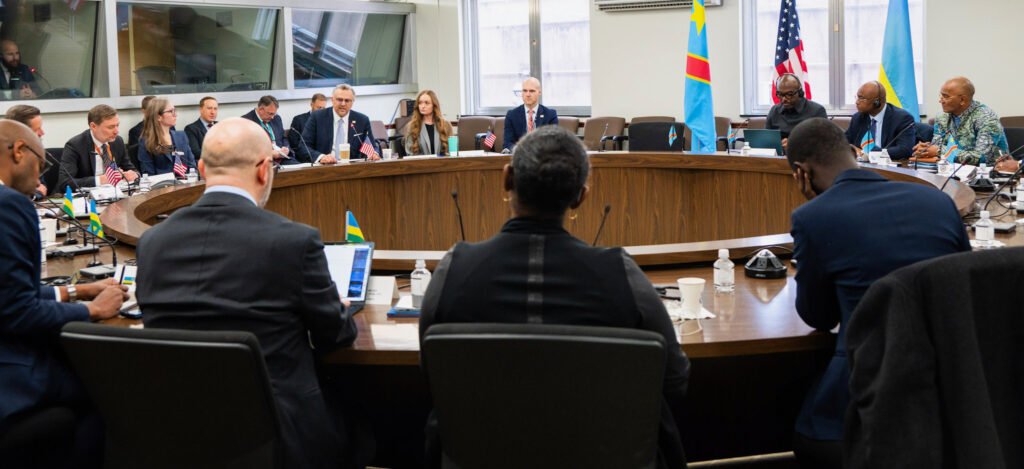
The agreement came out of two days of direct talks in Washington on March 17 and 18, producing a joint statement from the governments of the United States, the DRC, and Rwanda. It is the most operationally specific commitment to emerge from the Washington process since the original accords were signed.
The timing matters. Just two weeks earlier, on March 2, the U.S. Treasury had sanctioned the Rwanda Defence Force and four of its senior officers for violations of the Washington Peace Accords a rare and pointed rebuke of a country Washington considers a close partner in the region.
Rwanda did not take the sanctions quietly. Kigali pushed back almost immediately, calling the measures unjust and accusing Washington of targeting only one party to the peace process while ignoring what Rwanda described as distortions of the facts on the ground.
The government’s position was consistent with its broader argument — that its military presence in eastern DRC is a response to a genuine security threat, not an act of aggression, and that holding Rwanda accountable while the FDLR operates freely across the border is fundamentally unbalanced.
That Rwanda returned to Washington and signed on to a new framework anyway says something. Either Kigali calculated that continued defiance was costlier than compromise, or it saw enough in the deal particularly the binding FDLR commitment from Kinshasa to make the concession worthwhile
The Washington Accords, signed on June 27, 2025, called for Rwandan troop withdrawal from eastern DRC and for Kinshasa to end its support for the FDLR a militia formed by perpetrators of the 1994 genocide against the Tutsi, whose continued presence in eastern Congo has long been Rwanda’s stated justification for its defensive measures.
Neither side had fully delivered. The new Washington talks appear to be an attempt to put both commitments back on a concrete, time-bound track. For Rwanda, the deal carries real strategic weight. Kigali has consistently framed its defensive measures as a necessity, not aggression.
Agreeing to a phased disengagement in defined areas, while securing a binding DRC commitment to neutralise the FDLR, gives Rwanda a framework it can point to as evidence of good faith without surrendering the security concerns.
The question is whether Kinshasa can or will actually move against FDLR elements embedded in territory and the army that is still contested and only partially under government control.
The next test is execution. The DRC parliament was already debating ratification of the Washington Accords as recently as March 7 , and separate Doha-mediated talks between the Congolese government and M23 are still ongoing.
If the force disengagement proceeds on schedule and the DRC takes visible action against the FDLR, it would mark the first time the peace process has produced verifiable movement on the ground. If it stalls again, the U.S. has already shown it is prepared to act and another round of sanctions, potentially broader, would put the entire Washington framework under serious strain.
About the Author