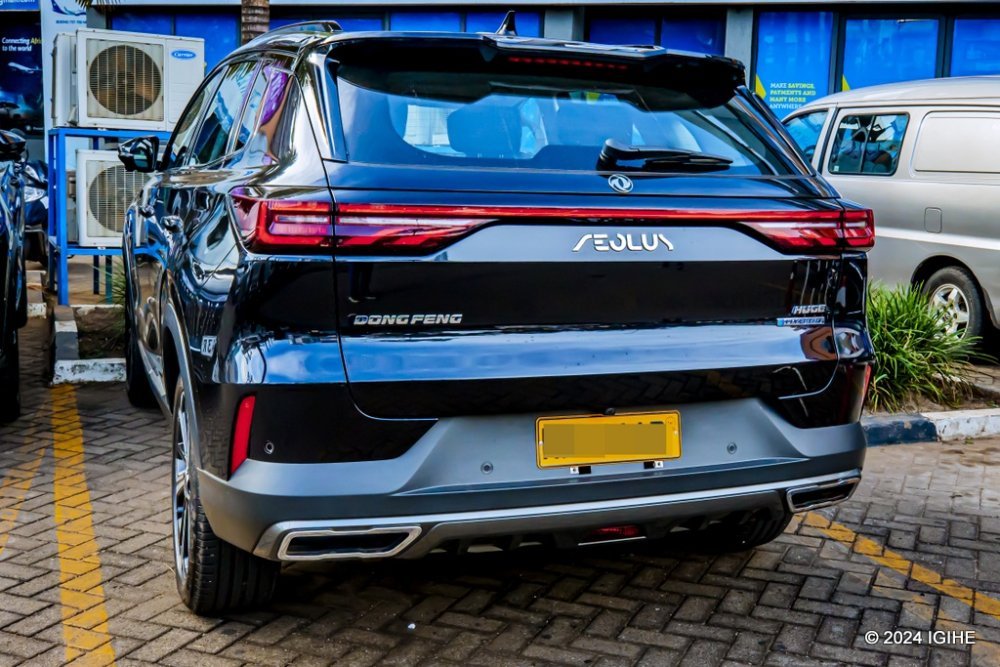
Rwanda’s government has made electric vehicles mandatory in public procurement, requiring that at least 30% of all vehicles purchased by state institutions be electric, a rule that puts green mobility at the center of how the government itself does business.
The directive, announced by the Ministry of Infrastructure through State Minister Jean de Dieu Uwihanganye, marks a significant policy shift: instead of simply incentivizing the private sector to go electric, Kigali is now leading by example, using procurement law as a lever.
It lands just days after Rwanda’s fuel regulator, RURA, pushed petrol prices to Rwf 2,938 per litre, a jump of Rwf 635, representing a 27.6% increase in just two weeks.
The spike, driven by Middle East geopolitical tensions, exposed once again how deeply Rwanda’s economy is tied to imported oil. Uwihanganye himself publicly urged vehicle owners to reduce unnecessary travel and lean on public transport as a buffer against rising costs.
The 30% EV procurement mandate is now the structural answer to that exact vulnerability.
For Rwanda, this is about more than clean air
Road transport already costs Rwanda $22 million a year in fuel imports from electric motorcycles alone and transport is one of the country’s fastest-growing sources of greenhouse gas emissions.
Transport contributed 57% of all GHG emissions in Rwanda’s energy sector as of 2022, making fleet electrification one of the highest-impact climate levers available to government. Rwanda has also committed, under its updated NDC 3.0, to reduce GHG emissions by 53% against a business-as-usual scenario by 2035, a $12 billion plan running from 2025 to 2035 targeting 14.86 million tonnes in carbon reductions.
Beyond climate, there’s a sovereignty argument. Every petrol vehicle in a government fleet is a direct drain on foreign exchange. Mandating EVs in procurement converts that recurring cost into domestic electricity spend, electricity that Rwanda prices at a capped industrial tariff of $0.10/kWh for EV charging, half the standard rate.
The 30% EV procurement target is almost certainly a floor, not a ceiling. Uwihanganye has already stated that all public transport buses in Rwanda are expected to be electric by the end of 2026, a timeline that would make Rwanda one of the first countries on the continent to fully electrify its urban bus fleet.
Rwanda’s broader national targets call for 20% of buses, 30% of motorcycles, and 8% of cars to be electrified by 2030.
The EV procurement mandate extends that logic to government fleets directly. As the policy takes effect, it will pressure suppliers and dealers to stock more affordable EV options locally, and signal to investors that Rwanda’s EV market has guaranteed institutional demand, not just aspirational targets.
For companies like Ampersand, Basigo, IZI Electric, and BYD’s Kigali dealership, this is the kind of policy certainty that makes scaling worthwhile.
About the Author