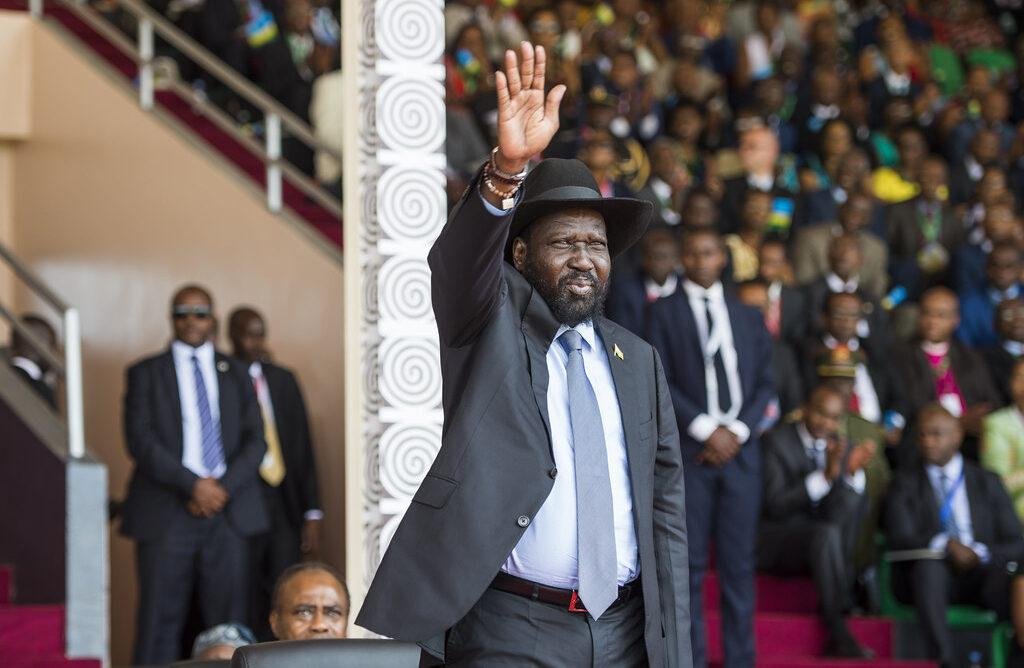
South Sudan’s President Salva Kiir has dismissed his foreign minister, trade minister, and the head of the country’s internal security bureau in a single evening decree announced on state television Wednesday, April 30, the latest in a string of abrupt government purges that have become a defining feature of his presidency.
The South Sudan Broadcasting Corporation announced that Kiir had relieved Wednesday Semeya Kumba of his post as foreign minister and sacked Atong Kuol Manyang as trade minister. No explanation was given for either dismissal. In the same sweep, General Mawien Mawien Ariik was removed as Director General of the Internal Security Bureau within the National Security Service.
Kiir appointed Ambassador James Pitia Morgan as the new foreign minister, a familiar face who had previously held the same position from August 2023 to April 2024, and most recently served as presidential envoy for the Great Lakes region.
Dr. Labanya Margaret Mathya Ugila was appointed Minister of Trade and Industry, while Atong Kuol Manyang, rather than being sent home entirely was reassigned to the Ministry of Youth and Sports.
Wednesday’s reshuffle did not happen in a vacuum. It follows an accelerating cycle of executive dismissals that critics say is dismantling the architecture of South Sudan’s fragile peace deal.
In early April, Kiir fired the speaker and deputy speaker of parliament. Before that, in late February, he abruptly sacked Finance Minister Bak Barnaba Chol, who had been in office for just three months.
The UN Security Council and the African Union have flagged these unilateral dismissals as violations of the 2018 Revitalized Agreement on the Resolution of the Conflict in South Sudan (R-ARCSS), noting that such moves are supposed to follow consultations between coalition partners not presidential decree alone.
South Sudanese analyst Boboya James Edimon, speaking to Radio Tamazuj, offered the most pointed diagnosis of why the foreign minister specifically was pushed out. “It appears the president was not convinced by the level of diplomatic input, especially during the recent engagements in Addis Ababa where tensions were high,” Edimon said, adding that the changes also pointed to wider governance and coordination challenges.
Civil society figure Edmond Yakani, a consistent voice on South Sudan’s governance crisis, put the pressure squarely on the incoming foreign minister. “The big task is on the newly appointed Minister of Foreign Affairs and International Cooperation. He has to work on regaining lost trust and confidence in South Sudan among its international partners,” Yakani said.
He also called on the new Internal Security Bureau chief to “ensure respect for civic and political space as a key to winning public trust.”
Analysts say Kiir regularly reshuffles his military and government to maintain control as he contends with armed conflict and speculation about his eventual succession.
The December 2026 election deadline which the AU has backed makes the diplomatic and security portfolios particularly sensitive. Who leads those offices will shape whether Juba enters that deadline period as a credible transitional partner or a government visibly pulling its own foundations apart.
The incoming foreign minister, James Pitia Morgan, faces an immediate in-tray that includes managing the Ugandan military presence inside South Sudan, navigating the AU’s C5-Plus pressure, and with Riek Machar still on trial, reassuring international donors that Juba remains a functioning peace partner.
Morgan’s return to the foreign ministry is not a fresh start. It is a signal that Kiir is reverting to a trusted loyalist at a moment when the diplomatic environment is becoming more demanding, not less.
About the Author