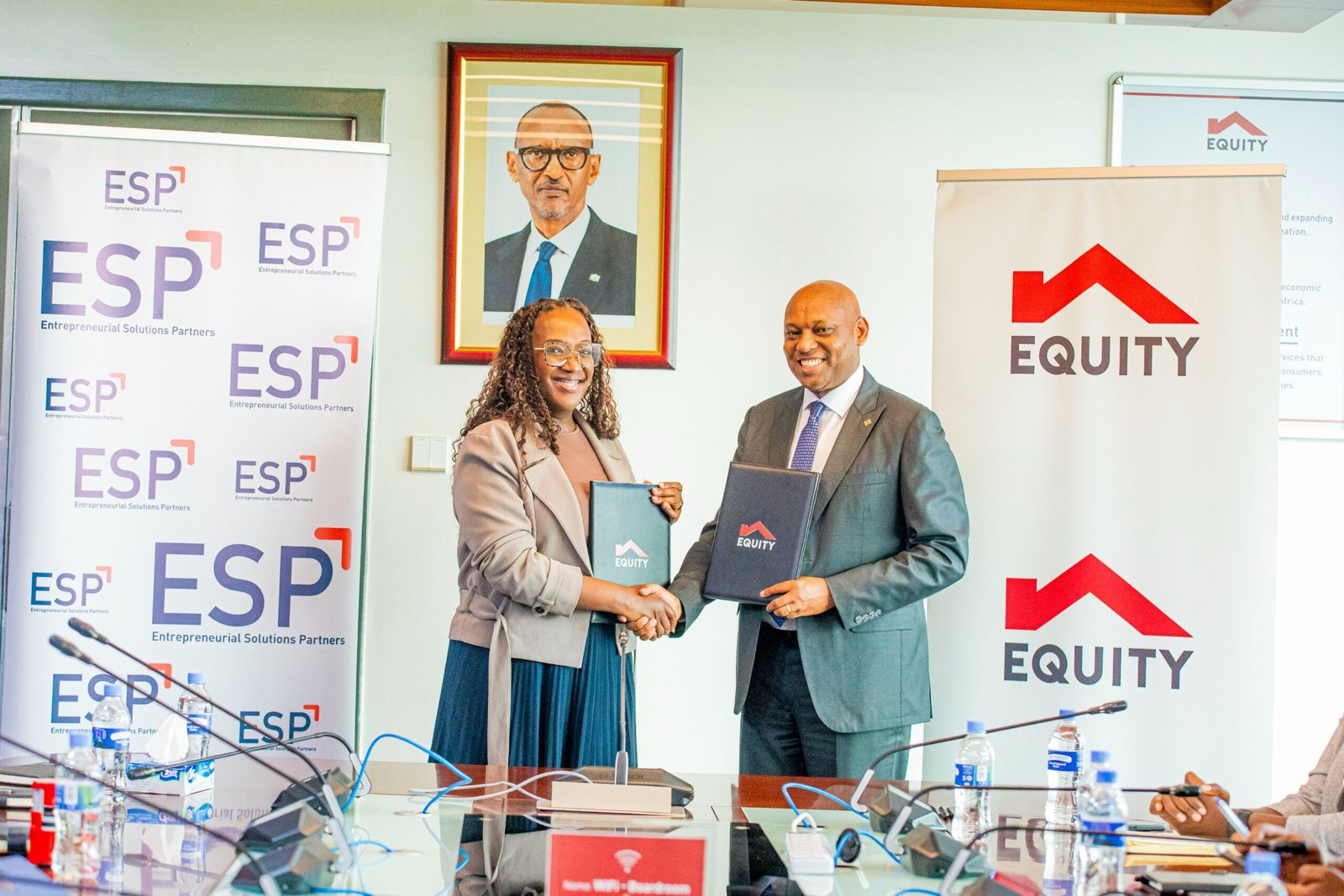
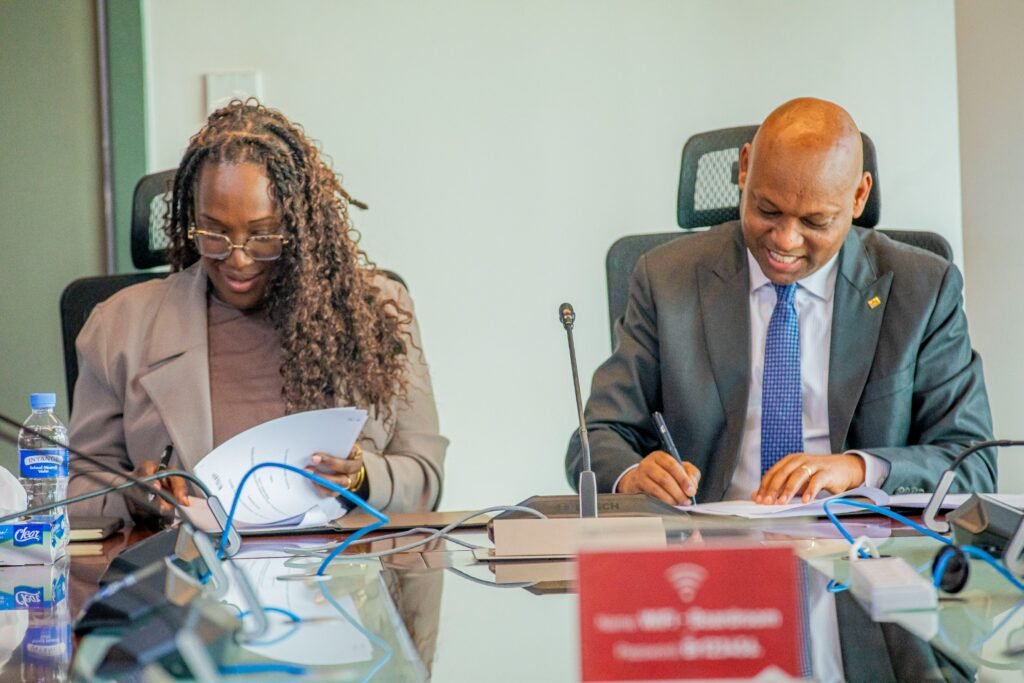
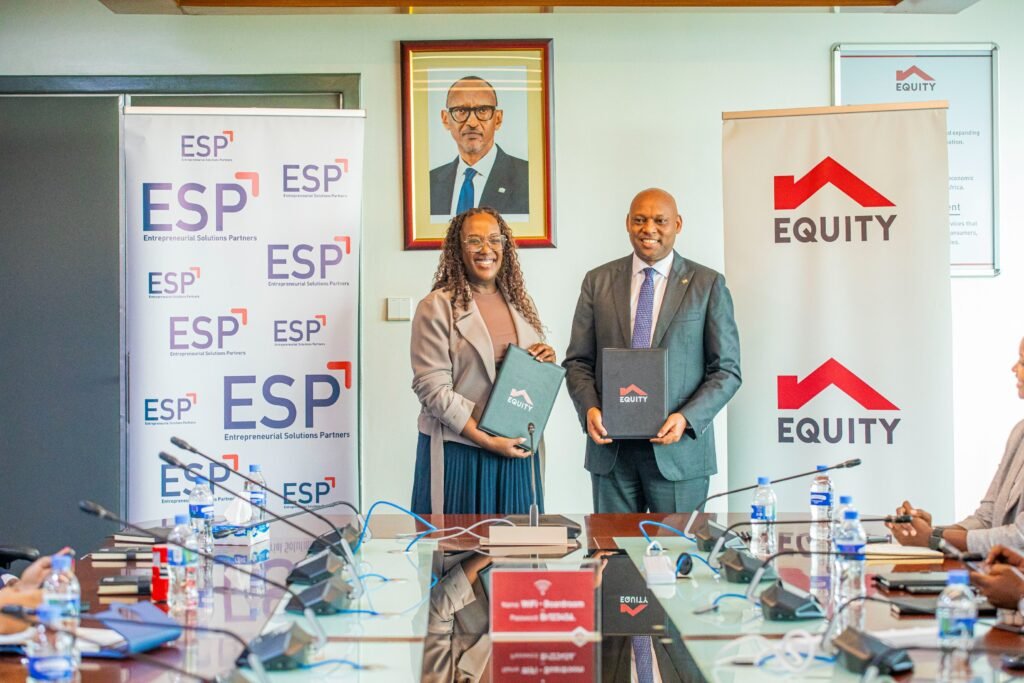
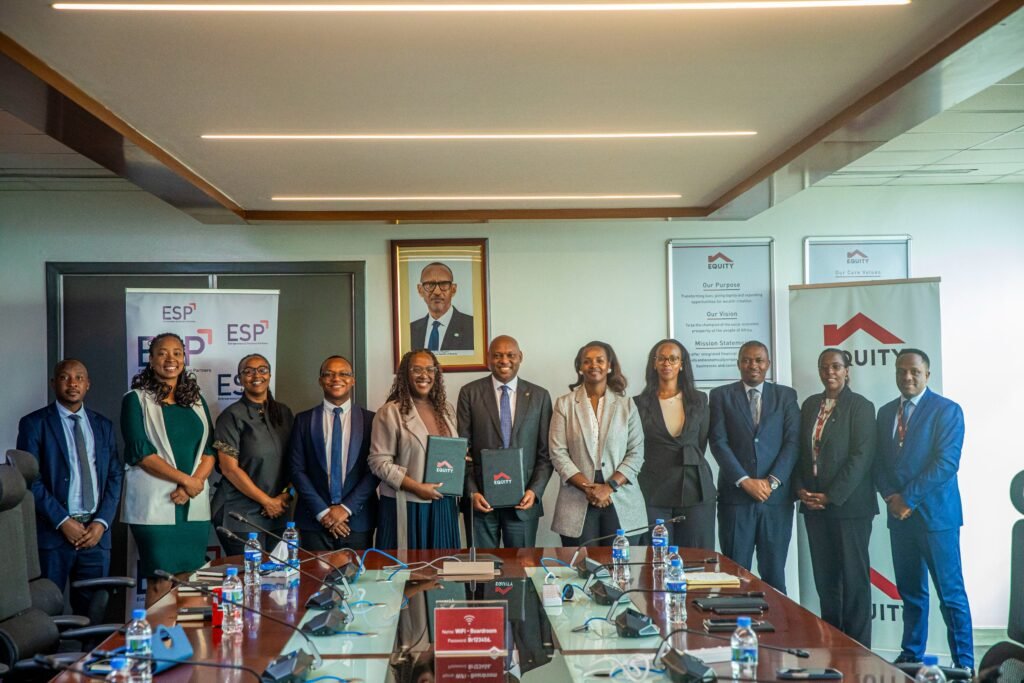
Equity Bank Rwanda has signed a Memorandum of Understanding with Entrepreneurial Solutions Partners, the Kigali-based firm known locally as ESPartners Rwanda Ltd to give women entrepreneurs structured access to finance, business skills, and market connections.
The signing, announced Wednesday by the bank’s official Twitter account, adds another institutional partner to a women’s economic empowerment strategy that Equity Bank has been building out aggressively since late 2025.
No financial figures or target beneficiary numbers were disclosed in the bank’s announcement. But the deal’s architecture pairing a commercial bank with an entrepreneurship support firm that has spent years working directly with Rwanda’s SME ecosystem suggests a more hands-on model than a simple lending facility.
Who ESPartners Is
ESPartners operates from Kacyiru, Gasabo, and runs programs across Rwanda and Côte d’Ivoire, working with entrepreneurs at every stage, from pre-ideation through to growth-stage businesses with an explicit mandate to build commercially successful, disruptive enterprises across Africa.
The firm has run multiple Mastercard Foundation-backed programs in Rwanda, including Tourism Inc, a flagship incubator for the hospitality sector. Over four years of that programme, ESP supported 176 entrepreneurs, 72 percent of them women, through whom hundreds of new products and jobs were created, a track record that speaks to their on-the-ground reach with exactly the demographic Equity Bank is now targeting through this MOU.
The MOU is not Equity Bank’s first partnership of this kind, and the bank knows the difference between a partner that can write a curriculum and one that can actually find the women who need it.
This deal is the third major women’s finance partnership Equity Bank Rwanda has formalised in less than eight months. In September 2025, the bank signed an MOU with UN Women Rwanda, with Managing Director Hannington Namara and UN Women Country Representative Jennet Kem committing to reach over 10,000 women including rural entrepreneurs, cross-border traders, cooperatives, and Village Savings and Loan Associations through tailored financial products, digital tools, and capacity-building support.
Then in March 2026, Equity Bank partnered with MUA Insurance Rwanda to launch Isheja, a hybrid banking-and-insurance product designed exclusively for women, offering preferential loan rates starting from 1.3 percent per month alongside business advisory and insurance coverage.
The ESPartners MOU follows those two deals within weeks and comes on the heels of external recognition. At the Inclusive FinTech Forum 2026 in Kigali, Equity Bank Rwanda was formally awarded for its leadership in advancing women’s financial inclusion, with National Bank of Rwanda Governor Soraya Hakuziyaremye handing the award to MD Hannington Namara.
Rwanda’s financial inclusion story has long had a gender gap at its centre. Women make up the majority of Rwanda’s agricultural workforce and a significant share of the informal economy, yet they consistently face barriers in accessing formal credit, including collateral requirements, documentation burdens, and loan structures that don’t account for seasonal income cycles.
Equity Bank Rwanda’s Commercial Director Eric Rutabana put it plainly at the bank’s Women Forum in March: “Access alone is not enough. Before capital can grow a business, confidence must grow the individual.”
That framing, finance and capacity building as inseparable is precisely what an ESPartners partnership is designed to deliver. Where a pure banking product offers capital, ESP adds the training, mentorship, and market linkages that determine whether a woman entrepreneur can actually deploy that capital effectively.
The combination is closer to what development economists call a “bundled” approach, and the evidence from Rwanda and across Africa suggests it works better than either element in isolation.
The bank has said more than 55,000 women have directly benefited from its empowerment programmes to date, with broader indirect impact across communities.
The ESPartners deal is designed to push that number further, and into market segments particularly growth-stage founders and women with existing businesses who need market linkages rather than just starter capital, that a conventional banking product alone cannot reach.
Given ESP’s existing relationships with the Mastercard Foundation and Rwanda Development Board, there is room for this partnership to attract additional development finance if it can demonstrate early traction.
About the Author