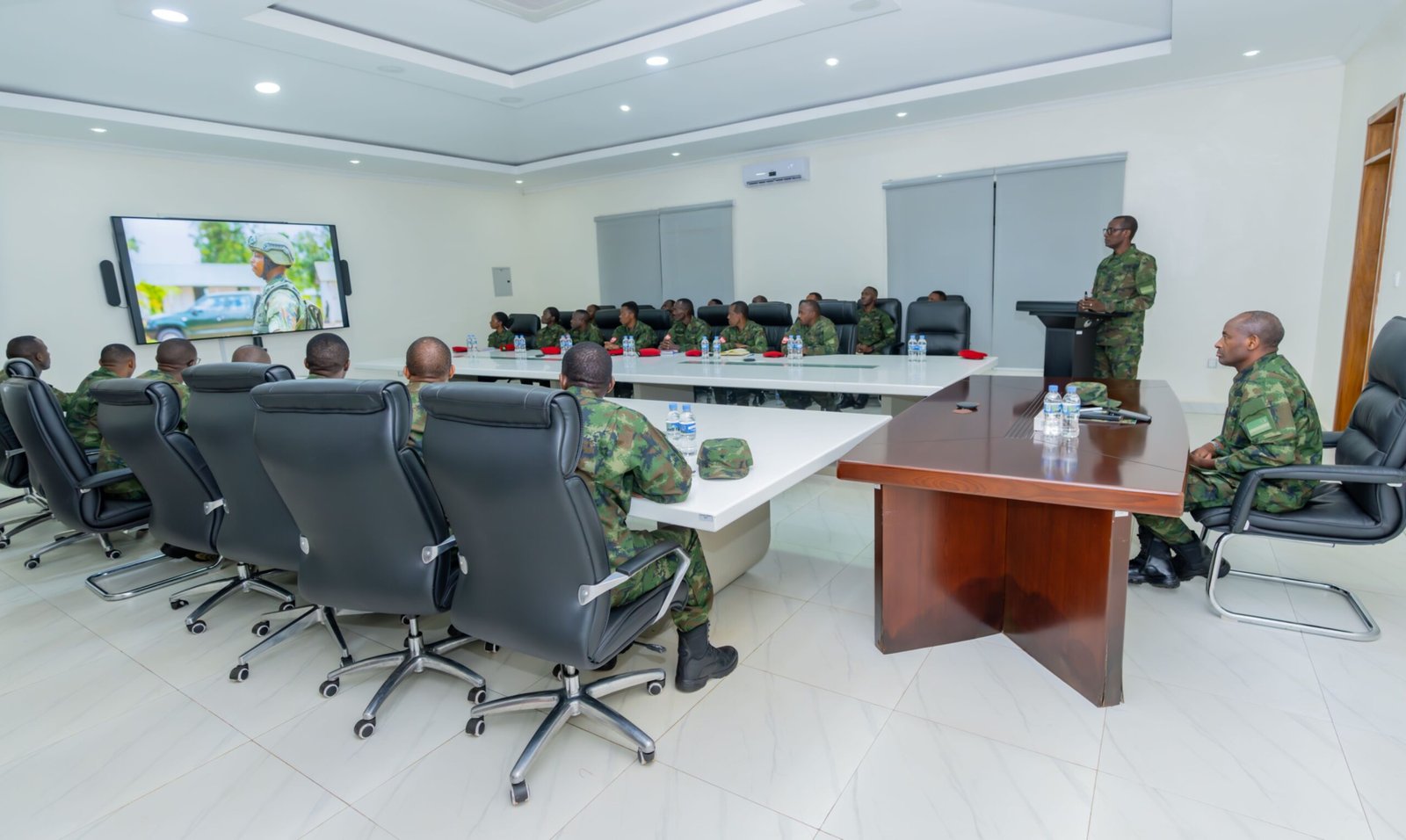
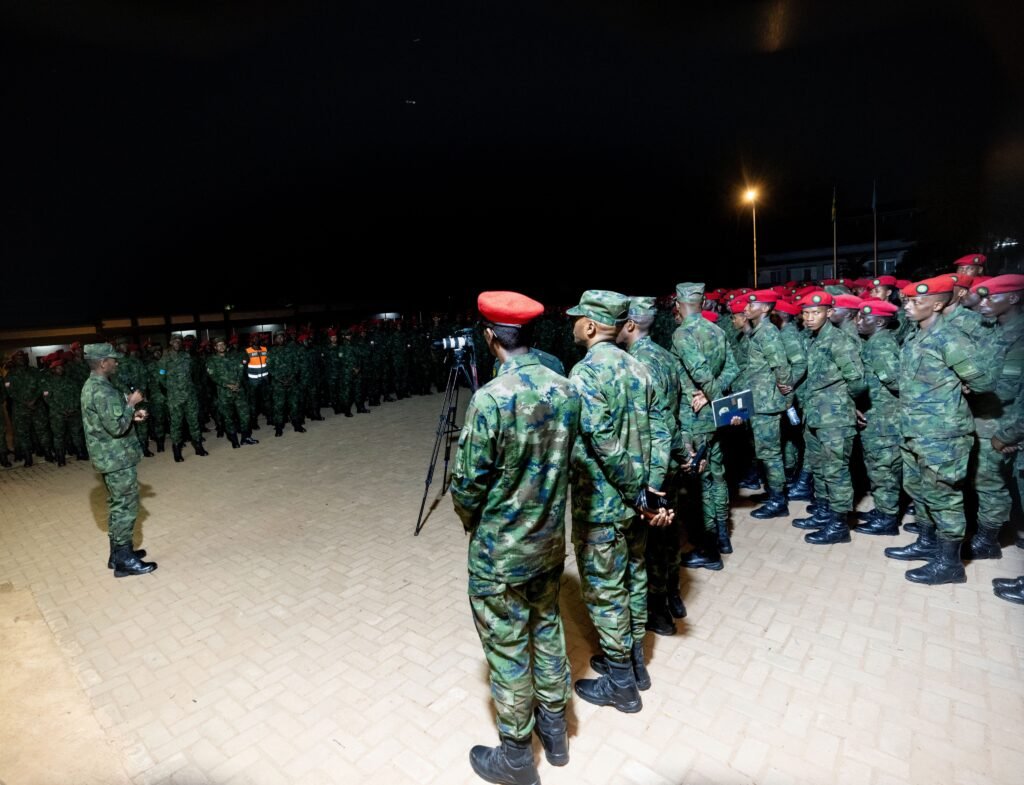
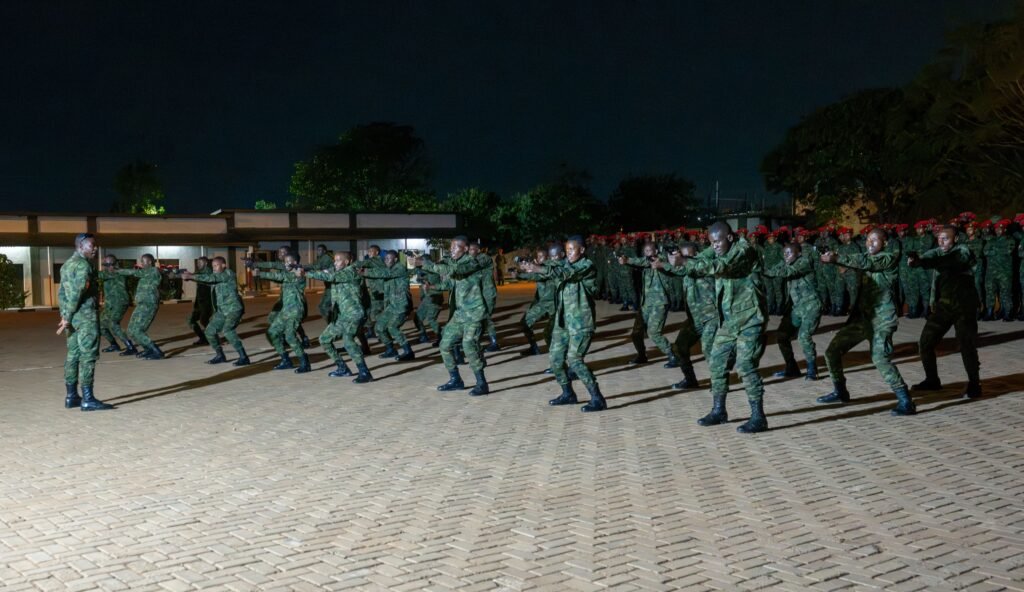
A new cohort of Rwanda Defence Force Military Police personnel graduated on Wednesday at Kanombe Military Barracks, with the RDF’s top general presiding over the ceremony and using the occasion to open a set of newly built sports and training facilities, a quiet but deliberate signal that the RDF is investing in the human and physical infrastructure that sustains a professional military.
The RDF Chief of Defence Staff, General MK Mubarakh, officiated the passing-out ceremony on April 29, congratulating the graduates on completing their training and calling on them to uphold the highest standards of discipline across all formations.
He specifically singled out the Military Police Brigade, urging its members to remain what he called “exemplary custodians of core values” within the RDF language that reflects the unique internal enforcement role the Brigade plays in maintaining order and professionalism across the force.
The Military Police Brigade is not a ceremonial unit. Under Rwanda’s 2025 Presidential Orders reorganising the RDF, the most comprehensive military restructuring in more than a decade, the Military Police was formally confirmed as a specialized unit with clearly defined responsibilities: handling internal discipline within the RDF across all formations.
That mandate makes it one of the few units whose work is as much inward-facing as it is operational, responsible for maintaining the behavioural and ethical standards that underpin the RDF’s reputation at home and abroad.
Rwanda is currently the second-largest troop-contributing country to UN peacekeeping operations globally. Every unit that deploys under a blue helmet carries Rwanda’s name. A Military Police force that cannot enforce discipline at home is ill-equipped to support the standards expected on international missions.
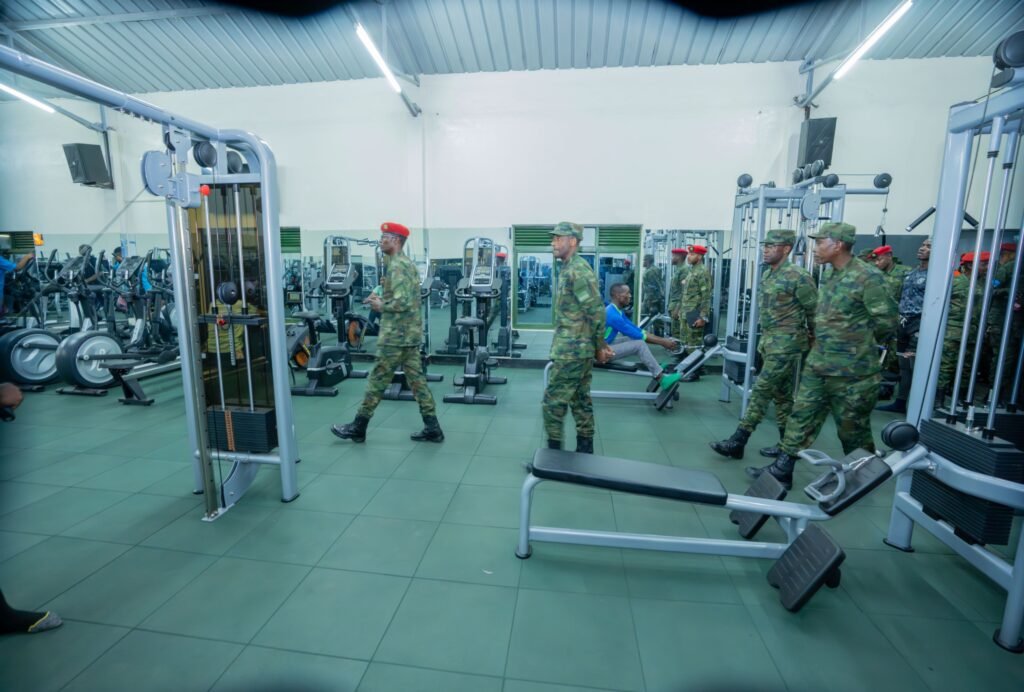
Beyond the graduation, General Mubarakh inaugurated a suite of newly constructed sports and training infrastructure at Kanombe: basketball, volleyball, and netball courts, along with a modern gymnasium.
The choice to open these facilities at a Military Police pass-out ceremony was deliberate. Physical readiness and professional development are treated as inseparable in the RDF’s training philosophy, not an add-on, but a baseline requirement.
This graduation lands at a moment when the RDF is managing one of its most complex operational profiles in years. Rwanda’s forces are active in Mozambique’s Cabo Delgado, the CAR, South Sudan, each environment demanding a different kind of soldier and a different code of conduct.
The 2025 RDF reorganisation reflected this reality, expanding the force’s structure to include formal recognition of specialized units with distinct command structures, while also broadening the definition of what counts as classified military assets to include communications technology, software, and intelligence infrastructure.
Investing in the Military Police, the unit that keeps all of this in line is not a soft institutional priority. It is a structural one. The new graduates stepping out of Kanombe will enforce discipline in a force that is bigger, more dispersed, and more scrutinised than at any point in its recent history.
About the Author