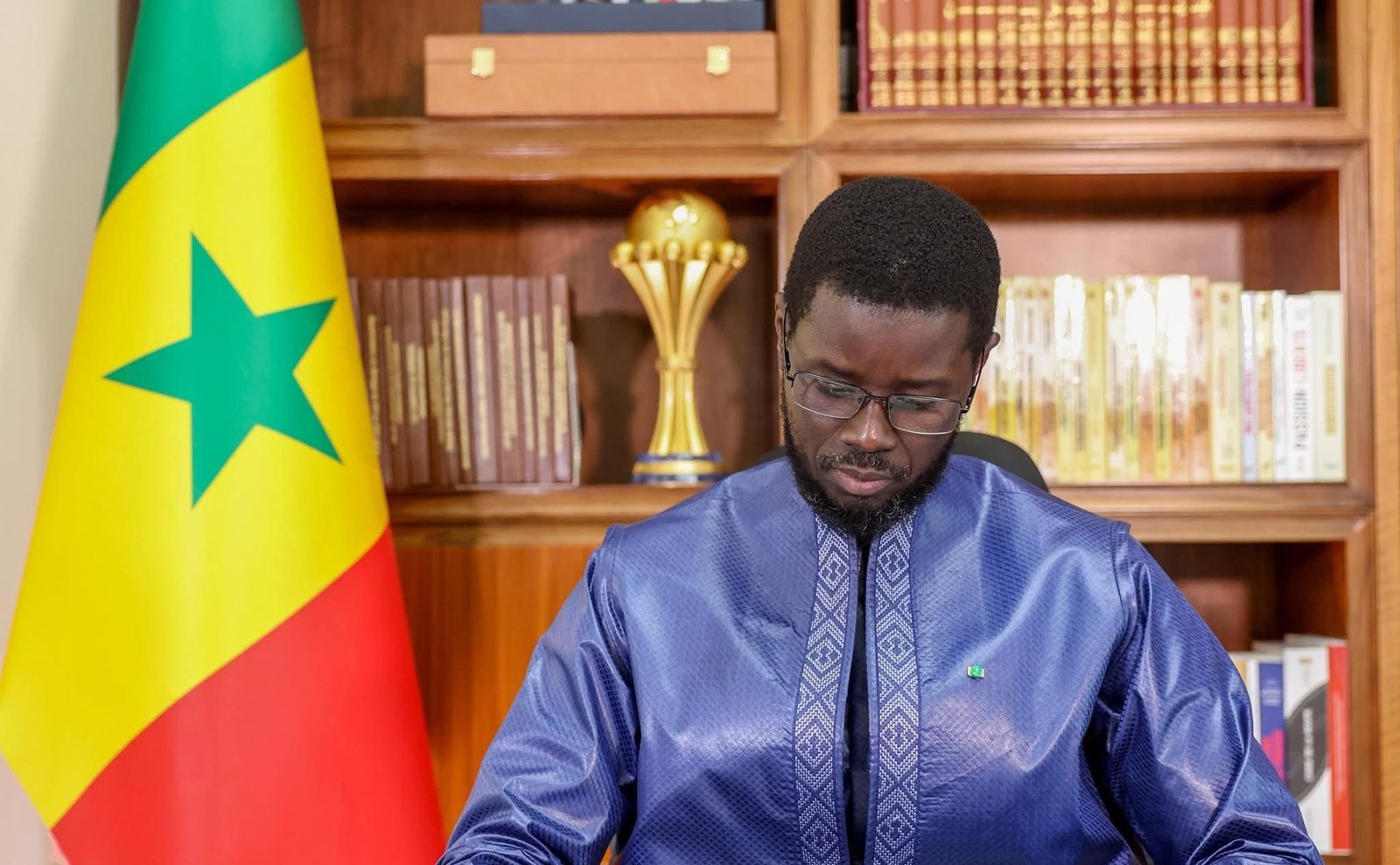
Senegal’s President Bassirou Diomaye Faye unveiled a 30-minister government on June 1, 2026, built entirely of technocrats and with zero official representation from PASTEF, the party that brought him to power just two years ago. The man who ran on PASTEF’s ticket is now governing against it.
Ousmane Sonko, Faye’s ousted prime minister and PASTEF leader, announced that the party would not participate in the new government and would not be represented by any ministers, after a meeting with Faye where “points of disagreement” emerged over PASTEF’s future role. He made the announcement one hour before the cabinet list went public.
Despite that, the roster of ministers appointed by new Prime Minister Al Aminou Lo included at least three PASTEF members, seemingly contradicting Sonko’s declaration. According to NetAfrique, up to five PASTEF-linked figures defied party orders to accept ministerial posts.
How it got here
The partnership that oversaw the fall of former President Macky Sall collapsed on May 22, 2026, when Faye announced he was dismissing Sonko as prime minister and dissolving the government. Months earlier, Faye had confirmed publicly that disagreements existed between him and his PM, denouncing what he called the “excessive personalisation” of power around Sonko.
Faye signalled a clean break from PASTEF’s direct control of the executive, stating the new prime minister would form the cabinet in consultation with both the National Assembly and the presidency. On May 27, deputies voted to elect Sonko as Speaker of the National Assembly, giving him a powerful platform to challenge the very president he helped elect.
The new Prime Minister, Al Aminou Lo, previously served as head of the Senegal branch of the Central Bank of West African States, a deliberate signal to the markets that Dakar is willing to play ball with the IMF.
Why this matters beyond Senegal
Senegal is not just going through a cabinet reshuffle. It is navigating a debt crisis that has implications for how West African governments manage sovereign finances. Senegal’s public debt has surged beyond 130% of GDP, IMF support remains suspended, and access to private credit markets is increasingly difficult, all inherited from hidden liabilities left by former President Macky Sall, equivalent to 25.3% of GDP.
Senegal’s foreign currency bonds fell as much as 5.7 cents on the euro and nearly 4 cents on the dollar immediately after the political shake-up, with Morgan Stanley noting that investors are now pricing in higher odds of a debt restructuring.
For the continent, the bigger question is governance: can a president elected on a populist, anti-IMF platform govern as a technocrat without fracturing his own base? Faye is now trying to do exactly that and Sonko controls the parliament that could block him at every turn.
Oxford Economics noted that Sonko “has signalled an intention to exercise strong parliamentary oversight, potentially constraining the executive’s ability to implement reforms aligned with IMF requirements.” With PASTEF holding a large parliamentary majority, every bill, every budget, and every IMF-required reform will face a test in the National Assembly.
Faye’s bet is that technocrats, markets, and multilateral creditors will stabilise the economy fast enough to survive that pressure. Sonko’s bet is that controlling the legislature is the better path to the 2029 presidential election.
About the Author