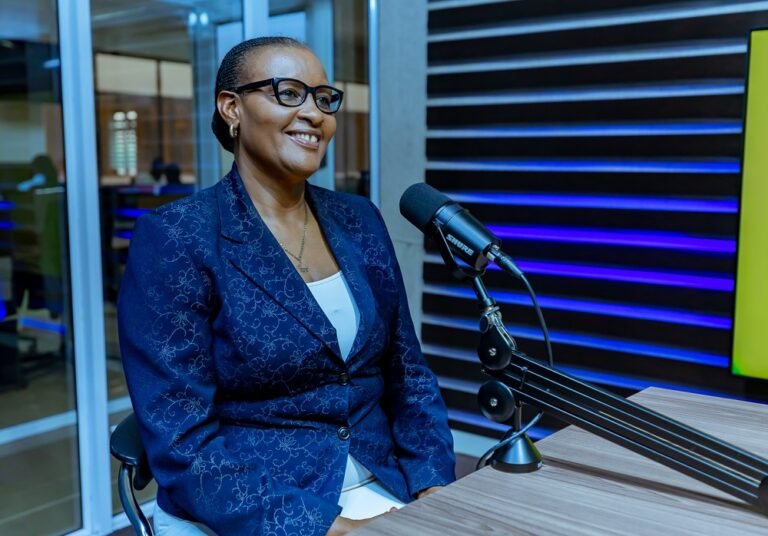
Rwanda’s Minister of Justice and Attorney General, Dr. Emmanuel Ugirashebuja, has signaled that the government is preparing to reduce the length of prison sentences for thousands of convicts, citing a need to bring the justice system’s punitive record into line with its rehabilitation goals.
Briefing the Chamber of Deputies, the lower house of Rwanda’s Parliament, on July 7, the Minister disclosed that between 2022 and 2024 more than 9,000 people were sentenced to terms ranging from fifteen years to life imprisonment, a large share of them young adults, and said the numbers point to a system still out of step with the rehabilitative aims Rwanda has set for itself.
The disclosure came during a parliamentary review of the National Criminal Justice Policy, a framework the government introduced in September 2022 to modernize how Rwanda investigates, prosecutes, and punishes crime.
Four years in, the policy’s architects set out to cut Rwanda’s court backlog, ease overcrowding in correctional facilities, and expand the use of alternatives to prison such as mediation and plea bargaining.
Dr. Ugirashebuja told lawmakers the case backlog stood at 62 percent before the policy began, against a national target of 30 percent under Rwanda’s first National Strategy for Transformation, the government’s medium-term development blueprint known as NST1.
Instead of falling, the backlog initially climbed, before recent gains brought it down to 42 percent, a reduction the Minister described as a 20 percent improvement on the pre-policy baseline.Prison overcrowding has followed a similar trajectory. Correctional facilities were operating at 144.5 percent of designed capacity before the reforms began; that figure has since dropped to 97 percent, a shift Dr.
Ugirashebuja attributed in part to the growing use of non-custodial sentencing, with 858 people currently serving alternative sentences rather than prison time. Plea bargaining, introduced as one of the policy’s centerpiece tools, has resolved 35,878 cases since 2022 without adding to the court backlog.
Mediation grounded in an admission of guilt has also gained traction: in the past ten months alone, 1,707 cases already before the courts and a further 10,889 cases handled by the Rwanda Investigation Bureau, the country’s principal criminal investigation agency, were resolved through the mechanism.
The policy additionally gave the Bureau authority once reserved for the Prosecution to close case files outright, a change Dr. Ugirashebuja said has kept 195,000 cases from ever reaching court.It is against this backdrop that the Minister raised the question of sentence length.
Citing a 2023 revision to the law governing crimes and penalties, which now allows judges to reduce sentences where mitigating circumstances exist, Dr. Ugirashebuja said further legal changes are still required, pointing to Rwanda’s long-sentence population as evidence.
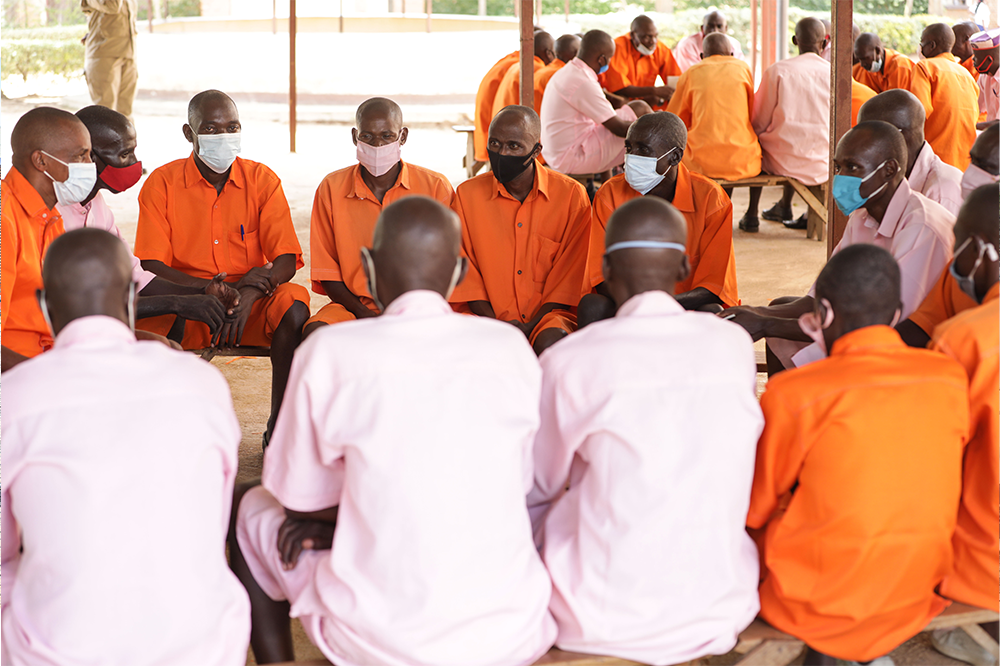
Between 2022 and 2024, courts sentenced 234 people aged 18 to 25 and 429 aged 26 to 40 to life imprisonment, alongside 264 over the age of 40. A further 589 people aged 18 to 25 received sentences of 20 to 25 years, and 2,255 in the same age bracket were sentenced to 15 to 20 years, the largest single group among those figures.
“These sentences need to be reviewed so that they align with the principle of rehabilitation, allowing individuals to reintegrate into society,” Dr. Ugirashebuja told lawmakers, adding that most of those affected are between 18 and 35 years old.
A report by Rwanda’s National Commission for Human Rights covering the 2024/25 period found that 74,253 people were held across the country’s 14 correctional facilities during that time.For a government that has staked its international reputation on efficient, technology-driven institutions, the gap between Rwanda’s rehabilitation rhetoric and its sentencing record carries diplomatic as well as domestic weight, particularly as Kigali seeks recognition from international justice bodies for the strength of its correctional system.
Dr. Ugirashebuja acknowledged that seven draft laws tied to the policy remain under revision, and that some reforms, including a planned rollout of electronic monitoring bracelets as an alternative to detention, are being held back by funding constraints rather than political will.
With youth offenders now identified as the primary concern, the Ministry is expected to bring concrete proposals on sentence reduction to Cabinet in the coming months, alongside the outstanding legislation needed to complete the four-year-old policy’s implementation.
About the Author