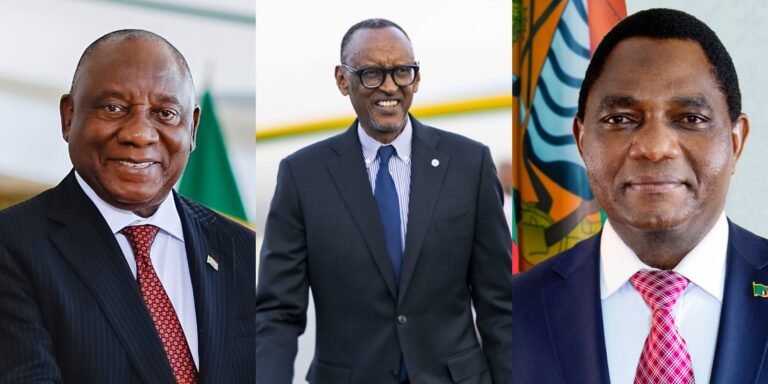
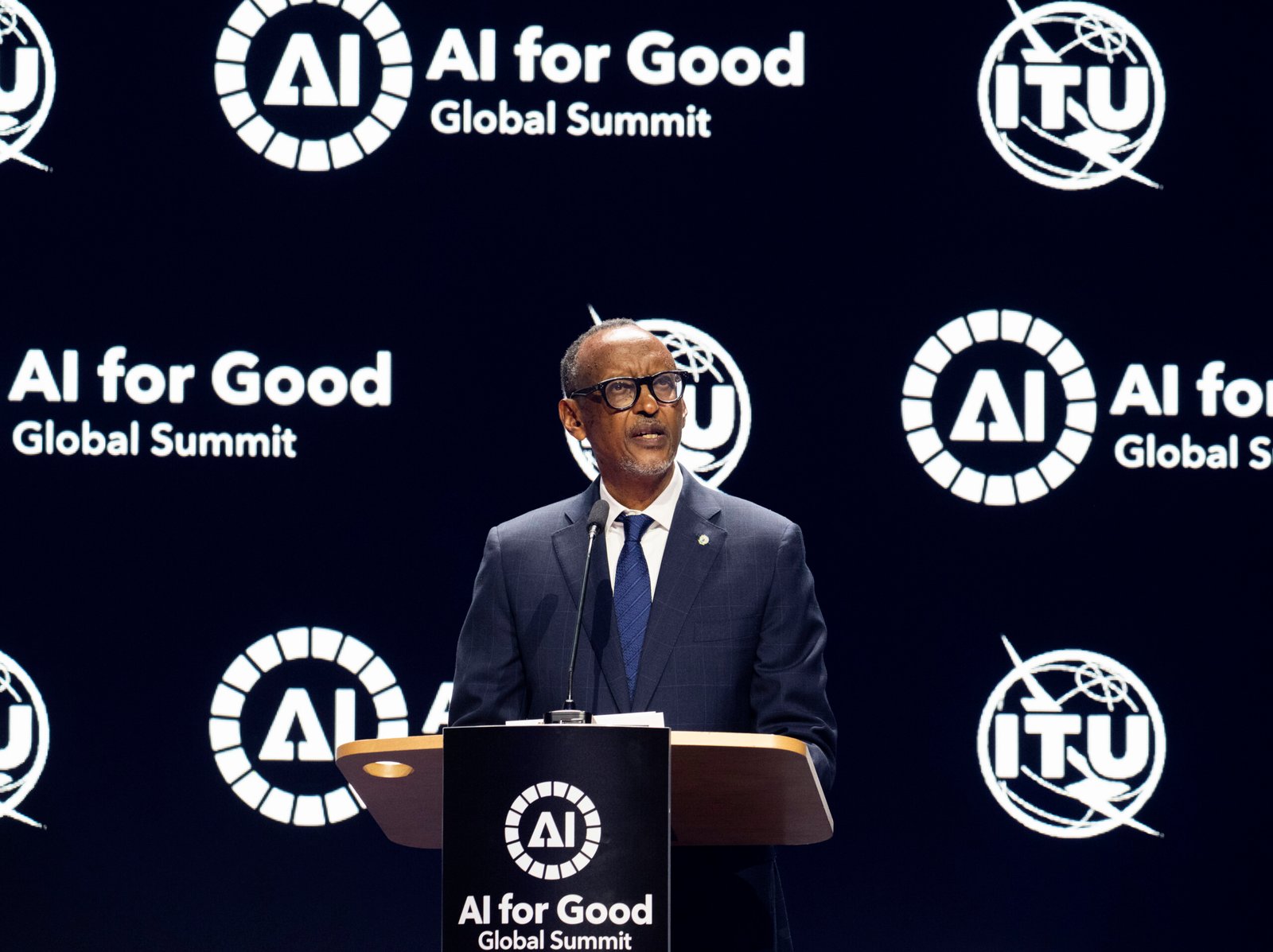
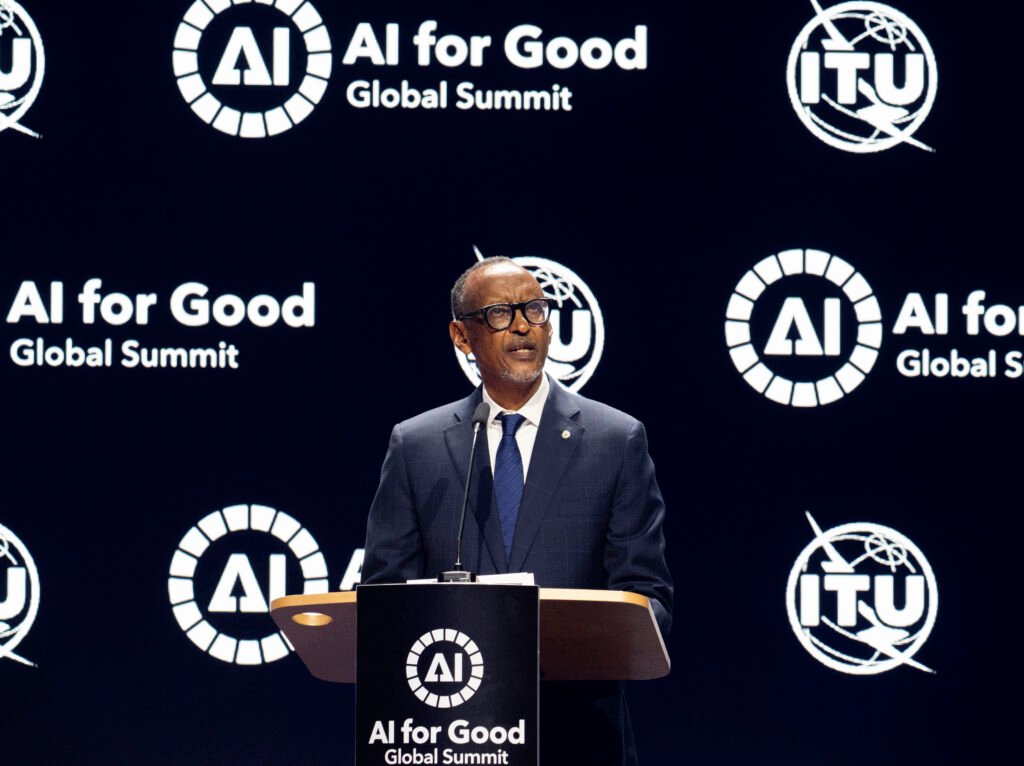
President Paul Kagame of Rwanda used his address at the AI for Good Global Summit in Geneva to set out three priorities he argued should guide how governments and industry approach artificial intelligence: infrastructure, skills development and accountability.
Speaking to an audience of heads of state, technology executives and development partners, he said computational power, connectivity and reliable energy needed to become more accessible through closer cooperation between governments and the private sector, framing infrastructure gaps as the first barrier standing between developing economies and meaningful participation in the AI economy.
On skills, President Kagame argued that talent exists broadly across the world but that access to opportunity does not, calling on educational institutions to continuously revise what they teach to keep pace with the technology. His third priority, accountability, centered on AI governance structures being built to earn public trust and operate transparently, rather than becoming another source of division between nations or between governments and the companies building the technology.
The framework was not abstract for Rwanda. It arrived just weeks after the Rwandan Cabinet, chaired by President Kagame, approved the creation of a National Artificial Intelligence Agency, a dedicated institution built specifically to act on those same three priorities domestically.
The agency’s mandate covers infrastructure-adjacent investment attraction, skills development and AI ethics and governance, effectively mirroring the international framework Kagame presented in Geneva at home in Kigali.
The agency replaces an AI office that had operated within the Ministry of ICT and Innovation, marking an upgrade in institutional weight behind Rwanda’s AI ambitions, and builds on a national AI policy adopted in 2023 that made Rwanda the first African country with a comprehensive AI governance framework.
The timing gives Rwanda a case study to point to on the same stage where the priorities were being debated in the abstract. Where much of the summit’s discussion concerned what governments should eventually do, Rwanda’s Cabinet decision offered a concrete example of a government moving from AI policy to AI institution within a matter of years.
That distinction matters to the diplomats and investors in Rwanda’s audience, for whom the credibility of policy commitments often rests on whether a government has built the machinery to enforce them.
Whether the National Artificial Intelligence Agency can deliver on the framework Kagame described in Geneva will depend on execution rather than intent. Local commentary following the Cabinet’s June approval has already cautioned that establishing a new institution is easier than making it effective, and that success will hinge on clear mandates, adequate funding and genuine collaboration with universities, startups and international partners rather than duplicating work already underway elsewhere in government.
For international observers, the agency’s first year of operations, not the Geneva speech, will be the real measure of whether Rwanda’s three priorities translate into results.
About the Author