Rwanda has pushed back against mounting pressure from the United States to dismantle the defense measures it has deployed along its border with the Democratic Republic of the Congo, with the spokesperson of the Rwanda Defence Force insisting the measures will not disappear but will instead continue to evolve alongside the security threat they were built to address.
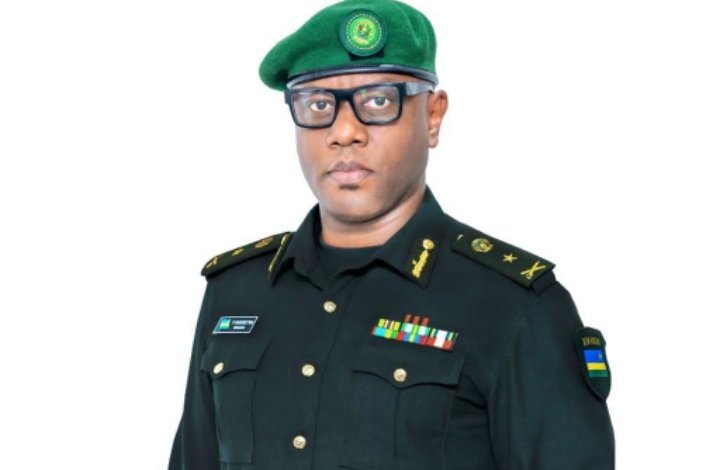
Speaking to Rwanda Broadcasting Agency, the country’s state broadcaster, on July 5, Brigadier General Patrick Karuretwa said Kigali’s posture along the frontier reflects lessons drawn from a period Rwanda refers to as the infiltrators’ war, when armed elements crossed into Rwandan territory before the state had built the capacity to intercept them early.
Waiting for a threat to reach Rwandan soil, he said, is not a strategy his country is willing to repeat. He explained that the decisions shaping today’s defense posture were designed precisely so that citizens could keep living safely without being exposed to problems originating across the border in the DRC.
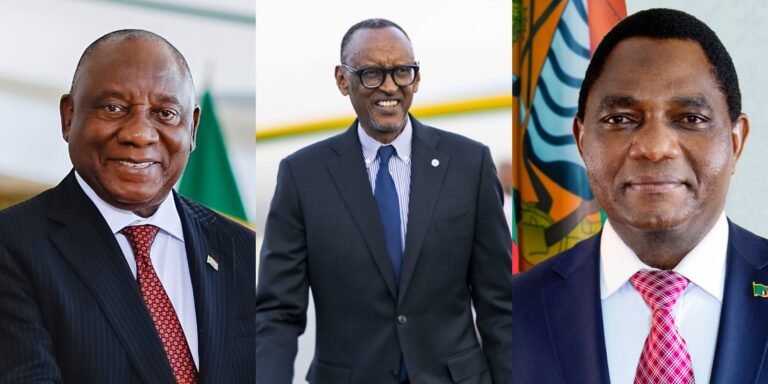
The exchange comes as Washington presses Rwanda to scale back its border deployment, citing the Peace Agreement between the DRC and Rwanda signed in Washington on June 27, 2025, and the follow-on Washington Accords for Peace and Prosperity signed by Presidents Félix Tshisekedi and Paul Kagame on December 4, 2025, in the presence of President Donald Trump.
Both instruments commit the two countries to a phased withdrawal of Rwandan forces and to the neutralization of the Democratic Forces for the Liberation of Rwanda, a militia formed by individuals who led or participated in the 1994 Genocide against the Tutsi and which Rwanda has long accused Kinshasa of continuing to shelter rather than disarm.
Karuretwa argued that this obligation, assigned to the Congolese government under the same agreements Washington now invokes, has gone unmet, and that Kinshasa has instead continued a pattern of cooperation with the group.Karuretwa, who also sits on the Joint Security Committee bringing together representatives of Rwanda, the United States and the DRC to review implementation of the peace accords, described Rwanda’s approach as a matter of continuity rather than rigidity.
He pointed to the joint military operations Rwanda and the DRC carried out in 2019 to dismantle armed groups as an earlier expression of the same defense logic, arguing that what changes over time is the shape of the response, not the underlying commitment to protect the border. When a foreign head of state chooses, in his words, to cooperate with Rwanda’s enemies rather than confront them, he said, the country’s defensive posture adjusts accordingly rather than standing down.
The spokesperson also disputed the narrative that FDLR’s threat is confined to the generation that fled Rwanda in the aftermath of the Genocide, saying the group has maintained an organized presence in areas of eastern DRC, including Walikale’s Pinga area, where it has run training schools for new recruits.
He said the group’s capacity has grown rather than diminished, and that the persistence of these camps undercuts arguments that the threat has faded with time.Karuretwa was direct in ruling out any near-term reversal, saying Rwanda has faced international pressure throughout its history and does not treat this moment as an exception.
He said Rwanda would welcome a return to the kind of joint operations it conducted with the DRC in the past, but that unilaterally lifting its defense measures while the FDLR remains active would amount to an unacceptable risk to national security.His comments signal that Kigali intends to treat the pace of any drawdown as conditional on verified Congolese action against the FDLR, rather than on a fixed timeline set by Washington.
With the Joint Security Committee continuing to assess implementation of the Washington Accords, the coming weeks are likely to test whether the DRC can produce evidence of concrete steps against the militia, a threshold Rwanda has signaled it will treat as the real measure of progress, ahead of any change to the deployment along its western border.
About the Author