At a major Africa-France summit in Nairobi this month, the world’s leading rural development fund pointed to Rwanda as proof that investing in agricultural value chains works.
The 26% income figure is real, The question is whether Rwanda can make it the rule rather than the exception.
On the sidelines of the Africa Forward Summit in Nairobi, co-hosted by Kenyan President William Ruto and French President Emmanuel Macron, the International Fund for Agricultural Development publicly highlighted Rwanda as a model for agricultural transformation.
In a post shared during the summit, IFAD credited its work in Rwanda with generating a 26 percent increase in farmer incomes, secured long-term agreements with international buyers including Agro Sourcing, and strengthened value chains capable of withstanding global shocks.
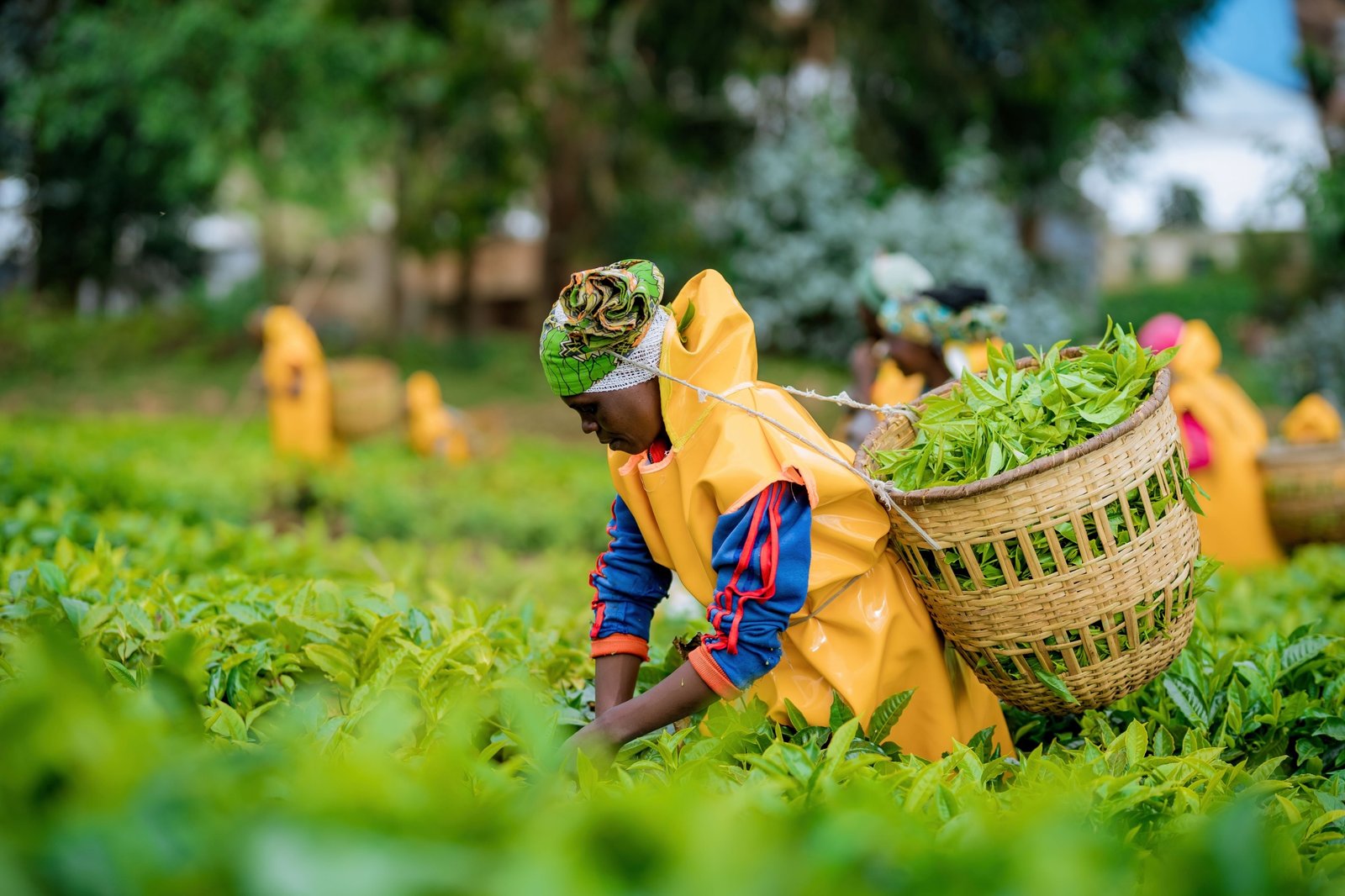
The 26 percent figure comes from a specific, measurable intervention. IFAD co-financed the US$83.35 million PASP project in Rwanda, which provided cooperatives with capacity development, business coaching, and support for agribusiness investment in drying, storage, and other post-harvest activities.
Cooperatives participating in the programme recorded an average increase of 26.1 percent in net income. That is a real, documented result, not a projection. It came from connecting farmers to markets, reducing losses, and helping them negotiate from a position of knowledge rather than desperation.
The Africa Forward Summit declaration committed African leaders to strengthening agricultural value chains through agro-processing, cold storage systems, logistics, and expanded trade under the African Continental Free Trade Area.
The declaration frames these reforms as a shift away from raw commodity dependence toward industrialization and economic sovereignty. Rwanda has heard versions of this language before, The difference now is that the $78.5 million IFAD just committed to Rwanda, the $83 million PASP project, and the political attention generated at the Nairobi summit are all pointing in the same direction at the same time.
That alignment is an opportunity, It is not a guarantee.
IFAD’s own documentation notes that an estimated 30 percent of Rwanda’s harvested output is lost each year, and that infrastructure and value chain investments have significant potential to drive rural economic growth.
In other words, the fund that is celebrating Rwanda’s 26 percent income gain is also on record acknowledging that a third of what Rwandan farmers grow never reaches a buyer. Both facts are true simultaneously, Rwanda is improving and losing at the same time.
In September 2025, IFAD launched the FARM P3 pilot with Rwanda’s Agriculture Board, targeting 4,000 smallholder farmers in Kayonza District through improved post-harvest practices and stronger market linkages, with a specific goal of cutting maize post-harvest losses currently estimated at 13.8 percent.
A $1.23 million pilot for 4,000 farmers in one district is useful. Rwanda has 30 districts and millions of smallholders. The arithmetic of scale is the real test of whether the summit rhetoric translates into sustained income gains across the farming population.
IFAD has partnered with Rwanda since 1981, co-financing 21 rural development programmes and committing $791 million by 2024, benefiting more than 1.5 million households. That is a four-decade relationship with substantial capital behind it, and yet, the conversations at the Africa Forward Summit were still about closing fundamental gaps, storage, market access, value addition that have been on Rwanda’s agricultural agenda for years.
The 26 percent income figure deserves recognition. It represents real farmers, real cooperatives, and real market agreements that did not exist before. But Rwanda’s agriculture sector will not be transformed by headline results from well-designed projects.
It will be transformed when the infrastructure, market systems, and policy environment that made those results possible are extended to the farmer in Kayonza who still has no dryer, no cold room, and no buyer lined up before harvest begins.
About the Author